Gresham College provides outstanding educational talks and videos for the public free of charge. There are over 2,500 videos available on our website. Your support will help us to encourage people's love of learning for many years to come.
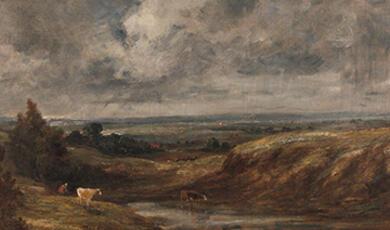
The late eighteenth and early nineteenth- century vogue for the Picturesque and for forging an English landscaping tradition (with frameable landscape scenery and managed wildness) will be the starting point for discussion.
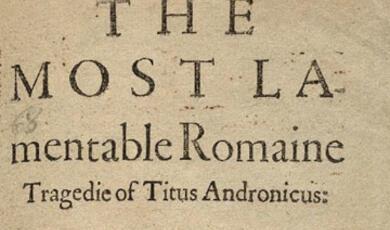
Jonathan Bate tells the story of how and why Shakespeare was steeped in the classics, from his earliest plays such as Titus Andronicus and The Comedy of Errors to his dramatisations of the stories of Julius Caesar and Antony and Cleopatra.
An economic model for news that have existed for 200 years or more is disappearing. Are we facing the prospect of societies without 'news' as previously understood? And why does it matter?
The first Conservation Areas were designated in 1967, today at the golden anniversary there are some 10,000 sites. The presentation will explore the origins, variety and some challenges for the future.
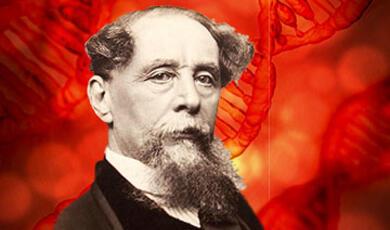
Charles Dickens's expert eye for detail enabled him to describe many medical conditions in his writings. Dickens also suffered with a number of medical conditions which will be discussed in detail during the lecture.
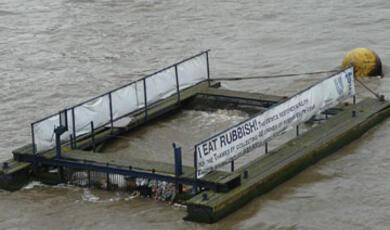
The advent of smart phones and GPS is increasingly allowing citizen observers of wildlife, ecology, air and water quality, and flooding, to enhance our understanding of environmental science. What opportunities exist for individuals to help to solve some of the most complex problems on Earth?

A dialogue with Philip Pullman's complex 'Dark Materials' trilogy which provides a framework for discussing how human beings relate to the material world, and the origin of evil.
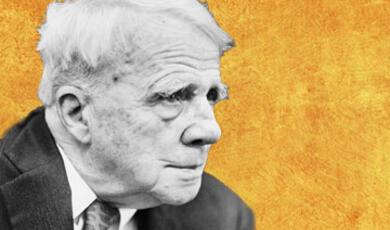
Frost's line, 'I found a dimpled spider... holding up a moth like a white piece of rigid satin cloth' exploits simile... But how can a moth be like cloth? -This is one of a number of examples that will be explored with a view to refining our understanding of smilie.
The era of ‘megacities’ is already with us, and the pace of development is escalating. But what are the challenges of managing their living environments to ensure that they are fed, have water to drink, clean air to breathe, and can dispose of their waste? Is it a utopian or dystopian urban fut