Gresham College provides outstanding educational talks and videos for the public free of charge. There are over 2,500 videos available on our website. Your support will help us to encourage people's love of learning for many years to come.
There is a seismic shift underway in economics, hastened by the aftermath of the Covid-19 pandemic. Communities and countries around the world are beginning to adopt/consider adopting well-being and prosperity as major guiding principles.
Niklaus Wirth said Algorithms + Data Structures = Programs. But programs are more than that. They are ubiquitous in modern life, but only a tiny minority of the population know how to program.
Humans use computers to do gigantic calculations which would be impossible to do by hand – for example, weather prediction. But could an AI go beyond that and come up with a proof of a theorem which has stumped humankind?
Drones are changing the face of war in the 21st century for combatants and civilians. Today drones carry out targeted assassinations, bombings and intelligence-gathering, and the forces that deploy them aim to minimise the loss of life.
The story of the deep, biogeophysical planetary connections and how these are intensifying the effects of climate change and economic development, is told through personal research and expeditions to remote locations across the world (including some that were previously unexplored).
Air pollution, the usefulness of trees, ideas for a green belt are not concerns we associate with the 1600s. But John Evelyn, writer, diarist and gardener, was unusual. His thinking in Fumifugium (1661) about air quality, and Sylva (1664) about trees, seems astonishingly close to our own today.

Algorithms, loosely translated, are systems for doing things. Algorithms are thus the link from pre-history to the modern world – without algorithms we would have an inanimate universe without all the mess and complexity of real life. It turns out that the history of algorithms is messy.
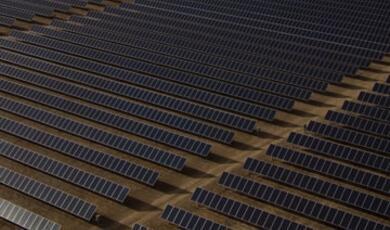
Environment Professor Jacqueline McGlade will examine how renewable energy systems, ranging from large scale hydroelectric dams, solar arrays and geothermal plants, to small-scale solar micro-grids can offer immense opportunities for climate mitigation and achieving a clean energy future.