Gresham College provides outstanding educational talks and videos for the public free of charge. There are over 2,500 videos available on our website. Your support will help us to encourage people's love of learning for many years to come.
Even the most humdrum of electrical devices nowadays contains at least one computer; yet surprisingly few people are aware of their history, their form or function. In this talk we will see that not only is the history of computers rich and diverse, their architecture likewise.

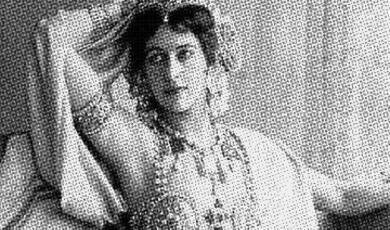
Mata Hari was an erotic dancer who, in 1917, was executed by the French army for treason. She has been portrayed as the ultimate femme fatale, extracting information from hapless men through exploiting her sensual charms.
The English Reformation – unlike many of the other Reformations convulsing sixteenth-century Europe – was at heart more about politics and law than about religion.
Niklaus Wirth said Algorithms + Data Structures = Programs. But programs are more than that. They are ubiquitous in modern life, but only a tiny minority of the population know how to program.
Humans use computers to do gigantic calculations which would be impossible to do by hand – for example, weather prediction. But could an AI go beyond that and come up with a proof of a theorem which has stumped humankind?
Most English people initially saw the Reformation as an unexpected catastrophe, wrenching their religious lives out of shape, and stripping their communities of resources they had naively believed belonged to them.
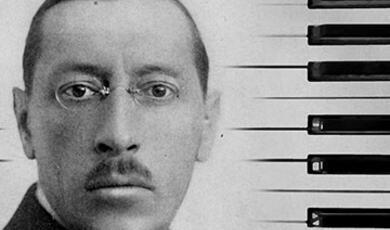
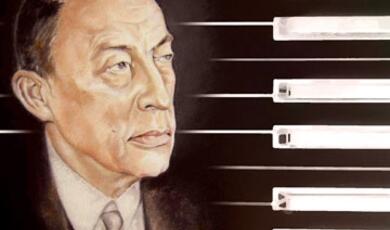
Rachmaninov is considered by many to be the greatest composer-pianist in history. But his very popularity has left the complexity and subtlety of his music underappreciated.
Data structures are the critical ingredient of all good information systems. Poor data structures lead to horrendous problems of interoperability and nightmarish complexity; good ones can make the ‘uncomputable’ computable.