Gresham College provides outstanding educational talks and videos for the public free of charge. There are over 2,500 videos available on our website. Your support will help us to encourage people's love of learning for many years to come.
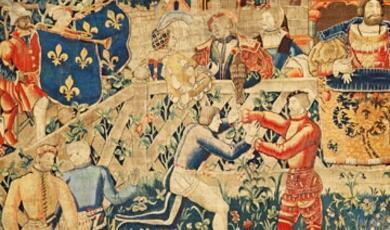
Most English people initially saw the Reformation as an unexpected catastrophe, wrenching their religious lives out of shape, and stripping their communities of resources they had naively believed belonged to them.
Rachmaninov is considered by many to be the greatest composer-pianist in history. But his very popularity has left the complexity and subtlety of his music underappreciated.
Drones are changing the face of war in the 21st century for combatants and civilians. Today drones carry out targeted assassinations, bombings and intelligence-gathering, and the forces that deploy them aim to minimise the loss of life.
Charles Edward Stuart (‘Bonnie Prince Charlie’) is one of the most recognisable and romanticised figures of British history. Born in Rome as a Catholic prince on 31 December 1720, he led the Jacobite Rising of 1745, which came closer than anyone expected to changing Great Britain irrevocably.
Algorithms, loosely translated, are systems for doing things. Algorithms are thus the link from pre-history to the modern world – without algorithms we would have an inanimate universe without all the mess and complexity of real life. It turns out that the history of algorithms is messy.
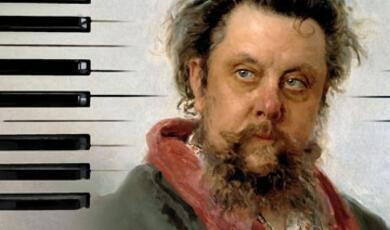
Musorgsky was a proficient, but not virtuosic pianist, and most of his piano music is comprised of unambitious salon pieces. On the basis of these modest exploits, no one could have predicted his Pictures at an Exhibition.
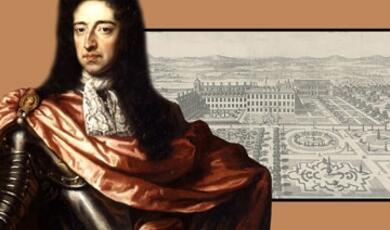
Like James I, King William III was fundamentally unhappy with the stuffy formality of England’s vast crumbling royal estate. But unlike James, who virtually abandoned Edinburgh, William maintained a second court, and a parallel suite of royal houses, in the Netherlands.

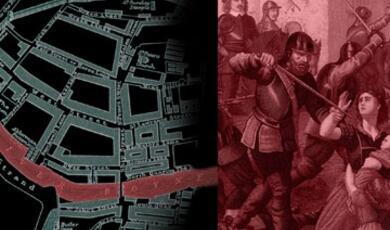
Nowhere in Europe have the wars of religion lasted longer than in Ireland. At the heart of this are two rival sets of memories of atrocities: above all, Protestants recall the massacres of the 1641 rebellion, and Catholics recall the massacres perpetrated by Oliver Cromwell in 1649.