Gresham College provides outstanding educational talks and videos for the public free of charge. There are over 2,500 videos available on our website. Your support will help us to encourage people's love of learning for many years to come.
For nearly seventy years, what might be called ‘the canon’ of greatest films has been arbitrated by an international poll of critics delivering a ‘ten best’ list every decade, published in the BFI’s Sight & Sound.
China’s media provide a window into the Chinese mind, as the country asserts itself in the world as a great power. What do Chinese people think is the purpose of life? What matters most to them? In what do they believe? How do officials and journalists explain their responsibilities?
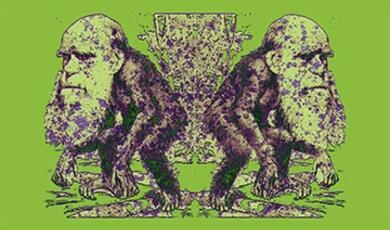
When Darwin finally published the On the Origin of Species, he tried to avoid controversy by ignoring human origins. Yet evolution was soon being attacked as the godless ‘monkey theory’.
Data structures are the critical ingredient of all good information systems. Poor data structures lead to horrendous problems of interoperability and nightmarish complexity; good ones can make the ‘uncomputable’ computable.
Over the last 30 years, digital technology produced an exponential increase in astronomical data. Within our lifetime, the entirety of the visible universe will have been mapped out: we will have seen everything there is to see. The question will then be: what does it all mean?
Accounts of occasional celestial spectacular events in past centuries have provided crucial information for modern-day astrophysicists. One such example is the so-called Great Eruption of Eta Carinae which was for a time in the mid 19th century the third brightest object in the night sky.
The story of the deep, biogeophysical planetary connections and how these are intensifying the effects of climate change and economic development, is told through personal research and expeditions to remote locations across the world (including some that were previously unexplored).
Air pollution, the usefulness of trees, ideas for a green belt are not concerns we associate with the 1600s. But John Evelyn, writer, diarist and gardener, was unusual. His thinking in Fumifugium (1661) about air quality, and Sylva (1664) about trees, seems astonishingly close to our own today.