Gresham College provides outstanding educational talks and videos for the public free of charge. There are over 2,500 videos available on our website. Your support will help us to encourage people's love of learning for many years to come.
Early in 2016, the criminal and civil courts of England and Wales embarked on a modernisation programme aimed at reforming procedures that have survived for centuries. The hope is to set up the courts of the future. Will this project be the forward-thing success we hope for, or an IT disaster?

Science and technology creates moral problems in being able to both improve life and destroy it. How might Tolkein's 'Lord of the Rings' offer us reflections on scientific and religious frameworks which enable us to respect nature on the one hand, while transcending its limits on the other?
Is science complete in itself, or does it act as a pointer or signpost to matters beyond its boundaries? C.S. Lewis argued that nature bears witness to the existence and nature of God, and developed the idea in works such as 'Miracles' and 'The Chronicles of Narnia.'
How can we find the best explanation of what we observe? Why do human beings enjoy pondering puzzles, such as the meaning of life? We can we learn much from Dorothy L. Sayers, whose detective novels and religious writings saw human beings as searching for 'patterns' in life.
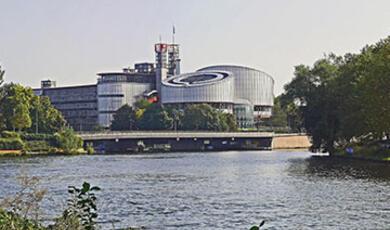
The European Court of Human Rights has been at the crossroads of two legal civilizations: the Continental Civil Law on the one hand and the British Common Law on the other. Here we have two different approaches to reality.