Gresham College provides outstanding educational talks and videos for the public free of charge. There are over 2,500 videos available on our website. Your support will help us to encourage people's love of learning for many years to come.
It is widely accepted that the rising prevalence of obesity is a major threat to current and future health of individuals, the public, and the NHS. Obesity comes from a complex interaction of personal choices, genetics, economics, the food industry, and the environment, among other things.
We hear too often about sudden death in adults following prolonged and often unnecessary police restraint. What do people know about the dangers of restraint and how widespread is our understanding of such deaths?
Clinical practice depends on the acquisition and analysis of evidence - detailed information from each patient’s clinical history, laboratory tests, imaging scans and biopsies. Yet data on its own is not enough, and must always be interpreted in the context of each unique person.
Vaccination has transformed the outlook for many previously lethal infectious diseases. It has, however, caused controversy since its beginnings, even when used for widely feared diseases such as smallpox. For many infectious diseases we do not have a vaccine, and may never get one.

Is there is a level playing field between participants at inquests? What does ‘equality of arms’ mean? Is such a concept appropriate when looking at inquests? Are inquiries better? How have they developed since the IRA Death on The Rock case?
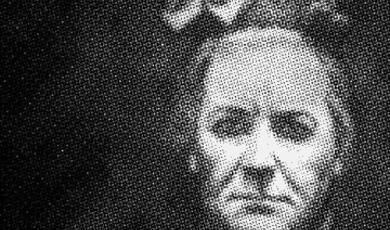
Amelia Dyer was one of the most prolific murderers in Victorian Britain. She made a living as a “baby farmer”, or someone paid to care for unwanted or abandoned infants – except she killed around 400 of them. How could a mother and nurse murder so many defenceless babies?
One of the most powerful tools in public health is screening – whether for cancers like cervical or breast cancer, genetic abnormalities, or infectious diseases. Screening can be transformational, detecting disease early and preventing it taking hold.
Is the jury system the bulwark of individual liberty? This lecture will look at the role of the so-called “perverse jury” in acquitting defendants where the law, or the charge itself, is deemed unjust.