Gresham College provides outstanding educational talks and videos for the public free of charge. There are over 2,500 videos available on our website. Your support will help us to encourage people's love of learning for many years to come.
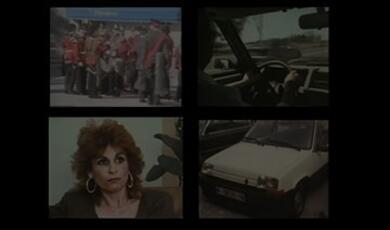
Is there is a level playing field between participants at inquests? What does ‘equality of arms’ mean? Is such a concept appropriate when looking at inquests? Are inquiries better? How have they developed since the IRA Death on The Rock case?
Niklaus Wirth said Algorithms + Data Structures = Programs. But programs are more than that. They are ubiquitous in modern life, but only a tiny minority of the population know how to program.
Humans use computers to do gigantic calculations which would be impossible to do by hand – for example, weather prediction. But could an AI go beyond that and come up with a proof of a theorem which has stumped humankind?
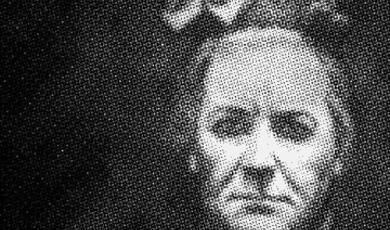
Amelia Dyer was one of the most prolific murderers in Victorian Britain. She made a living as a “baby farmer”, or someone paid to care for unwanted or abandoned infants – except she killed around 400 of them. How could a mother and nurse murder so many defenceless babies?
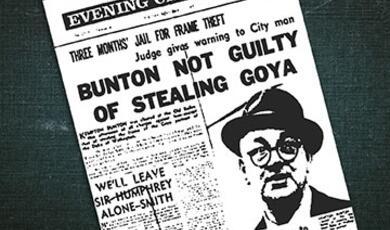
Is the jury system the bulwark of individual liberty? This lecture will look at the role of the so-called “perverse jury” in acquitting defendants where the law, or the charge itself, is deemed unjust.
How do we investigate violent and unexpected deaths at the inquest? Who investigates? When do deaths get referred to the Coroner? Are inquests non-adversarial and inquisitorial? When do you have a jury? What are findings, determinations and conclusions (aka verdicts)? Can you appeal?
Drones are changing the face of war in the 21st century for combatants and civilians. Today drones carry out targeted assassinations, bombings and intelligence-gathering, and the forces that deploy them aim to minimise the loss of life.
Algorithms, loosely translated, are systems for doing things. Algorithms are thus the link from pre-history to the modern world – without algorithms we would have an inanimate universe without all the mess and complexity of real life. It turns out that the history of algorithms is messy.

Traditionally a lawyer’s own views and political affiliation are irrelevant to the pursuit of the legal process. This lecture will examine – and celebrate – the work of lawyers who have crossed the usual lines and worked for political change.