Gresham College provides outstanding educational talks and videos for the public free of charge. There are over 2,500 videos available on our website. Your support will help us to encourage people's love of learning for many years to come.
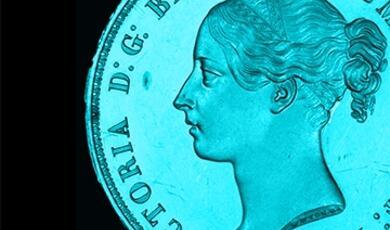
This event, jointly hosted with the British Society for the History of Mathematics, will focus upon the relationship between mathematics and money, from coinage through to cryptocurrencies.
Algorithms, loosely translated, are systems for doing things. Algorithms are thus the link from pre-history to the modern world – without algorithms we would have an inanimate universe without all the mess and complexity of real life. It turns out that the history of algorithms is messy.
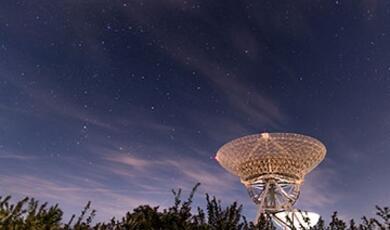
At longer wavelengths than the normal optical wavelengths to which human eyes are normally sensitive, is the radio part of the electromagnetic spectrum.
Number theory is the branch of mathematics that’s primarily concerned with our counting numbers, 1, 2, 3, etc., and in particular the prime numbers, the ‘building blocks’ of our number system. The subject dates back to the ancient Greeks and is notable for its intrinsic beauty and elegance.
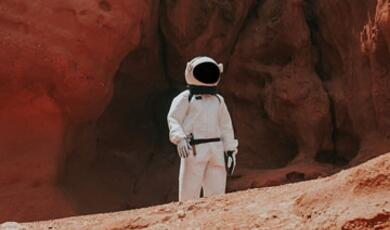
Mars has changed since it formed 4.6 billion years ago. When life started on Earth ~4 billion years ago, Mars was habitable too, with volcanism, a magnetic field, surface water and a thick atmosphere. Today, Mars is cold and dry, with a thin atmosphere and harsh surface.

This talk will consider how expectation plays a role in discovery and in scientific advance, and considers the challenges involved in assessing changes taking place on our own planet.
This final lecture will celebrate some of the great mathematical equations, and related algorithms, which have both changed the world as we know it and which are likely to change it in the future.
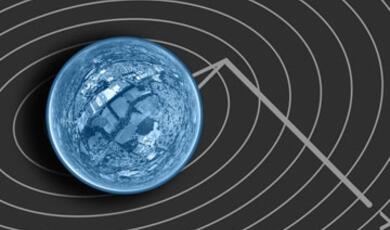
This lecture will present the endeavours of cosmologists and particle physicists, as they attempt to explain the fundamental nature of these mysterious dark components.