Gresham College provides outstanding educational talks and videos for the public free of charge. There are over 2,500 videos available on our website. Your support will help us to encourage people's love of learning for many years to come.
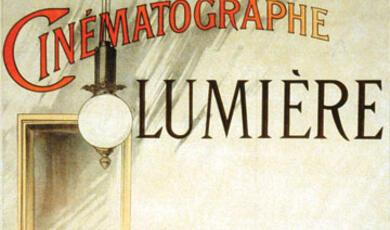
Moving pictures may not have been the innovation once claimed, but within a decade few could doubt that they had become a major force in changing the Edwardian world.
Matter consists of a mêlée of elementary particles. There are protons and neutrons, made up of quarks, and many other short-lived massive particles. One hope is to discover particles of dark matter, but this has so far eluded our best efforts.
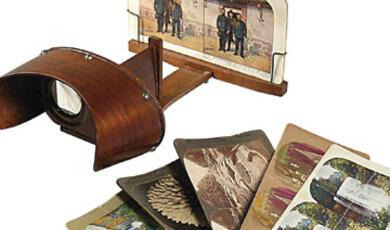
Stereoscopic photography rapidly became a worldwide craze after the Great Exhibition of 1851. Cheap viewers and mass-produced stereographs brought startlingly vivid images within reach of a mass audience, making this the form in which most people first encountered photography.
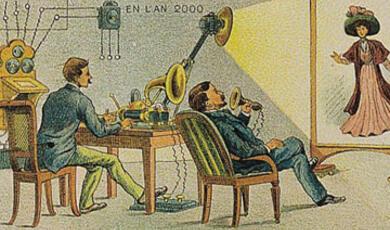
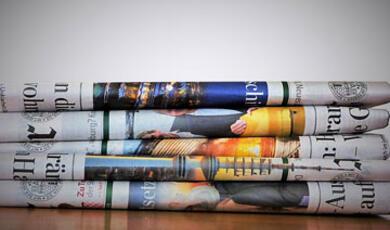
An economic model for news that have existed for 200 years or more is disappearing. Are we facing the prospect of societies without 'news' as previously understood? And why does it matter?
What happens when power, communications, and transport are all disrupted, when shops cannot function, and when most people cannot find out what is happening? Storm Desmond in 2015 revealed how dependent on electricity modern city life has become. What lessons have been learnt?

This lecture tells a startling and unexpected story of science-communication success: the YouTube channel 'The Periodic Table of Videos,' which boasts over 130 million views in more than 200 counties. What is the secret to this educational success?
Can a scientific theory ever be confirmed? Must a scientific theory be falsifiable? Theories such as that of the multiverse and string theory will be considered.
In the first three minutes after the beginning of the universe, all of the stuff that we and the Earth are made of were created and the universe attained its huge size, homogeneity and isotropy.