Gresham College provides outstanding educational talks and videos for the public free of charge. There are over 2,500 videos available on our website. Your support will help us to encourage people's love of learning for many years to come.
The Jewish communities of London have a rich musical-liturgical history, stretching back to the mid-17th century. This lecture will consider some of the main musical developments since then.
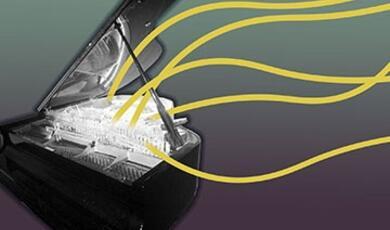
The Magnetic Resonator Piano invented by Andrew McPherson sees electromagnets suspended above the strings of a regular grand piano, allowing for control of minute details of shimmering resonance.
Mathematics has been used as a tool to understand and control infectious disease for over a century, but Covid-19 brought along a whole epidemic of new challenges.
Toy pianos were first made in the 19th century. This lecture/recital tells the story of an instrument originally marketed at children, that subsequently made a surprising transition into the professional sphere.
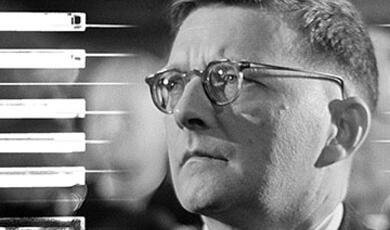
Shostakovich had considered the career of a concert pianist, yet his piano music studiously avoids the virtuosity he had assiduously cultivated as a young performer. Almost all his piano writing is in some way experimental and conceptual.
What the NHS has provided and had to treat over its existence has changed much more radically than most people realise. Some of this change is rightly the domain of politics, but much is driven in response to changing health needs, improvements in medical science and priorities of society.
Knife violence is one of the biggest challenges facing our society. Simulation offers a way to involve young people in exploring the consequences of carrying a knife and responding when incidents occur.
Space today is terrifyingly silent. But it wasn’t always thus: the early universe was filled with a hot plasma in which sound waves could travel. The cosmos was quivering with the aftershocks of the Big Bang.
Lymphoma, leukaemia and myeloma arise from different parts of the white blood cell system. Unlike solid tumours, they can be widely distributed in the body, and this means they need a different approach.
On 17 August 1982, the first commercial CD was released. Digital recording and editing have changed the face of music by making recordings easy to originate and share. But has this affected musical quality, and what are the financial and artistic consequences?