Gresham College provides outstanding educational talks and videos for the public free of charge. There are over 2,500 videos available on our website. Your support will help us to encourage people's love of learning for many years to come.
In 1930, the great physicist Wolfgang Pauli invented a new particle to save the principle of energy conservation in certain radioactive decays he was studying.
Sound investment decisions are critical for our long-term financial future. But psychological biases can lead investors to make costly mistakes – overconfidence can cause them to trade too much, and the reluctance to take a loss can encourage them to throw good money after bad.
How do we investigate violent and unexpected deaths at the inquest? Who investigates? When do deaths get referred to the Coroner? Are inquests non-adversarial and inquisitorial? When do you have a jury? What are findings, determinations and conclusions (aka verdicts)? Can you appeal?
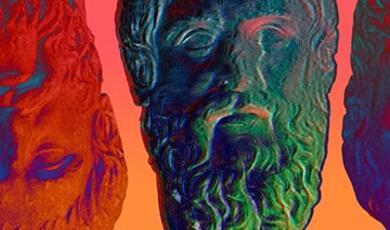
Plato the Athenian was the philosopher who founded the Academy and whose brilliant writings are the foundation texts of the entire western philosophical tradition.
Over the last 30 years, digital technology produced an exponential increase in astronomical data. Within our lifetime, the entirety of the visible universe will have been mapped out: we will have seen everything there is to see. The question will then be: what does it all mean?
Accounts of occasional celestial spectacular events in past centuries have provided crucial information for modern-day astrophysicists. One such example is the so-called Great Eruption of Eta Carinae which was for a time in the mid 19th century the third brightest object in the night sky.
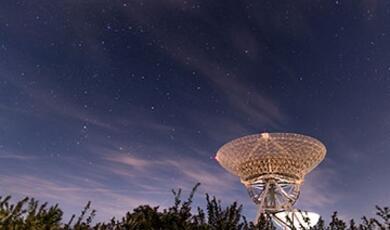
At longer wavelengths than the normal optical wavelengths to which human eyes are normally sensitive, is the radio part of the electromagnetic spectrum.
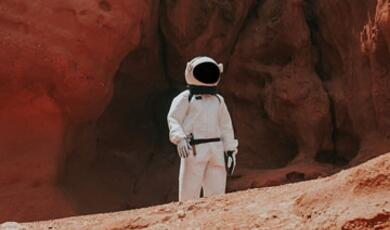
Mars has changed since it formed 4.6 billion years ago. When life started on Earth ~4 billion years ago, Mars was habitable too, with volcanism, a magnetic field, surface water and a thick atmosphere. Today, Mars is cold and dry, with a thin atmosphere and harsh surface.

This talk will consider how expectation plays a role in discovery and in scientific advance, and considers the challenges involved in assessing changes taking place on our own planet.