Gresham College provides outstanding educational talks and videos for the public free of charge. There are over 2,500 videos available on our website. Your support will help us to encourage people's love of learning for many years to come.
Despite the controversy, evolution was widely accepted by many naturalists within a few years of the Origin’s appearance. An important reason for this rapid triumph was Darwin’s botanical works. Seen through evolutionary eyes, plants proved to be mobile, carnivorous, sensitive – even crafty.

Father and son, William and Robert Cecil, not only dominated politics for much of Elizabeth I and James I reign but dominated architectural fashion. Building a series of spectacular houses, they, and not the monarchy, were the great palace builders of their age.
A family best known for producing one of England’s most famous queen consorts started out owning substantial estates in Norfolk before buying, and inheriting, a series of major houses close to London.
This lecture examines the work of Hugo de Vries, a Dutch botanist who was one of the first to claim that science would allow plants and animals to be designed to order.
Sydney’s botanic garden, founded in the early nineteenth century, was expected to ship new plants 'home' to the Royal Botanic Gardens, Kew, from where they could be transplanted to other colonial gardens, to see if they could become valuable new crops to enrich the British Empire.
This lecture will begin with Bacon’s imagined garden, then consider the long-term promise of the experimental or scientific garden, which would eventually lead to today’s biotechnologies.
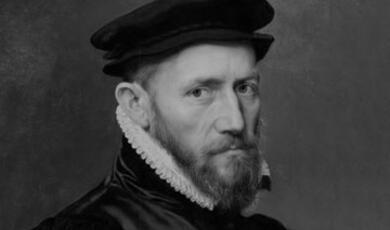
Dr John Guy presents a special illustrated lecture to commemorate the 500th Anniversary of the birth of the College’s founder and benefactor Sir Thomas Gresham.