Gresham College provides outstanding educational talks and videos for the public free of charge. There are over 2,500 videos available on our website. Your support will help us to encourage people's love of learning for many years to come.
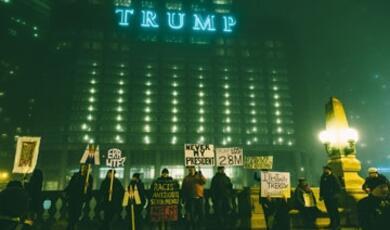
What is the history of populism? Has it ever been a force for good? In this lecture, Sir Richard Evans, Provost of Gresham College, discusses the different varieties of populism.
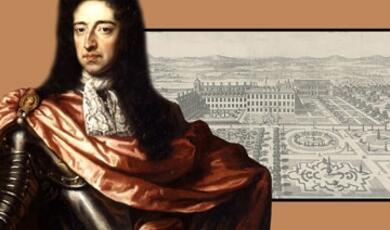
Like James I, King William III was fundamentally unhappy with the stuffy formality of England’s vast crumbling royal estate. But unlike James, who virtually abandoned Edinburgh, William maintained a second court, and a parallel suite of royal houses, in the Netherlands.

This lecture addresses the potential links between AI and religious belief, which include the question of whether an artificial “superintelligence”, were one to arise, would be well-disposed towards us.
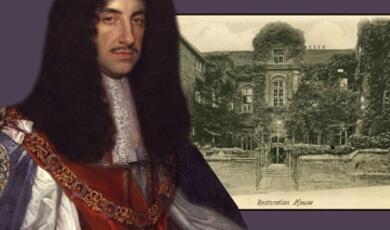
For a decade after the execution of Charles I the Stuart courts were based in the Low Countries and France. Always short of money, but determined to maintain splendour and dignity, Charles II rented a series of mansions and used them as the headquarters of the exiled monarchy.
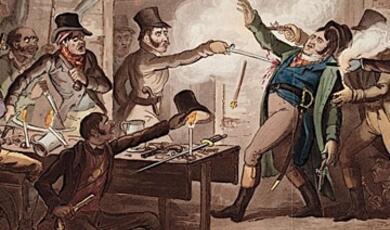
The lecture discusses their identities, motives and impact, and the forgotten fact that their failure ended British revolutionary fantasies for a century.
The question “Will AI artefacts ever be conscious?” was raised by Turing seventy years ago, and will not go away even though no one quite knows what it means, nor how we would know they were conscious if they were.
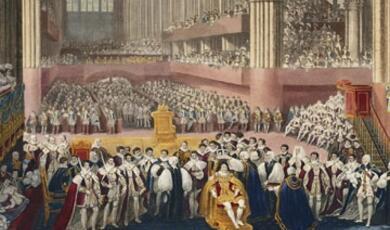
On the 200th anniversary of George IV's accession to the throne, this lecture considers whether or not he had any real impact on the fast-industrialising world around him, and the turbulent political times he lived through.
In this talk we use mathematics to look at these flaws and answer associated questions (eg. voting trends and gerrymandering). For a bit of light relief we will see how the same principles work in the Eurovision Song Contest.