Gresham College provides outstanding educational talks and videos for the public free of charge. There are over 2,500 videos available on our website. Your support will help us to encourage people's love of learning for many years to come.
This final lecture will show how Shakespeare helped to immortalize the famous figures of ancient Greece and Rome, and how he in turn became famous after his death.
I will argue for the essential unity of speech and gesture in the transmission of thought, and suggest that we have underestimated the considerable communicative significance of these movements.
In this lecture, Jonathan Bate will summon up the ghosts of Old Hamlet, the victims of Richard III and Julius Caesar, revealing their origins in the bloody plays of Seneca.
It is well known that Shakespeare lived in an age of monarchy and wrote powerfully in his English history plays about the duties of the sovereign. In this lecture, Jonathan Bate will tell another, forgotten story: of how Shakespeare was also fascinated by Roman political models.
The Rape of Lucrece set the mould for Shakespeare’s exploration of the tragic consequences of sexual desire turning to violence. Jonathan Bate will show how Shakespeare developed these themes from his reading of the great Roman poet Ovid.
Catherine Roach uncovers what we learn from the romance story about today’s changing norms for gender and sexuality and about the nature of happiness and love.
What do we mean by a hero and where does our understanding of the ‘heroic’ idiom come from? In this lecture, Jonathan Bate will show how Shakespeare’s idea of the hero was shaped by the classical tradition, going back to the ancient tale of Troy and Virgil’s epic poem The Aeneid.

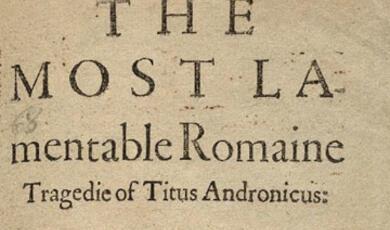
Jonathan Bate tells the story of how and why Shakespeare was steeped in the classics, from his earliest plays such as Titus Andronicus and The Comedy of Errors to his dramatisations of the stories of Julius Caesar and Antony and Cleopatra.
Pain forces sufferers to ‘pay attention’ to their bodies. The way people-in-pain communicate their suffering has a profound effect on the type and quality of care they receive.