Gresham College provides outstanding educational talks and videos for the public free of charge. There are over 2,500 videos available on our website. Your support will help us to encourage people's love of learning for many years to come.
In 1930, the great physicist Wolfgang Pauli invented a new particle to save the principle of energy conservation in certain radioactive decays he was studying.
One of the most powerful tools in public health is screening – whether for cancers like cervical or breast cancer, genetic abnormalities, or infectious diseases. Screening can be transformational, detecting disease early and preventing it taking hold.
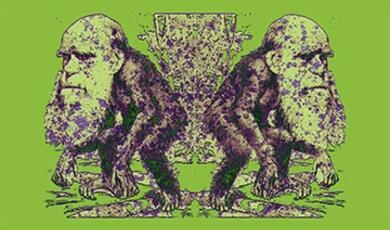
When Darwin finally published the On the Origin of Species, he tried to avoid controversy by ignoring human origins. Yet evolution was soon being attacked as the godless ‘monkey theory’.
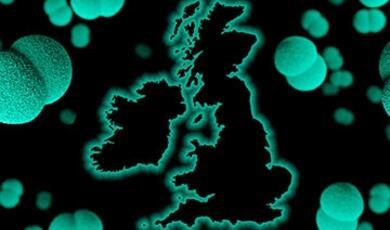
Ill health has always been concentrated in particular places; tackling these pockets of ill health is an essential role for public health. These may be driven by environmental factors, demography, deprivation and healthcare provision.
Data structures are the critical ingredient of all good information systems. Poor data structures lead to horrendous problems of interoperability and nightmarish complexity; good ones can make the ‘uncomputable’ computable.
Over the last 30 years, digital technology produced an exponential increase in astronomical data. Within our lifetime, the entirety of the visible universe will have been mapped out: we will have seen everything there is to see. The question will then be: what does it all mean?
Accounts of occasional celestial spectacular events in past centuries have provided crucial information for modern-day astrophysicists. One such example is the so-called Great Eruption of Eta Carinae which was for a time in the mid 19th century the third brightest object in the night sky.
The story of the deep, biogeophysical planetary connections and how these are intensifying the effects of climate change and economic development, is told through personal research and expeditions to remote locations across the world (including some that were previously unexplored).