Gresham College provides outstanding educational talks and videos for the public free of charge. There are over 3,500 videos available on our website. Your support will help us to encourage people's love of learning for many years to come.
World War Two set British filmmakers a challenge: to be relevant and entertaining and to inspire without patronising. Powell and Pressburger brought wit and imagination to their task, questioning what Britain stood for, warts and all.
In the third of his lectures on the rhetoric of Romanticism, Jonathan Bate will explore how they did so, with particular emphasis on the role of children in the poetry of Blake and Wordsworth.
At a time when religions language is meaningless or feels stale for many, we can rediscover its freshness and force in the works of novelists and poets. Lord Harries will be in conversation with Alec Ryrie, the new Gresham Professor of Divinity.
Jonathan Bate will follow in the footsteps of the 18th-century inventors of the ‘picturesque’ and show how Wordsworth shaped the vision of his native region, leading to the foundation of the National Trust and the idea of a National Park.
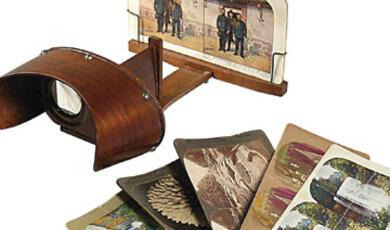
Stereoscopic photography rapidly became a worldwide craze after the Great Exhibition of 1851. Cheap viewers and mass-produced stereographs brought startlingly vivid images within reach of a mass audience, making this the form in which most people first encountered photography.
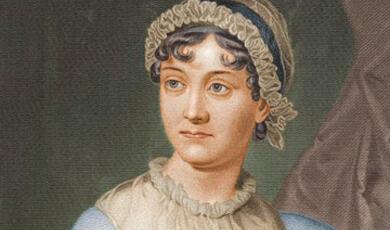
Professor Todd will be discussing patriotism in Austen’s time and her particular attitude to it; her sense of what Englishness is, materially and politically, and how it manifests itself in daily life.
An economic model for news that have existed for 200 years or more is disappearing. Are we facing the prospect of societies without 'news' as previously understood? And why does it matter?
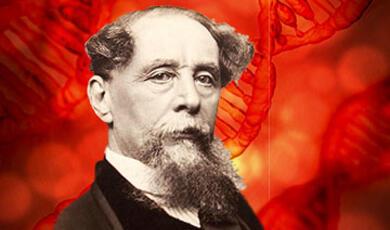
Charles Dickens's expert eye for detail enabled him to describe many medical conditions in his writings. Dickens also suffered with a number of medical conditions which will be discussed in detail during the lecture.
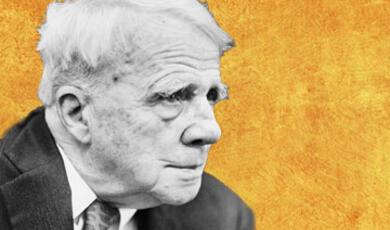
Frost's line, 'I found a dimpled spider... holding up a moth like a white piece of rigid satin cloth' exploits simile... But how can a moth be like cloth? -This is one of a number of examples that will be explored with a view to refining our understanding of smilie.
In the line, 'The Western wave was aflame', the 'Western wave' refers to the sea. But is it this simple? What do forms of substitution, synecdoche for example, lend to this magnificent and shadowy poem?

 Login
Login