
 Login
Login

Where Is China Heading under Xi Jinping?
Share

- Details
- Text
- Audio
- Downloads
- Extra Reading
In this lecture, Tsang examines the strategic goals and direction of travel China’s supreme leader, Xi Jinping, has set for the country and its people. He highlights what China’s new de facto state ideology Xi Jinping Thought is in order to explain systematically Xi’s domestic and global ambitions. In short, what Xi seeks to do is to forge one country, one people, one ideology, one party and one leader’ to make China great again or to accomplish the China Dream of national rejuvenation.
Download Text

Where Is China Heading under Xi Jinping?
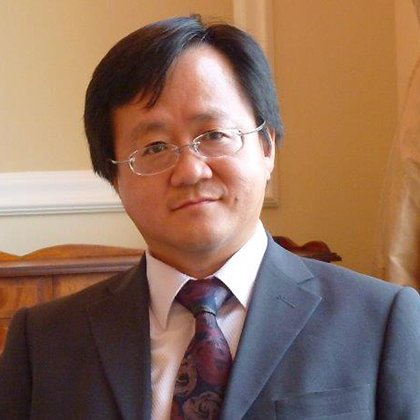
Professor Steve Tsang,
Director, SOAS China Institute
27th November 2025
The China Dream
In terms of the political system, China today retains the same Leninist system it had installed after Mao Zedong founded the People’s Republic in 1949. In this system the Communist Party shadows and superintends the government apparatus at all levels. But how the system works in practice has changed over the last seven and a half decades. Under Mao (1949-76) the system functioned in a totalitarian way. In the ‘reform and opening up’ era (December 1978 - November 2012) ushered in by Deng Xiaoping, the Party pulled back from closely supervising the government and allowed substantial scope for personal freedom though it retained tight political control. Significantly, Deng ensured the top leadership of the Party, the Politburo and its Standing Committee operated in a collective way, with the General Secretary or top leader being the first among equals in the Politburo Standing Committee of 9 or 7 members. After Xi Jinping consolidated power in 2017, five years into his office, he reinstated the party’s supervision of the government and replaced collective leadership by strongman rule. From then on, General Secretary Xi has made himself the supreme leader, and required the other members of the Politburo Standing Committee report to him personally. Xi has not restored Maoist totalitarianism, but his words have become more powerful than the law, and ‘Xi Jinping Thought on socialism with Chinese characters for a new era’ or Xi Thought for short, has effectively been hailed as the de facto state ideology. Today Xi can override the collective wisdom of the Politburo or its Standing Committee, not to say the Chinese Government.
Under Xi, China is committed to fulfil ‘the China Dream of national rejuvenation’ by the centenary of the People’s Republic, meaning 2049. This implies making China into one single modern, rich, powerful country second to none under the leadership of the Communist Party led by General Secretary Xi. The only ambiguity is the deadline for this to be completed, as Xi has on different occasions referred to 2049 and 2050 but never later.
One Country, One People, One Ideology, One Party, One Leader
Xi Thought seeks to forge in China one country, one people, one ideology, one party and one leader. When Xi was about to start his second term as General Secretary of the Chinese Communist Party in autumn 2017, he declared that ‘matters not it’s in the East, South, West, North or the middle, or in the party, government, military, civilian sector or academia, the Party leads them all’. No exception is permitted. The emphasis put on China being one nation means Beijing is now committed to take Taiwan and make it a part of China by 2049, and to pre-empt ethnic minority dominated regions or special administrative regions like Hong Kong from drifting away from the tight grip of the Communist Party. Previous commitments to allow for varying degree of autonomy among them have now been put aside. The concept of national security is used to ensure everyone and every region defined by the Party as Chinese stay firmly under Party control, and any challenge against the Party, whether it originates domestically or externally, is to be crushed or countered.
The Party under Xi now systematically ‘educate’ or indoctrinate people of China to become Chinese patriots, defined as Chinese nationals who embrace the leadership of the Party and the mainstream, in other words, Han, way of life. They are also required to love the supreme leader, Xi. This applies to everyone, from the Han majority to the ethnic minorities. For the latter, those who resist are confined to residential ‘re-education’ units until they have learnt their lesson. This process relies on the indoctrination of Xi Thought, from kindergarten to graduate school, and through the regular use of a dedicated app, Xuexi qiangguo. Unlike during the ‘reform and opening up’ era when people in China could pay lip service to Communism as the state ideology, since 2017, the learning of Xi Thought is being monitored, though not equally tightly everywhere. Opting out completely is not an option though studying it pro forma is still practiced by many. To make one people out of a population of 1.4 billion, the Party utilizes ideological indoctrination. There is no alternative to Xi Thought in China. It is effectively presented as the highest form of Communism and therefore the only ideology.
The centrality of the Communist Party is now absolute in China. It not only superintends government departments and policy making but also requires private enterprises to set up party branches and fulfil their ‘patriotic duties’ when called upon to do so. Most private companies still try to operate on commercial principles, putting their corporate interests first. But they can do so only for as long as the Party does not need them to support government policies.
As to the Party itself, it is subjected to rectification or purges regularly, generally carried out in the name of anti-corruption. In Xi’s first ten years of rule, none of his proteges in senior office, defined as at or above Vice-Minister rank, was ousted. But into his third term, after he had cleansed the top Party and government offices of members of other factions, Xi has started to purge his proteges. His determination to make the Party loyal to him and to perform as he requires is steadfast. Being loyal to Xi is no longer enough when all top office holders are loyalists. Delivering Xi’s goals is now needed to keep high offices. Thus, the Communist Party and its military wing, the People’s Liberation Army, are being frequently purged to ensure all embrace the leadership of the supreme leader unswervingly. Xi has also completely reversed
arguably the most important post-Mao change Deng Xiaoping had put in place, which was to ensure the top leader serves a maximum of 10 years in office, with a successor identified and groomed for the top spot five years ahead of succession. Now, no one who could be a potential successor is allowed in the Politburo Standing Committee. There is but one leader, whose commitment to ‘serve’ China indefinitely cannot be questioned.
The forging of ‘oneness’ in China under Xi means national interest exists in concentric circles. If China’s national interest constitutes the outer circle, inside it is that of the Party, and within that is the core of the Party, Xi himself. In such a conceptualization, what is good for the core is good for the Party and is therefore good for China. It does not stop there, as in this line of thinking, what is good for China must also be good for the world.
Making China Great Again
Xi’s ambition for China is not limited to the region. It is global. The China Dream is not only about forging one country, one people, one ideology, one party and one leader domestically. It is also about restoring China to the greatness Xi believes it had enjoyed in the past. Having banned, through the prohibition of ‘historical nihilism’ in Document No.9 of 2013, any interpretation of history other than the Party-approved version, Xi pronounces on China’s historic mission. In the Xi view of history, the best of times was when China was the greatest, richest, strongest, most sophisticated, and in technological and civilizational terms the most advanced power in the world. As China is by Xi’s definition inherently benevolent and non-imperialist, its magnificence and munificence are supposed to be so overwhelming that other states choose to admire it and embrace its pre-eminence, resulting in the old tianxia order ‘re-emerging’ organically. Tianxia consists of two Chinese characters, ‘sky’ and ‘below’, meaning under the sky or ‘all under heaven’. Reinstating the tianxia order implies ‘restoring’ Chinese global pre-eminence.
Following this line of thinking, the delivery of pax Sinica will bring about the best outcome for the world, implicit in Xi’s articulated goal to forge ‘a common destiny for humankind’. This is of course based on a perverted interpretation of history, as successful empires centred around China proper over the millennia behaved fundamentally similarly to great empires everywhere, from the ancient Persian to the Roman and to the British. But with Xi exercising a monopoly of wisdom and historical narrative in China, his Thought shapes the global strategy of the Party and the state, and he has declared that in its ‘5,000 years of history’ China has never invaded anyone.
This underlines the importance of recognizing China’s perspective and agency. It has a vision and a strategy based on Xi Thought. It does not just imitate the US or react to external initiatives. For people living in European or American democracies, relying on Western scholarship and theories of international relations to understand China is often taken for granted. Doing so will, however, not get us very far, as it generally makes us see China through glasses tainted by our own preconceptions. Hence, most US specialists tend to see China as trying to replace the US as the global hegemon. Those who believe China is less ambitious see China ushering in Cold War 2.0. But most fail to see China and its global strategy as they are.
China under Xi does not seek to replace the US as the global hegemon and is not interested in starting Cold War 2.0. Instead, it works unrelentingly under the guidance of Xi Thought to fulfil the China Dream, which aims to ‘re-establish’ a tianxia based international order. The distinction of the Chinese concept of global pre-eminence and global hegemony is not an academic distinction that makes no difference. It reflects a basic difference in worldviews. US global hegemony since the Second World War had, at least until the Trump presidency, implied fulfilling US global obligations, such as peace-making or conflict pre-emption, to sustain the liberal international order. Such an approach explains why the US could have been a global hegemon and a leader in soft power simultaneously. For China to replace the US as the global hegemon, it will have to inherit, at least in principle, US global obligations and the liberal international order as well. China under Xi has no intention to take on such obligations, like playing global policeman. It does accept a rule-based international order, once the rules are made by China or are sufficiently China-friendly. What it seeks is recognition of its status as the pre-eminent power in the world, one that takes the lead role in making rules and setting norms and standards. It sees the UN as an institution that can be transformed to deliver this goal. It is not interested in a new Cold War, as a Cold War inherently denies any player pre-eminence. It upholds the UN system and works to make it useful to China.
What Xi’s China wants is to forge ‘a common destiny for humankind’ as conceived and led by itself. It is to be achieved by the ‘democratization of international relations’, which will require transforming the liberal international order centered around the UN into a Sino-centric order based on the tianxia paradigm. To achieve this, China’s global strategy pivots its foreign policy not to the US but to the Global South. The Global South in Chinese usage refers to the world other than the rich and advanced democratic West, constituting a clear majority of the world’s population and members of the UN. Xi has proclaimed that China is forever a member of the Global South and is implicitly its natural leader. Through his four global initiatives, on development, security, civilization and governance, as well as the development-oriented Belt and Road Initiative, China has been engaging the Global South to secure their support at the UN. The idea is that by gaining the support of the Global South, China can transform the UN (and other international organizations) and make it put the interests of the majority Global South as represented by China ahead of the minority Democratic West. When this is achieved, it will have delivered the ‘democratization of international relations’ and prepared the ground for China to ‘reassert’ its global pre-eminence. In return for supporting this Chinese agenda, and its claim over Taiwan, Beijing offers its partners in the Global South not just development loans but also an assurance that autocrats and autocracies would be safe in the tianxia international order.
This central pivot is complemented by a secondary pivot, which is Taiwan. Despite having a weak case in international law, China has since the 1950s claimed Taiwan as Chinese and has unrelentingly worked to confuse its own ‘one-China principle’ with Western democracies’ ‘one China policies’. The Chinese principle simply asserts that Taiwan is a part of China from ancient time and must therefore be part of China again. Western democracies have all devised their own ‘one-China policies’ which share one thing in common – they acknowledge China’s claim over Taiwan and desist from challenging it, but they do not accept it. The US is a bit of an outliner. Based on its own ‘one-China policy’ the US has committed, under its own Taiwan Relations Act (1979), to help the people of Taiwan defend itself if Taiwan’s status were to be changed against their will. This US commitment is the biggest obstacle for China to seize Taiwan. China’s comprehensive national power is so much greater than that of Taiwan that without US intervention, Taiwan almost certainly cannot successfully defend itself for long. With this being the strategic reality, for China to take Taiwan it will have to either deter the US from interfering or inflict sufficient losses on US forces deployed to help Taiwan to force the US accept a Chinese victory. In the Chinese global strategy, when it takes Taiwan it will have publicly humbled the US and proved the US an unreliable ally in the Indo-Pacific. Assuming its primary pivot has already secured for China leadership at the UN, winning against the US will in effect deliver China’s rise to global pre-eminence.
Conclusion
In short, Xi is dedicated to make China great again, domestically by expanding and consolidating the power and control of the Communist Party under his own leadership, and externally by ‘restoring’ China’s place as the pre-eminent power in the world. All Chinese people are to be mobilized to embrace and support this historic mission Xi has set for the country and its people. Unity across the board is to be delivered by putting the Party in charge everywhere.
The basic premise underlining this approach is that China under the Communist Party rule has the best political system there is, when it is led by a visionary leader. Xi calls this ‘the whole-process people’s democracy’. China under Xi does not seek to export the China model, as other countries do not have the fortune of having anything comparable to the Chinese Communist Party, and without it, it cannot rise to China’s level of greatness. But it is committed to share the positive results a ‘return’ of China to pre-eminence will bring, as long as the rest of the world will embrace China’s leadership as it forges a common destiny for humankind. Until the China Dream is fulfilled, the process of making China great again must have its momentum sustained, as a loss of momentum could unleash forces that question if the price for forging the oneness is worth the while, implying a challenge to the monopoly of power by the Communist Party and its supreme leader. The single-minded commitment to fulfil the China Dream will almost certainly be sustained as long as Xi remains in power or is alive.
© Professor Steve Tsang 2025
References and Further Reading
Elizabeth Economy, The World According to China (Polity, 2021)
John Fitzgerald, Cadre Country: How China became the Chinese Communist Party (University of New South Wales Press, 2022)
Kevin Rudd, On Xi Jinping: How Xi’s Marxist-nationalism is shaping China and the world (OUP, 2025)
Holly Snape, ‘The rise of Party law: rewiring the Party, recalibrating the Party–state relationship’, China Journal, 92, (2024),1-26.
Steve Tsang & Olivia Cheung, The Political Thought of Xi Jinping (OUP, 2024)
Steve Tsang, ‘Getting China Right’, Survival, 65(4) (2023), 43–54.
Elizabeth Economy, The World According to China (Polity, 2021)
John Fitzgerald, Cadre Country: How China became the Chinese Communist Party (University of New South Wales Press, 2022)
Kevin Rudd, On Xi Jinping: How Xi’s Marxist-nationalism is shaping China and the world (OUP, 2025)
Holly Snape, ‘The rise of Party law: rewiring the Party, recalibrating the Party–state relationship’, China Journal, 92, (2024),1-26.
Steve Tsang & Olivia Cheung, The Political Thought of Xi Jinping (OUP, 2024)
Steve Tsang, ‘Getting China Right’, Survival, 65(4) (2023), 43–54.
Part of:
This event was on Thu, 27 Nov 2025
Support Gresham
Gresham College has offered an outstanding education to the public free of charge for over 400 years. Today, Gresham College plays an important role in fostering a love of learning and a greater understanding of ourselves and the world around us. Your donation will help to widen our reach and to broaden our audience, allowing more people to benefit from a high-quality education from some of the brightest minds.