
 Login


What is the Purpose of Yoga: Transcendence or Transformation?
Share

- Details
- Text
- Audio
- Downloads
- Extra Reading
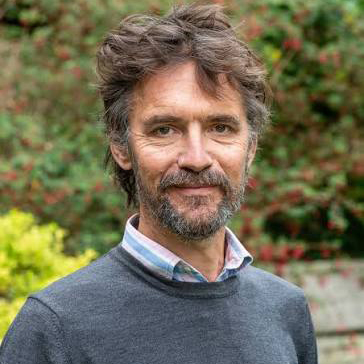
In this lecture, Jim Mallinson draws on texts, art history and fieldwork to trace the history of the role of the body in yoga over its 2,500-year history.
For its first 1,500 years the body is to be transcended; yoga’s aim is an almost death-like mental stillness equated with liberation. Then the body starts to be cultivated to attain power and immortality. While charting this transformation, Prof. Mallinson highlights parallels between yoga’s premodern goals and modern pursuits of longevity, perfection, and transcendence.
Download Text

What is the Purpose of Yoga: Transcendence or Transformation?
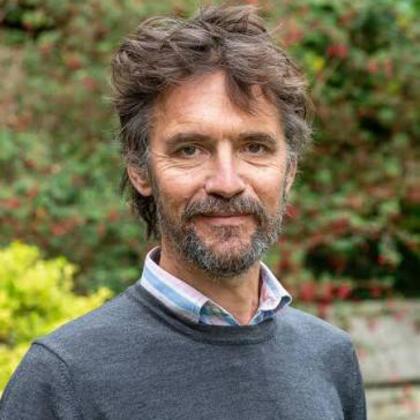
James Mallinson, University of Oxford
Monday 5 October 2026
Yoga originated among groups of male renunciate ascetics in northern India in the middle of the first millennium BCE as a way of transcending the suffering that they believed to be the hallmark of worldly existence. In this lecture I shall chart the path yoga then took to its current global ubiquity, in which it is primarily understood to be a way of transforming one’s body in order to enhance wellbeing, and the vast majority of its practitioners are women.
One will often hear that yoga is 5,000 years old, in support of which claim images on seals from the Indus Valley Civilisation are invoked. Sober analysis of the images reveals, however, that they do not depict a forerunner of the Hindu god Śiva, ithyphallic and sitting in a yoga posture, but rather share features with images from the contemporaneous Trans-Elamite Culture to the west, with which the Indus Valley Civilisation interacted.
The first solid evidence for practices that came to be categorised as yoga dates to the middle of the first millennium BCE, the time of the Buddha. In the Greater Magadha region at the eastern end of the Gangetic plain new religious teachings were taking hold which posited that we are reincarnated after death, that our reincarnation is determined by our karma, or previous actions, and that this cycle is essentially unpleasant. In order to get off it various doctrines were proposed, among which we see many features of yoga. But as far as physical methods are concerned, other than seated postures for meditation, only ascetic privations such as staying immobile for long periods, sometimes leading to permanent mortification, were included in the practices undertaken.
This was the case until about a thousand years ago, when a new approach to the body starts to appear in the textual and material record. The body is now to be cultivated through physical methods in order to control its vital energies and thereby bring about elevated states of consciousness. The practices include the earliest instances of the balancing and contorted postures for which yoga became renowned. Success in them leads to bodily immortality.
This new dispensation did not, however, displace the ancient mortifications, many of which survive to this day. A synthesis resulted but yoga remained the preserve of primarily male ascetics, so the penitential aspect of its physical methods remained important.
In the 20th century a succession of Indian gurus reformulated yoga to incorporate elements of the new global physical culture movement. This led to the body-positive aspects of its teachings coming to the foreground and enabled its subsequent spread around the world. Yoga remained somewhat fringe, however, until the turn of the millennium, when its adoption by high-profile celebrities such as Sting and Madonna led to an explosion in its popularity.
For most practitioners yoga’s aims are now much more worldly than those of its originators two and a half millennia ago. But it is not as simple as a clear divide between a “spiritual”, “original” yoga and a worldly, appropriated globalised simulacrum. Yoga is seen by many of its modern practitioners to be distinct from other methods of physical self-cultivation because of its spiritual aspect, and some of them do incorporate aspects of asceticism and denial into their practice. Meanwhile, other than those most extreme ascetics whose practice led to their deaths, Indian ascetics have always needed to keep themselves alive while undergoing their austerities and they have developed distinctive ways of doing so. Furthermore, the body-positive dispensation of yoga which appears a thousand years ago is said to bestow many of the mundane physical benefits sought by practitioners today, such as leanness, good health, flexibility and attractiveness to the opposite sex.
Indian religious traditions have long recognised the opposition between paths which prescribe engagement with the world and those which teach detachment from it. These are two fundamental yet contradictory human urges. Yoga addresses them both; studying its history is an enlightening way of examining them.
© Professor Jim Mallinson 2026
This event was on Mon, 05 Oct 2026
Support Gresham
Gresham College has offered an outstanding education to the public free of charge for over 400 years. Today, Gresham College plays an important role in fostering a love of learning and a greater understanding of ourselves and the world around us. Your donation will help to widen our reach and to broaden our audience, allowing more people to benefit from a high-quality education from some of the brightest minds.