
 Login
Login

Economics and Artificial Intelligence
Share

- Details
- Text
- Audio
- Downloads
- Extra Reading
ChatGPT, the AI chatbot developed by OpenAI, was the fastest growing app in history. But this achievement, as sudden and remarkable as it might seem, was simply the most recent chapter in a fascinating story that has been unfolding for almost seven decades. This lecture explores the full history of the relationship between AI and work, and how economists have tried to make sense of it. It’s a journey that begins with a remarkable gathering of minds in a nondescript mathematics department at Dartmouth University in 1956 and ends with the technological convulsions that we see around us today.
Download Text

Economics and Artificial Intelligence
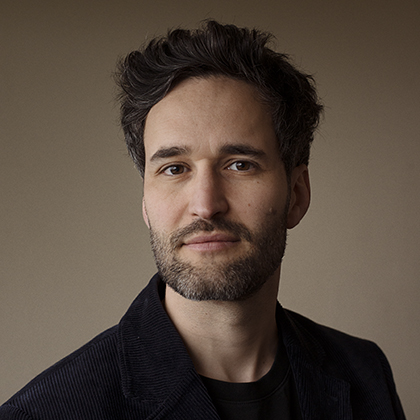
Daniel Susskind, Gresham Professor of Business
13 January 2026
A (longer) history of AI
In February 2023, something extraordinary happened. ChatGPT, an AI developed by OpenAI, became the fastest-growing app in history. TikTok had taken nine months to reach 100 million users; Instagram had taken two years. ChatGPT reached that milestone in just two months.
Here was an AI that could answer questions on almost anything in the world—and often to a standard that resembled, or even exceeded, the capabilities of human beings. And this was only the beginning. A wave of generative AI systems soon followed: Gemini, Claude, Grok.
Yet this burst of progress did not come out of the blue. Today’s advances in AI are best understood as the latest chapter in a much longer story -- one that has been unfolding for many decades -- in which machines have gradually, but relentlessly, taken on tasks we once believed only humans could perform. I have watched this story unfold for the past fifteen years, but it began long before that. Most importantly, this progress has left many economists flat-footed in how they think about the impact of technology on work.
In this lecture, I want to explore that longer story. In the first part of this lecture, I begin with the history of AI itself -- a history that starts with a gathering of extraordinary minds in a nondescript mathematics department at Dartmouth College in 1956, a moment filled with remarkable vision, hope, and excitement about what AI might become -- and ends with the technological convulsions we can see around us today.
The Pragmatist Revolution
The turning point in the history of AI came in 1997, when Garry Kasparov, then the world chess champion, was defeated by an IBM system known as Deep Blue. This was a sensational practical achievement. But it was also an ideological triumph.
Until then, AI researchers had largely been purists: they closely observed human beings acting intelligently and tried to build machines in their image -- copying the anatomy of human beings, the reasoning processes they employed when performing a task, or the particular rules they followed.
That, however, was not how Deep Blue was designed. Its creators did not set out to copy a human chess player. Instead, they were pragmatists. They took a task that required intelligence when performed by a human being and built a machine that could perform it in a fundamentally different way, making use of significant advances in processing-power and data storage capability. Deep Blue was calculating 330 million moves a second; Kasparov, at best, could juggle 110 moves in his head on any way turn.
I call this shift the Pragmatist Revolution.
In the decades since Deep Blue’s victory, a new generation of machines has been built in this pragmatist spirit: designed to function very differently from human beings, and judged not by how they perform a task, but by how well they perform it. AI, for example, has learned to classify images not by mimicking human vision, but by reviewing millions of previously labelled pictures and identifying statistical patterns and similarities between those images and the photograph in question.
Figure 1: Error rate of the winning system in ImageNet Contest [see downloadable pdf] Source: Susskind (2020)
The ImageNet project hosts an annual competition in which leading computer scientists build systems to identify objects in images as accurately as possible. In 2015, the winning system outperformed human beings for the first time, correctly identifying images 96 per cent of the time. By 2017, the best-performing system had reached 98 per cent accuracy.
In the second part of this lecture, I want to explore the Pragmatist Revolution in more depth: why it happened when it did, what it meant for computer science, and why it is so important for thinking about the capabilities of AI.
The consequence for economics
What do the tasks of driving a car, making a medical diagnosis, and identifying a bird at a fleeting glimpse have in common? All were tasks that leading economists, until fairly recently, believed could not readily be automated -- yet today, all of them can be. Driverless cars are already on the roads in various parts of the world. Countless systems can make medical diagnoses. And there is even an app, developed by the Cornell Laboratory of Ornithology, that can identify a bird from a photo.
This was not simply an unfortunate mistake on the part of economists. They were wrong, and the reason why they were wrong is important. They were old-fashioned purists, believing that for machines to outperform humans, they would need to copy the way human beings think and reason. That belief shaped their assumptions about what artificial intelligence could -- and could not -- do. But those assumptions turned out to be false. Many of the tasks once thought to provide a reliable refuge for displaced workers proved not to be so reliable after all.
In the final parts of the lecture, I want to explore what this means for how economists think about the impact of AI on work. Rather than asking what the limits of AI might be -- trying to draw boundaries around which tasks machines can and cannot perform -- we should instead begin from the assumption that AI will gradually, but relentlessly, take on more and more tasks that, until recently, we believed only human beings could do. The real challenge is to make sense of what this process of “task encroachment” means for the future of work.
© Professor Daniel Susskind 2026
References and Further Reading
Crevier, Daniel. AI: The Tumultuous History of the Search for Artificial Intelligence, (New York: Basic Books, 1993).
Hofstadter, Douglas. Gödel, Escher, Bach: An Eternal Golden Braid. (London: Penguin, 2000).
Nilsson, Nils. The Quest for Artificial Intelligence. (New York, CUP, 2010).
McCarthy, John, Marvin Minsky, Nathaniel Rochester and Claude Shannon, ‘A Proposal for the Dartmouth Summer Research Project on Artificial Intelligence’, August 1955.
Susskind, Daniel. ‘Re-thinking the capabilities of technology in economics’, Economics Bulletin 39 (1) (2019).
Susskind, Daniel and Richard Susskind. The Future of the Professions. (2015)
Susskind, Daniel. A World Without Work. (2020)
Crevier, Daniel. AI: The Tumultuous History of the Search for Artificial Intelligence, (New York: Basic Books, 1993).
Hofstadter, Douglas. Gödel, Escher, Bach: An Eternal Golden Braid. (London: Penguin, 2000).
Nilsson, Nils. The Quest for Artificial Intelligence. (New York, CUP, 2010).
McCarthy, John, Marvin Minsky, Nathaniel Rochester and Claude Shannon, ‘A Proposal for the Dartmouth Summer Research Project on Artificial Intelligence’, August 1955.
Susskind, Daniel. ‘Re-thinking the capabilities of technology in economics’, Economics Bulletin 39 (1) (2019).
Susskind, Daniel and Richard Susskind. The Future of the Professions. (2015)
Susskind, Daniel. A World Without Work. (2020)
Part of:
This event was on Tue, 13 Jan 2026

Support Gresham
Gresham College has offered an outstanding education to the public free of charge for over 400 years. Today, Gresham College plays an important role in fostering a love of learning and a greater understanding of ourselves and the world around us. Your donation will help to widen our reach and to broaden our audience, allowing more people to benefit from a high-quality education from some of the brightest minds.