

 Login
Login

The Future of Creativity
Share

- Details
- Text
- Audio
- Downloads
- Extra Reading
Even since the field of AI began in the 1950s, people have insisted it will never be creative. For decades, this view was easy to accept.
But today it sounds far less convincing. We are surrounded by AIs that write compelling text, compose music, create images, and produce video—tasks once thought to require human creativity alone. In the 20th century, new ideas came from human minds; in the 21st, they may increasingly come from AI systems.
Download Text

The Future of Creativity
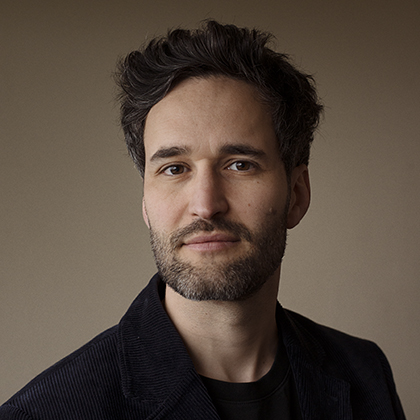
Daniel Susskind, Gresham Professor of Business
22nd September 2026
Even since the field of computing began, people have claimed that machines cannot be creative. In 1843, Ada Lovelace, writing about Charles Babbage’s proposed Analytical Engine – thought to be one of the first programmable computers – argued that the machine had “no pretensions whatever to originate anything”: it could only do what human beings knew how to instruct it to do. More than a century later, Alan Turing returned to what he called “Lady Lovelace’s objection” – the claim that a machine could never do anything genuinely new or take us by surprise. In short, a machine could never be creative.
Yet from the beginning of AI, there was another tradition as well. The researchers who gathered at Dartmouth in 1956 – a meeting that is often taken as the starting point for the field of AI – began from the adventurous claim that every aspect of intelligence could in principle be described precisely enough for a machine to simulate it. And one of those ‘aspects’ was creativity.
In one sense, that Dartmouth meeting was a great disappointment – no particular advance worth celebrating was made that summer. Nevertheless, a community formed, a direction of travel was established, and a handful of great minds began to work together. In time, an eclectic collection of different types of problems would be swept together under the banner of AI. And as time passed, more attempts were made to perform tasks requiring creativity from human beings.
One fascinating moment involved the cognitive scientist, Douglas Hofstadter. In his cult book Gödel, Escher, Bach, published in 1979, Hofstadter argued that a machine capable of producing music like a great human composer would somehow have to experience human life: joy and loneliness, grief and despair, determination and awe. Yet in 1997 he organized a musical experiment at the University of Oregon in which the attendees heard three pieces: one by Bach, one written by a human composer in the style of Bach, and one produced by David Cope’s computer program EMI, ‘Experiments in Musical Intelligence’. To his amazement, audience mistook the computer’s composition for Bach.
Nevertheless, for many years people remained skeptical. Despite remarkable achievements by AI, the conventional wisdom was that creativity could not be automated. But the turning point for many eventually came with AlphaGo’s victory over Lee Sedol in 2016. In the 2nd game, on the 37th move, AlphaGo made a now infamous move – one that has reshaped the way the game is taught. If a human player had made the move, we would have called it ‘creative’.
So was this AI acting ‘creatively’?
In this lecture, I argue that this is the wrong question to be asking. For most of the 20th century, AI researchers assumed that to machines had to copy human beings in order to outperform them. In part, this was because humans were the most capable ‘machines; in existence and so it made sense to try and copy them if you wanted to build powerful machines; partly because many early AI researchers saw themselves as’ cognitive scientists’ rather than ‘computer scientists’, whose ambition was to make sense of our minds.
Yet that assumption turns out to be misplaced. Just as an airplane does not need to flap its wings like a bird in order to fly and a submarine does not need fins and a tail in order to move underwater, AI does not need to copy or imitate how we think and reason in order to outperform us. And, in that spirit, an AI does not need to be ‘creative’ in the human sense in order to solve problems for which human beings have traditionally used their creativity.
In thinking about the future of creativity, this is critical. It means that the important question for us is not, ‘Can AI be creative?’, but instead, ‘Can AI solve the problem that human beings use creativity to solve?’. And in this lecture, I argue that the central problem is one of ‘originality’ – human beings use the faculty of creativity to produce something novel, surprising, original.
Can AI produce something original? The answer increasingly appears to be yes. Generative AI systems now readily produce original text, images, music and video. The implications of this are widespread and significant: practical, psychological, intellectual. But perhaps most important is what it means for intellectual property law – the collection of formal rules and regulations that protect people’s rights to their intellectual creations. This is the most important toolbox that societies have to shape the creation and distribution of ideas. And it is a deceptively dry term for one of the most profound questions we can ask about how we live together in society: who gets to own and control the ideas that we create?
© Professor Daniel Susskind 2026
Further Reading
Boden, Margaret, The Creative Mind: Myths and Mechanisms (2003)
Hofstadter, Douglas, Godel, Escher, Bach (1979)
Kasparov, Garry, Deep Thinking (2017)
Lessig, Larry, The Future of Ideas: The Fate of the Commons in a Connected World (2001)
Susskind, Daniel, A World Without Work (2020)
Susskind, Daniel, What Should My Children Do? How to Flourish in the Age of AI (2026)
Turing, Alan, ‘Computing machinery and intelligence’, Mind, 236 433-460 (1950)
AlphaGo – The Movie, (2017) [https://www.youtube.com/watch?v=WXuK6gekU1Y ]
Boden, Margaret, The Creative Mind: Myths and Mechanisms (2003)
Hofstadter, Douglas, Godel, Escher, Bach (1979)
Kasparov, Garry, Deep Thinking (2017)
Lessig, Larry, The Future of Ideas: The Fate of the Commons in a Connected World (2001)
Susskind, Daniel, A World Without Work (2020)
Susskind, Daniel, What Should My Children Do? How to Flourish in the Age of AI (2026)
Turing, Alan, ‘Computing machinery and intelligence’, Mind, 236 433-460 (1950)
AlphaGo – The Movie, (2017) [https://www.youtube.com/watch?v=WXuK6gekU1Y ]
This event was on Tue, 22 Sep 2026

Support Gresham
Gresham College has offered an outstanding education to the public free of charge for over 400 years. Today, Gresham College plays an important role in fostering a love of learning and a greater understanding of ourselves and the world around us. Your donation will help to widen our reach and to broaden our audience, allowing more people to benefit from a high-quality education from some of the brightest minds.