
 Login
Login





The White Knight: Ice
Share

- Details
- Text
- Audio
- Downloads
- Extra Reading
The polar regions are still some of the most inaccessible and least touched by humans, but they are deeply linked to the rest of Earth. We will cover the history of exploring them, the challenges of measuring this environment, and the current state of knowledge about the ice at both poles. We will also cover the likely future for the polar regions – the incentives driving different actions, what science suggests about the consequences, and coming events to look out for.
Download Text

The White Knight: Ice
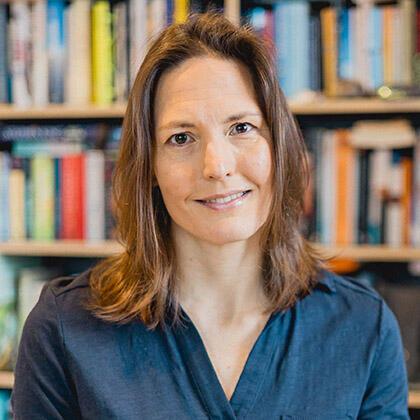
Professor Helen Czerski
21st May 2026
Ice plays a critical role in shaping Earth’s climate, but physical hazards and remote locations mean that most icy regions are relatively inaccessible to humans. The earliest polar science was done by western explorers who were often keen to emphasize the value of the environmental measurements they made. This was not without compromise: famously Captain Scott (with competing aims of geographical exploration, scientific measurements and being first) was beaten to the South Pole by Amundsen (whose primary focus was reaching the Pole). The most creative and original polar expedition was led by Fridjhof Nansen in 1893-1896, who designed a ship called Fram (“Forward”) to be deliberately frozen into the Arctic Sea ice. The expedition succeeded in proving the existence of the Transpolar Drift and set a new record for the Furthest North, but failed to reach the North Pole. Over the 130 years since Nansen returned home, modern ships, satellites, underwater autonomous vehicles and a huge scientific effort have revealed the complexity of both ice itself and ice-dominated environments. Scientific progress on this topic is now more urgent than ever, as climate change reduces the quantity of ice on Earth before we fully understand what is being lost.
Ice Physics
Water ice has a number of very distinctive physical features that are critical to its function within the Earth system. Most significantly, water ice floats on the liquid it froze from, which is exceptionally unusual – almost all solids are more dense than the liquid they formed from and would therefore sink. This matters because the frozen ice stays at the surface, acting both to insulate the ocean surface and to reflect light. Pure ice is a very dramatic blue, but we rarely see that colour because whether ice is formed by the slow accumulation of snow or by the ocean surface freezing, it’s full of internal channels, bubbles and boundaries. This internal structure strongly influences its reflectivity or “albedo”, so sea ice reflects about 60% of the light falling on it while fresh snow reflects 90%. When sea ice freezes, it also rejects salt, effectively “unmixing” salt from the ocean and providing a mechanism for different water masses in the ocean to have different salinities. Finally, freezing and thawing water ice requires a colossal quantity of energy to be ejected or absorbed (known as “latent heat”). This allows ice to act as a buffer, limiting temperature change while storing or giving up energy.
Where ice is
Large quantities of ice are found as sea ice, glaciers, icebergs and ice sheets. Although glaciers are distributed around the world and are often an important water source for communities living downstream, we will focus here on polar ice. Together, the Arctic and Antarctic ice sheets contain more than 99% of the land ice and more than 68% of all the fresh water on Earth. However, they are dynamic systems, and although ice in the centre of these ice sheets can be very old, there is a constant exchange going on at the edges. Even if we were not warming the planet, icebergs would calve naturally as glaciers flow downwards under gravity to the ocean. However, climate change is threatening the stability of ice sheets. In recent years, the news has covered enormous icebergs (which can be 100km long) breaking away from Antarctica and floating out into the ocean. They can last for several years, and recent science demonstrates that they change the environment around them, mixing nutrients upwards and causing phytoplankton blooms in their wake.
MOSAiC
The MOSAiC expedition took place over a year from September 2019 until September 2020, continuing through the pandemic (with some modifications to the original plan). The aim of this huge international experiment was to re-create Nansen’s original drift experiment on Fram, freezing a ship into the sea ice in the Arctic ocean, and being carried by the Transpolar Drift for a whole year. One year was sufficient for this, both because there is less ice in the Arctic now than in 1893 and because modern icebreakers made it easier to control the entry and exit points. The German ship Polarstern was the centre of the experiment, but six other ships were involved in either working nearby or ferrying scientists to and from the drift site over the year. Overall 442 people took part, from 20 nations, following the Arctic sea ice, weather, biology and oceanography throughout the polar night. The data from this enormous effort is still being analysed and published, but it will provide an enormously valuable baseline for the years to come.
Changing Ice
We are all familiar with the general picture: sea ice is in dramatic decline as the climate warms, and there is a clear correlation between greenhouse gas emissions and sea ice loss. But we now know that the biology and chemistry of changing polar oceans also matter, not just the physics. In particular, as pollution increases dark particulates can settle on ice surfaces, causing it to absorb more solar energy and therefore warm. Understanding these feedbacks is critical for predicting the future, but the big message is clear: reducing greenhouse gas emissions is the most direct route to ensure that Earth’s ice is still playing its role in the climate system in the future.
©Helen Czerski
References and Further Reading
Nansen and the Fram
Nansen, Fridjtof. Farthest north: The incredible three-year voyage to the frozen latitudes of the north. Modern Library, 2000. Available online here: https://www.gutenberg.org/files/30197/30197-h/30197-h.htm
Fram Museum expedition webpage: https://frammuseum.no/polar-history/expeditions/the-first-fram-expedition-1893-1896/
Ice Physics
Rudels, B., and E. Carmack. 2022. Arctic ocean water mass structure and circulation. Oceanography 35(3–4):52–65, https://doi.org/10.5670/oceanog.2022.116.
Zawierucha, Krzysztof, et al. "What animals can live in cryoconite holes? A faunal review." Journal of Zoology 295.3 (2015): 159-169.
Where Ice Is
Turney CSM. Why didn’t they ask Evans? Polar Record. 2017;53(5):498-511. doi:10.1017/S0032247417000468
Headland RK. Captain Scott’s last camp, Ross Ice Shelf. Polar Record. 2011;47(3):270-270. doi:10.1017/S0032247410000380
Taylor, L.R., Pryer, H., Hendry, K.R. et al. Giant iceberg behaviour impacts regional biogeochemical cycling in the Southern Ocean. Commun Earth Environ 7, 353 (2026). https://doi.org/10.1038/s43247-026-03440-z
MOSAiC
MOSAiC website: https://mosaic-expedition.org/
Blog with photos comparing the Fram 1893 expedition with MOSAiC: https://framsenteret.no/retrospective-drifting-with-ice-from-the-schooner-fram-to-ultramodern-rv-polarstern/
MOSAiC: Overview of ice: Nicolaus, Marcel, et al. "Overview of the MOSAiC expedition: Snow and sea ice." Elem Sci Anth 10.1 (2022): 000046.
Changing Ice
Webster, Melinda A., et al. “Observing Arctic Sea Ice.” Oceanography, vol. 35, no. 3/4, 2022, pp. 29–37.
Meier, Walter N., and Julienne Stroeve. “An Updated Assessment of the changing Arctic Sea Ice Cover” Oceanography, vol. 35, no. 3/4, 2022, pp. 10–19.
Serreze, Mark C., et al. "The observed evolution of Arctic amplification over the past 45 years." The Cryosphere 20.1 (2026): 411-425.
Hotaling, Scott, et al. "Biological albedo reduction on ice sheets, glaciers, and snowfields." Earth-science reviews 220 (2021): 103728.
Lucas, Natasha S., et al. "Giant iceberg meltwater increases upper-ocean stratification and vertical mixing." Nature Geoscience 18.4 (2025): 305-312.
Sea ice updates from the Copernicus satellites: https://climate.copernicus.eu/sea-ice
The Future
Zhao, P., Li, Y. & Zhang, Y. Ships are projected to navigate whole year-round along the North Sea route by 2100. Commun Earth Environ 5, 407 (2024). https://doi.org/10.1038/s43247-024-01557-7
© Professor Helen Czerski 2025/6
Nansen and the Fram
Nansen, Fridjtof. Farthest north: The incredible three-year voyage to the frozen latitudes of the north. Modern Library, 2000. Available online here: https://www.gutenberg.org/files/30197/30197-h/30197-h.htm
Fram Museum expedition webpage: https://frammuseum.no/polar-history/expeditions/the-first-fram-expedition-1893-1896/
Ice Physics
Rudels, B., and E. Carmack. 2022. Arctic ocean water mass structure and circulation. Oceanography 35(3–4):52–65, https://doi.org/10.5670/oceanog.2022.116.
Zawierucha, Krzysztof, et al. "What animals can live in cryoconite holes? A faunal review." Journal of Zoology 295.3 (2015): 159-169.
Where Ice Is
Turney CSM. Why didn’t they ask Evans? Polar Record. 2017;53(5):498-511. doi:10.1017/S0032247417000468
Headland RK. Captain Scott’s last camp, Ross Ice Shelf. Polar Record. 2011;47(3):270-270. doi:10.1017/S0032247410000380
Taylor, L.R., Pryer, H., Hendry, K.R. et al. Giant iceberg behaviour impacts regional biogeochemical cycling in the Southern Ocean. Commun Earth Environ 7, 353 (2026). https://doi.org/10.1038/s43247-026-03440-z
MOSAiC
MOSAiC website: https://mosaic-expedition.org/
Blog with photos comparing the Fram 1893 expedition with MOSAiC: https://framsenteret.no/retrospective-drifting-with-ice-from-the-schooner-fram-to-ultramodern-rv-polarstern/
MOSAiC: Overview of ice: Nicolaus, Marcel, et al. "Overview of the MOSAiC expedition: Snow and sea ice." Elem Sci Anth 10.1 (2022): 000046.
Changing Ice
Webster, Melinda A., et al. “Observing Arctic Sea Ice.” Oceanography, vol. 35, no. 3/4, 2022, pp. 29–37.
Meier, Walter N., and Julienne Stroeve. “An Updated Assessment of the changing Arctic Sea Ice Cover” Oceanography, vol. 35, no. 3/4, 2022, pp. 10–19.
Serreze, Mark C., et al. "The observed evolution of Arctic amplification over the past 45 years." The Cryosphere 20.1 (2026): 411-425.
Hotaling, Scott, et al. "Biological albedo reduction on ice sheets, glaciers, and snowfields." Earth-science reviews 220 (2021): 103728.
Lucas, Natasha S., et al. "Giant iceberg meltwater increases upper-ocean stratification and vertical mixing." Nature Geoscience 18.4 (2025): 305-312.
Sea ice updates from the Copernicus satellites: https://climate.copernicus.eu/sea-ice
The Future
Zhao, P., Li, Y. & Zhang, Y. Ships are projected to navigate whole year-round along the North Sea route by 2100. Commun Earth Environ 5, 407 (2024). https://doi.org/10.1038/s43247-024-01557-7
© Professor Helen Czerski 2025/6
This event was on Thu, 21 May 2026
Support Gresham
Gresham College has offered an outstanding education to the public free of charge for over 400 years. Today, Gresham College plays an important role in fostering a love of learning and a greater understanding of ourselves and the world around us. Your donation will help to widen our reach and to broaden our audience, allowing more people to benefit from a high-quality education from some of the brightest minds.