
 Login
Login

Dionysus: Lord of Misrule
Share

- Details
- Text
- Audio
- Downloads
- Extra Reading
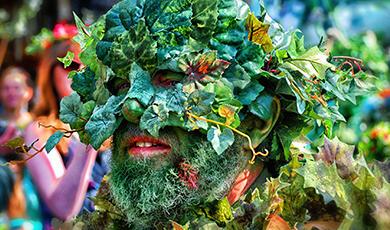
The ancient Greeks themselves were never comfortable about their god Dionysus, or Bacchus, treating him as a foreign intruder. This is because he was patron of wine, with all its exciting, convivial and destructive effects. As such he was associated with community, sociability, reconciliation, inspiration and salvation, but also with madness, violence, transgression and fear. He was both the ultimate party animal and the leader of the hippies from hell. This lecture steers a course through his various different attributions, to see if a unity and logic can be found at the heart of them.
Download Text

Dionysus: Lord of Misrule
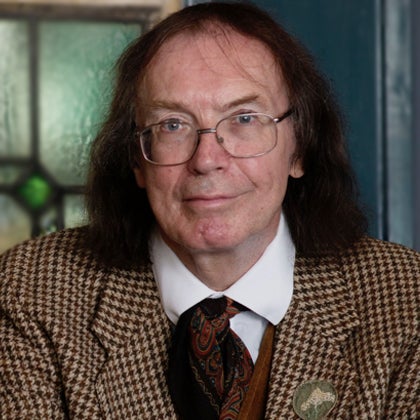
Professor Ronald Hutton
6 May 2026
Dionysus is one of the oldest recorded Greek gods, appearing on the Bronze Age Linear B tablets dating from the fourteenth century BCE. This is significant because in later historic times Greeks preferred to regard him as a newcomer and a foreigner. In other words, although he had been part of their religion since prehistory, they were never really comfortable with him. This was because he stood for something that they found both indispensable and disturbing, and often felt that they should do without: alcohol, in their case specifically wine. This talk is devoted to exploring this vexed relationship, concentrating not on mythology, literature or art, but on actual cult. There are some serious casualties of this approach, such as his wife Ariadne, who is prominent in the first three areas, but not that of worship. However, looking at how people actually interacted with him reveals more of his nature.
For one thing it shows that he was rooted in an economic reality, the cultivation of grape vines. He was often represented as a tree and his shrines were caves or groves more often than actual temples. Just as vines are cut back and then regrow, so he was a god who conquers death, and just as the regrowth happens in the spring, so he was seen as a youthful and energetic deity of springtime. In Athens he had two spring festivals, the Anthesteria, when he entered the city in a ship, and the City Dionysia, when he was accepted into its community. In autumn a third, the Oschosphoria, celebrated the grape harvest. His festive season was therefore the growing time of the year.
He was also seen as a unifying and reconciling force within a community. As he entered Athens, prisoners and slaves were freed, and at the Oschophoria landowners joined their labourers to fetch in the grapes. He reconciled rival communities, his shrines being places for the arbitration of disputes. He was the Greek god most concerned with humanity, and as part of his sociability the only one to travel with a retinue of followers. He was also however deeply scary, which is clearly related to the propensity of alcohol to cause disorder and misbehaviour. Pagan deities often had traumatic family histories and life stories, but Dionysus outdid the rest, as his mother was incinerated by his father and he was then eaten as a baby by monsters and magically reborn. This theme of destruction and regeneration of course relates to the reality of farming. Likewise Dionysus was seen as wrecking the old in human affairs in order to create the news. His whole mythological entourage was dangerous, functioning like an army. His second in command was Silenus, his fat, drunken and irresponsible former tutor, and his followers consisted of satyrs, half-human, half-animal males who were professional trouble-makers, and maenads, a demented and violent variety of nymph who tore animals to pieces and ate them raw. His favourite animals were the bull and the leopard, both exceptionally dangerous.
This leads us to his next aspect, as the greatest of divine transgressors. He was a natural breaker of barriers, boundaries and rules. He privileged women, the sex who were excluded from public life and confined to the home in much of Greece. The heart of the Anthesteria was a secret rite conducted by a group of them on behalf of the city. At Bryseai only women were allowed to enter the interior of his temple. Increasingly across the Greek world all-female clubs were dedicated to him, members of which went into the countryside to honour him in hidden (and reputedly wild) rites. They were called bacchants, after his alternative Greek name of Bacchus.
Another major aspect of Dionysus was his ambiguity, mirroring the positive and negative aspects of alcohol. Reasonable people made the point that his gifts could be best enjoyed by exercising self-restraint, responsibility and moderation- in effect watering the wine, as every civilized Greek did. The philosopher Socrates called him a divine helper in the search for a well-balanced life. Another philosopher, Plato, made him the patron of poets, as creative inspiration could be related to inebriation. He was certainly the patron of Athenian drama, one of ancient Greece’s greatest gifts to the world, which developed out of the City Dionysia festival in the course of the fifth century BCE. He was one of the most dynamic of gods, seen as always restlessly moving in and out of cities and from one land to another.
His final role in the ancient world was to become the focus for a mystery religion, a variety of worship which consisted of closed societies entered by initiation and dedicated to fostering a close relationship with a particular deity or pair of them. These offered personal transformation and growth, and the prospect of a better existence after death. The mystery cult of Dionysus appears in the record in the fifth century BCE and almost immediately spread across the Greek world. Its initiation rite seems to have been particularly gruelling, involving a surrender to madness, before sacred objects were taken from a basket and shown to the initiate. One was a model erect phallus, to represent the life force. As a god who had died and returned himself, and who broke boundaries, Dionysus had special qualifications to help worshippers into a better afterlife. There seems to have been a common idea that his followers had a special region of flowering meadows reserved for them in the world of the dead.
Clearly Dionysus was one of the most complex, ambiguous and multifaceted of Greek deities. In essence, his enduring appeal is that his worship encouraged drinking, wild dancing, wild music and sex. We have to ask, what’s not to like? The answer, of course, is ‘all of the above’, because all of them (and especially the drink) can lead to trouble.
© Professor Ronald Hutton 2025
References and Further Reading
Seaford, Richard. Dionysus. 2006.
Schlieser, Renate. A Different God? Dionysos and Ancient Polytheism. 2012.
Herrero de Jáuregui, Miguel, et al., ed. Redefining Dionysos. 2013.
Seaford, Richard. Dionysus. 2006.
Schlieser, Renate. A Different God? Dionysos and Ancient Polytheism. 2012.
Herrero de Jáuregui, Miguel, et al., ed. Redefining Dionysos. 2013.
This event was on Wed, 06 May 2026
Support Gresham
Gresham College has offered an outstanding education to the public free of charge for over 400 years. Today, Gresham College plays an important role in fostering a love of learning and a greater understanding of ourselves and the world around us. Your donation will help to widen our reach and to broaden our audience, allowing more people to benefit from a high-quality education from some of the brightest minds.