
 Login
Login

The Dictionary City: Londoners and the Oxford English Dictionary
Share

- Details
- Text
- Audio
- Downloads
- Extra Reading
The creation of the Oxford English Dictionary was one of the world's first crowd-sourced projects in the nineteenth century. People from all around the world sent in their local words, but no city played a more important role than London. In this lecture, Professor Sarah Ogilvie, author of The Dictionary People: the unsung heroes of the Oxford English Dictionary, tells the fascinating stories of some of the hundreds of
Londoners who helped create the world's largest English dictionary. She has unearthed a fascinating group of people across all social classes who represent some of the most interesting contributors to the Dictionary from all parts of this great city one hundred and fifty years ago. From a pornographer living in Bloomsbury who sent in sex words, to a servant in Eaton Square, a suffragist in St John's Wood, a plant expert at Kew Gardens, a coin specialist at the Royal Mint, and - yes! - a Gresham Professor of Geometry, this is a people's history of one of our most famous books.
Download Text

Londoners and the Oxford English Dictionary
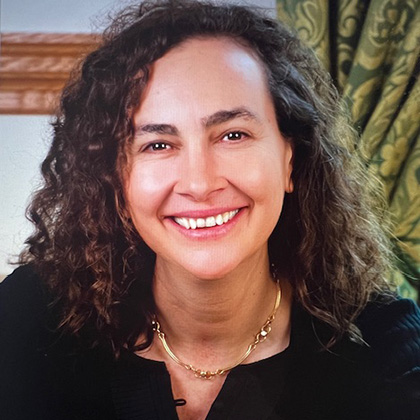
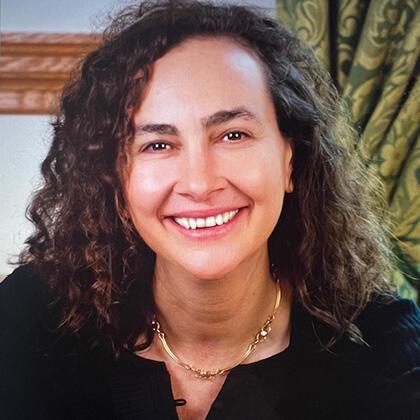
Professor Sarah Ogilvie
London may not immediately spring to mind when we think of locations of famous dictionaries, but the city deserves to be recognized as a major hub in lexicographical history. Not only was it where Samuel Johnson created his famous dictionary in 1755, but London was also where the Oxford English Dictionary (OED) first started in 1858, and - more importantly for this lecture -it was where hundreds of Londoners generously volunteered to help in the dictionary's creation.
Indeed, the making of the Oxford English Dictionary in the nineteenth century was one of the world's first crowd-sourced projects. Over a period of seventy years, from 1858 until 1928, the project depended on the kindness of volunteers from all around the world who read their local books and sent in their local words. No city played a more important role than London.
Hundreds of Londoners from all parts of the city helped gather words and quotations, subedited portions of the dictionary, and gave advice on words from all subject areas and semantic categories. This was truly a work of collaboration which drew on the efforts of a female archaeologist at University College London; a specialist in sound and music who lived on Argyll Road, Kensington; an obsessive-compulsive in Primrose Hill who sent in thousands of words relating to the human body; a Gresham professor of geometry; a businessman in Bloomsbury who owned the world's largest collection of pornography (and sent in sex words); a promising young medical student at London's University College Hospital and St Pancras Infirmary who was addicted to cocaine and was found dead in a railway station; and the contributions of not one but three murderers - one of whom ended up living in south-west London at Kingston upon Thames where he built a miniature scale reproduction of the American Great Lakes in his back garden.
Many of these people were eccentric and unusual, and many were self-educated. Most of them were not the professionals and famous scholars whom you might expect. Rather, the creation of the OED was a project of dedication and devotion by thousands of amateurs and unknowns, many of whom were women, many of whom (like the longest-serving editor himself, James Murray) had no formal education beyond the age of fourteen. But all of them - from a servant in Eaton Square to a suffragist in St John's Wood - possessed a startling enthusiasm for the emerging dictionary and an ardent desire to document their language. Helping the OED provided a chance to be associated with a prestigious project attached to a famous university which symbolized the world of learning from which they were otherwise excluded.
The dictionary people of London could be cranky, difficult, and eccentric - as James Murray often found out - but that, paradoxically, also makes them lovable, or at least fascinating. Recognition of their efforts is long-overdue. This lecture shines a light on these unsung heroes, finally giving them credit for all they did to help create the world's largest English dictionary.
Some key dates:
1604 first monolingual dictionary of English A Table Alphabeticall by Robert Cawdrey
1755 Samuel Johnson's Dictionary of the English Language was created at 17 Gough Square, London
1857 Richard Chenevix Trench delivers a paper On Some Deficiencies in Our English Dictionaries to the London Philological Society
1858 Richard Chenevix Trench, Frederick Furnivall, and Herbert Coleridge propose creating a New English Dictionary (later known as the Oxford English Dictionary), and the London Philological Society agrees
1859 Herbert Coleridge becomes the first editor of the OED
1861 Herbert Coleridge dies, and Frederick Furnivall takes over as Chief Editor
1879 Frederick Furnivall hands over the editorship of the dictionary to James Murray, a school master at Mill Hill School
1884 James Murray and the dictionary moves to Oxford
1915 James Murray dies
1928 Oxford English Dictionary is finally published, 70 years after it began
© Sarah Ogilvie 2026
Further Reading:
Sarah Ogilvie, The Dictionary People: the unsung heroes who created the Oxford English Dictionary, London: Chatto and Windus, 2023
Speaker:
Sarah Ogilvie is Professor of Language and Lexicography at the University of Oxford. A former editor on the Oxford English Dictionary, her most recent book is The Dictionary People: The Unsung Heroes Who Created the OED (Chatto and Windus). She is also author of Words of the World (Cambridge University Press), co-author of Gen Z, Explained (University of Chicago Press), editor of The Cambridge Companion to English Dictionaries, and co-editor of The Whole World in a Book (Oxford University Press).
Sarah Ogilvie, The Dictionary People: the unsung heroes who created the Oxford English Dictionary, London: Chatto and Windus, 2023
This event was on Thu, 16 Apr 2026
Support Gresham
Gresham College has offered an outstanding education to the public free of charge for over 400 years. Today, Gresham College plays an important role in fostering a love of learning and a greater understanding of ourselves and the world around us. Your donation will help to widen our reach and to broaden our audience, allowing more people to benefit from a high-quality education from some of the brightest minds.