Gresham College provides outstanding educational talks and videos for the public free of charge. There are over 2,500 videos available on our website. Your support will help us to encourage people's love of learning for many years to come.
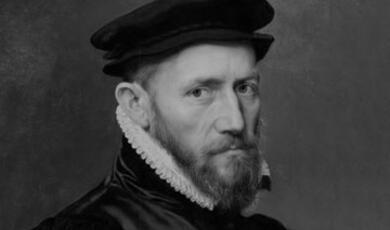
Dr John Guy presents a special illustrated lecture to commemorate the 500th Anniversary of the birth of the College’s founder and benefactor Sir Thomas Gresham.
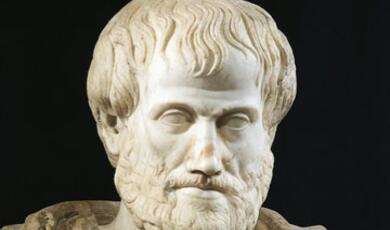
This lecture looks at the archaeological site of the Lyceum, discovered accidentally in 1996, and asks how the remains can illuminate Aristotle’s life, work, and incomparable contribution across academic disciplines, from Political Theory and Aesthetics to Zoology, Physics and Astronomy.

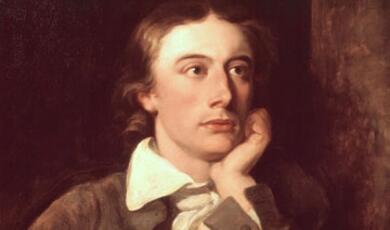
Jonathan Bate will track Keats to Hampstead and tell of the extraordinary circle of writers – opium-eater Thomas De Quincey, essayist Charles Lamb, master-critic William Hazlitt – who wrote for The London Magazine, until its gifted editor was killed in a duel with a rival critic.
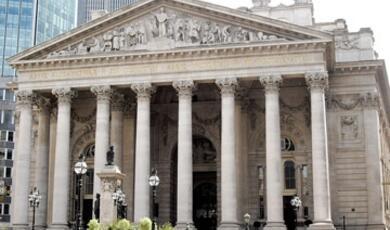
Why did Gresham finance and build it? What did Londoners (and others) do there? And what does the Exchange tell us about Gresham's ambitions both for himself and for London?
The last 500 years of progress in maths will be reviewed, to see where it is going next and ask whether we are truly living in a mathematical Golden Age.
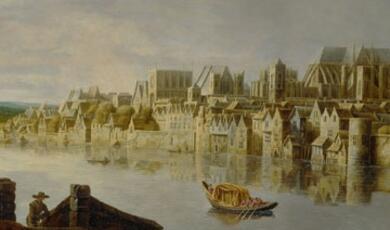
Drawing on evidence from contemporary maps, paintings and writings, and modern environmental science, the lecture will offer a 'virtual' walk around the City with Sir Thomas Gresham.
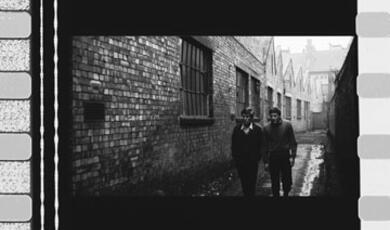
In the 1960s, British filmmakers broke out of the studio to find new subjects among the young, fashionable and disadvantaged, seen in their natural habitats – not only in the North and Midlands, but in unfamiliar parts of London.
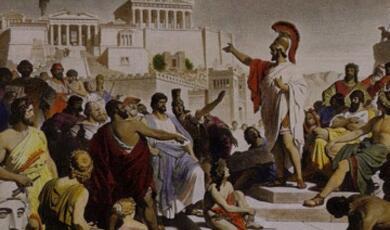
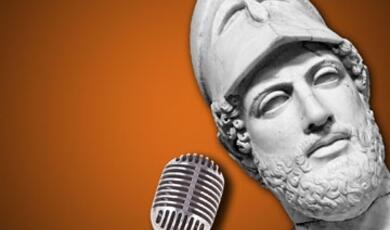
In 431 BCE the Athenian statesman Pericles delivered one of the most influential speeches of all time, his Epitaphios or Funeral Oration. The occasion was at the funeral of the first Athenian soldiers to lose their lives in the Peloponnesian War.
Britain’s pioneer filmmaker, born 150 years ago in North London, vividly portrayed the variety of life in ‘the imperial metropolis’ at the end of the 19th century, conscious of its historic appeal but also emphasising the modernity of which he was a part.