Gresham College provides outstanding educational talks and videos for the public free of charge. There are over 2,500 videos available on our website. Your support will help us to encourage people's love of learning for many years to come.
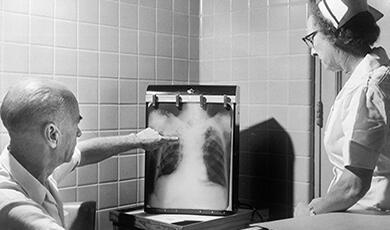
Some diseases are specialised in using sexual behaviour for transmission. Major pandemics including HIV and syphilis have been transmitted via this route, along with the cancer-causing infections Hepatitis B and HPV. Along with these are highly transmissible diseases such as gonorrhoea and herpes. Another way people share bodily fluids is via needles, and several diseases can be transmitted this way, including HIV and Hepatitis. Changing sexual behaviour is hard, so other methods have to be found to control these diseases.
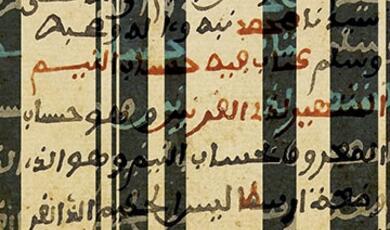
The Malian city of Timbuktu is one of the world's oldest seats of learning and has an intellectual legacy of hundreds of thousands of manuscripts, coming from three great West African desert empires. These manuscripts offer a unique window into their history. This lecture will look at how their study can be used to advance our knowledge of the intellectual history of the premodern world.
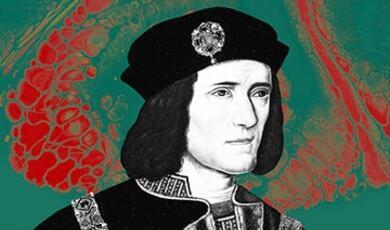
The skeleton of Richard III was discovered beneath a Leicester car park in 2012. Forensic techniques were used to analyse injuries to the skull, rib and pelvis.
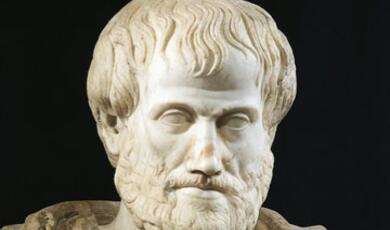
This lecture looks at the archaeological site of the Lyceum, discovered accidentally in 1996, and asks how the remains can illuminate Aristotle’s life, work, and incomparable contribution across academic disciplines, from Political Theory and Aesthetics to Zoology, Physics and Astronomy.

Excavations have recently uncovered much evidence of Roman London, including fragments of 405 waxed stylus writing-tablets that can be dated to AD 50-90. Roger Tomlin explains how he deciphered the tablets and what can be learned from them.
Roman London was founded on the banks of the Thames to take advantage of the tidal river for traffic trade and communications. But precisely where were the bridge and the harbour, and what did they look like?
Examples of disease as shown in artworks will be examined, from the medical and surgical point of view as well as the historical and artistic ones, particularly visual loss as portrayed by artists from pre-historic times.