Gresham College provides outstanding educational talks and videos for the public free of charge. There are over 2,500 videos available on our website. Your support will help us to encourage people's love of learning for many years to come.
For nearly seventy years, what might be called ‘the canon’ of greatest films has been arbitrated by an international poll of critics delivering a ‘ten best’ list every decade, published in the BFI’s Sight & Sound.
China’s media provide a window into the Chinese mind, as the country asserts itself in the world as a great power. What do Chinese people think is the purpose of life? What matters most to them? In what do they believe? How do officials and journalists explain their responsibilities?
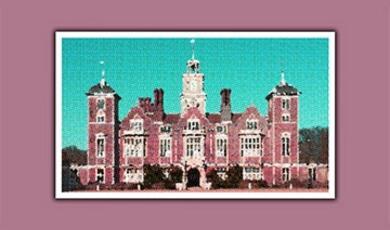
Father and son, William and Robert Cecil, not only dominated politics for much of Elizabeth I and James I reign but dominated architectural fashion. Building a series of spectacular houses, they, and not the monarchy, were the great palace builders of their age.

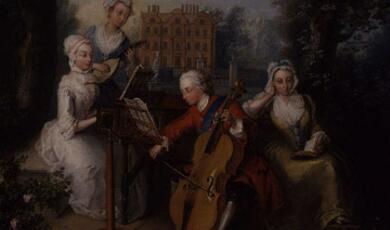
In 1920, Nellie Melba’s singing was transmitted to Europe and Newfoundland via the wireless. In 1922 the BBC began broadcasting, and from the outset sponsored new music and relayed outside broadcasts to the nation (and from 1932, to the world).
A family best known for producing one of England’s most famous queen consorts started out owning substantial estates in Norfolk before buying, and inheriting, a series of major houses close to London.
Stories about islands punctuate the careers of Michael Powell and Emeric Pressburger, from Powell’s breakthrough with Edge of the World (1936) to the Hebridean journey of I Know Where I’m Going! (1945), and the final act of their Tales of Hoffmann (1951).
World War Two set British filmmakers a challenge: to be relevant and entertaining and to inspire without patronising. Powell and Pressburger brought wit and imagination to their task, questioning what Britain stood for, warts and all.
This lecture explores how the partnership worked during the 1940s, drawing in collaborators from many backgrounds who also excelled, and benefiting from the extraordinary conditions of wartime Britain.
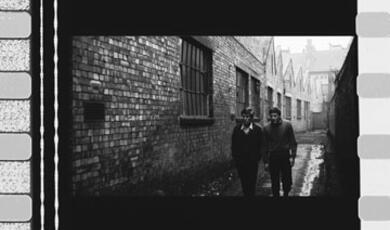
In the 1960s, British filmmakers broke out of the studio to find new subjects among the young, fashionable and disadvantaged, seen in their natural habitats – not only in the North and Midlands, but in unfamiliar parts of London.
The changing balance of power and wealth between the aristocracy and the monarchy from the sixteenth to the nineteenth century has fundamentally influenced today’s national cultural landscape of art and architecture.