Gresham College provides outstanding educational talks and videos for the public free of charge. There are over 2,500 videos available on our website. Your support will help us to encourage people's love of learning for many years to come.
Over the last 30 years, digital technology produced an exponential increase in astronomical data. Within our lifetime, the entirety of the visible universe will have been mapped out: we will have seen everything there is to see. The question will then be: what does it all mean?
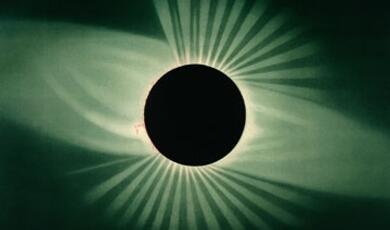
Accounts of occasional celestial spectacular events in past centuries have provided crucial information for modern-day astrophysicists. One such example is the so-called Great Eruption of Eta Carinae which was for a time in the mid 19th century the third brightest object in the night sky.
Well-trained eyes can be remarkably useful for capturing light curves of evolving objects in the cosmos, even contributing to modern research programmes.
At longer wavelengths than the normal optical wavelengths to which human eyes are normally sensitive, is the radio part of the electromagnetic spectrum.
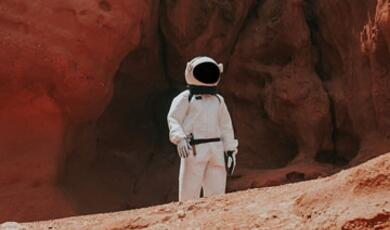
Mars has changed since it formed 4.6 billion years ago. When life started on Earth ~4 billion years ago, Mars was habitable too, with volcanism, a magnetic field, surface water and a thick atmosphere. Today, Mars is cold and dry, with a thin atmosphere and harsh surface.

In 1920, Nellie Melba’s singing was transmitted to Europe and Newfoundland via the wireless. In 1922 the BBC began broadcasting, and from the outset sponsored new music and relayed outside broadcasts to the nation (and from 1932, to the world).
This talk will consider how expectation plays a role in discovery and in scientific advance, and considers the challenges involved in assessing changes taking place on our own planet.
This lecture will present the endeavours of cosmologists and particle physicists, as they attempt to explain the fundamental nature of these mysterious dark components.