Gresham College provides outstanding educational talks and videos for the public free of charge. There are over 2,500 videos available on our website. Your support will help us to encourage people's love of learning for many years to come.
Charles Edward Stuart (‘Bonnie Prince Charlie’) is one of the most recognisable and romanticised figures of British history. Born in Rome as a Catholic prince on 31 December 1720, he led the Jacobite Rising of 1745, which came closer than anyone expected to changing Great Britain irrevocably.
Psychological studies show that humans overweight tangible factors and underweight intangible ones when making decisions. This talk shows how these biases affect the stock market – it focuses excessively on short-term profit, but ignores environmental, social and governance (ESG) factors.
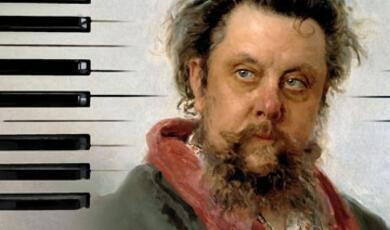
Musorgsky was a proficient, but not virtuosic pianist, and most of his piano music is comprised of unambitious salon pieces. On the basis of these modest exploits, no one could have predicted his Pictures at an Exhibition.
The Efficient Market Hypothesis argues that stock markets are rational – they take into account all relevant information, and incorporate it in an unbiased way. This talk will present evidence that stock prices are instead driven by human psychology.
The COVID-19 pandemic has been devastating. But one silver lining has been the tremendous responses from businesses and individual citizens, as we’ve realised how even small actions can have a substantial effect on society.
Like James I, King William III was fundamentally unhappy with the stuffy formality of England’s vast crumbling royal estate. But unlike James, who virtually abandoned Edinburgh, William maintained a second court, and a parallel suite of royal houses, in the Netherlands.

This talk will explore the “growth mindset”, the evidence-based view that talents are developed rather than genetic. It provides practical tips on how to develop new skills with limited time, and highlights the importance of pushing yourself outside your comfort zone.
This talk will explain how to discern what and who to trust, how to know whether evidence is causation or just a correlation, and how to overcome the temptation to accept views that we agree with.