Gresham College provides outstanding educational talks and videos for the public free of charge. There are over 2,500 videos available on our website. Your support will help us to encourage people's love of learning for many years to come.
This talk and panel discussion will explore the fundamentals of trust, why companies lower standards at their peril, and what, other than pious words, can be done to restore confidence that society has appropriate levels of commercial trust.
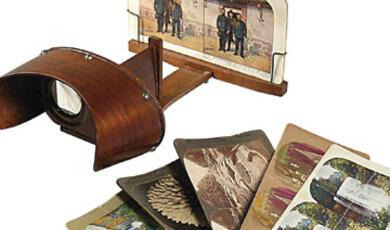
Stereoscopic photography rapidly became a worldwide craze after the Great Exhibition of 1851. Cheap viewers and mass-produced stereographs brought startlingly vivid images within reach of a mass audience, making this the form in which most people first encountered photography.
Housing represents the main asset class held by UK households and we shall try to understand why it is held as such a large share of assets. We shall then outline whether this choice has other knock on effects in the economy such as labour and social mobility.
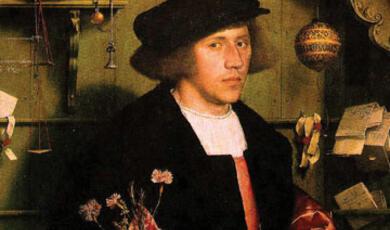
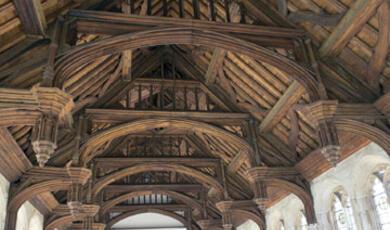
Simon Thurley, Visiting Professor of the Built Environment unearths the lost mercantile buildings of medieval London and shows how influential they were.
In the first of two lectures with the theme ‘Merchants, Money and Megalomania’, Simon Thurley will unearth the lost mercantile buildings of medieval London and show how influential they were.
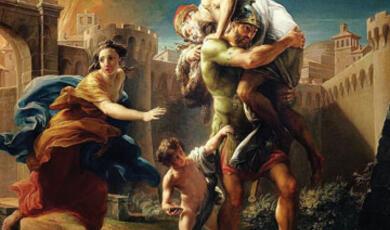
Homer’s Iliad, the earliest Greek poem, narrates the archetypal war between ‘Europeans’ and ‘Asiatics’ divided by the Hellespont. Looking at Wolfgang Peterson’s blockbuster Troy (2004), the lecture describes the genesis of the Iliad between the Mycenaean Late Bronze Age and the 8th centu

We will carefully outline the categories of savings held by households and link that to the operation of financial intermediaries in providing loanable funds.
Productivity growth in the UK economy has lagged behind that of our major trading partners. We will examine a number of possible explanations ranging from the role of finance to the employment of physical and human capital.
An economic model for news that have existed for 200 years or more is disappearing. Are we facing the prospect of societies without 'news' as previously understood? And why does it matter?