Gresham College provides outstanding educational talks and videos for the public free of charge. There are over 2,500 videos available on our website. Your support will help us to encourage people's love of learning for many years to come.
We often think that leaders are particularly strong in decision making – that’s why they’ve made it to the top. But evidence shows that even senior executives are prone to psychological biases, such as overconfidence, groupthink, and applying one-size-fits-all rules.
Clinical practice depends on the acquisition and analysis of evidence - detailed information from each patient’s clinical history, laboratory tests, imaging scans and biopsies. Yet data on its own is not enough, and must always be interpreted in the context of each unique person.
Sound investment decisions are critical for our long-term financial future. But psychological biases can lead investors to make costly mistakes – overconfidence can cause them to trade too much, and the reluctance to take a loss can encourage them to throw good money after bad.
Psychological studies show that humans overweight tangible factors and underweight intangible ones when making decisions. This talk shows how these biases affect the stock market – it focuses excessively on short-term profit, but ignores environmental, social and governance (ESG) factors.
The 2020 Annual Lord Mayor’s Gresham event will explore the value of culture for The City of London. The City of London is not only a great place to do business but also has a rich and vibrant cultural offer making it a great place to live, learn, work and visit.
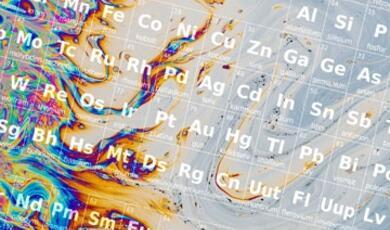
In this talk, Dr Wilkins will discuss the astrophysical origins of the chemical elements, almost all of which have an origin ranging from the big bang, to exploding white dwarfs, the collapse of massive stars, and the merger of ultra-compact objects, neutron stars.

The origin of life is one of the biggest questions in science, but until recently it was, experimentally, a question in chemistry. Now, gene sequences and a better understanding of cell growth under extreme conditions are giving insights from biology.
This talk will discuss rigorous evidence on what optimal governance should look like – including issues such as boardroom diversity, independence of directors, employee representation, and whether directors’ fiduciary duty should be to shareholders or all of society.