Gresham College provides outstanding educational talks and videos for the public free of charge. There are over 2,500 videos available on our website. Your support will help us to encourage people's love of learning for many years to come.
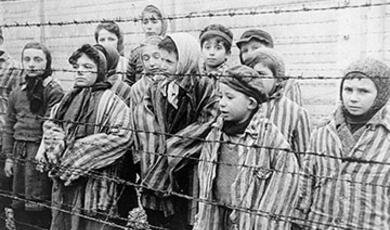
The 2020 Alfred Wiener Holocaust Memorial Lecture Series - 2020 marks the 75th anniversary of the liberation of Auschwitz, the most lethal of all Nazi camps.
Drones are changing the face of war in the 21st century for combatants and civilians. Today drones carry out targeted assassinations, bombings and intelligence-gathering, and the forces that deploy them aim to minimise the loss of life.
Air pollution, the usefulness of trees, ideas for a green belt are not concerns we associate with the 1600s. But John Evelyn, writer, diarist and gardener, was unusual. His thinking in Fumifugium (1661) about air quality, and Sylva (1664) about trees, seems astonishingly close to our own today.

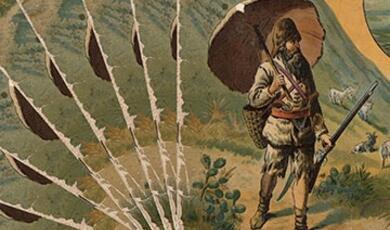
How does fiction make itself seem like fact? Professor John Mullan begins where novels begin: with Defoe’s Robinson Crusoe, which showed every novel that followed how to make a ‘strange surprising’ story seem entirely ‘probable’ (the word that eighteenth-century pioneers of fiction liked t
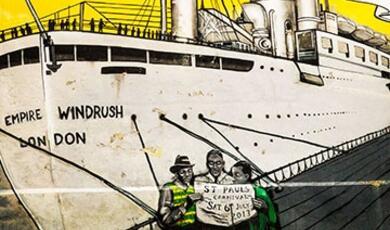
London in the 1950s and 60s was a crucible in which West Indian writers, artists, thinkers and scholars imagined new futures for the Caribbean, Britain and the world.
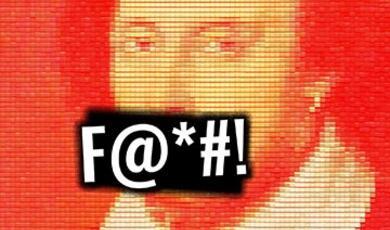
From The Merchant of Venice to The Taming of the Shrew, it’s easy to see how Shakespeare’s plays can cause offence to contemporary audiences. Is it harder to teach Shakespeare today than in the past? Have ideas about what is offensive in Shakespeare changed over time?
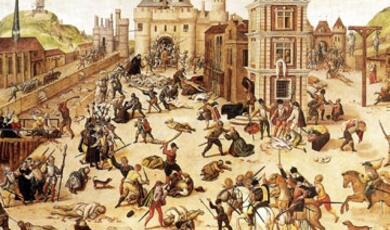
Europe’s Wars of Religion were fought against entire populations, and were punctuated by events remembered as atrocities: such as the siege of Leiden in 1573-4 or, most notoriously, the St Bartholomew’s Day Massacres in France in 1572.
The lecture will show how Prohibition animated combatants on both sides, generating two Americas that were barely comprehensible to each other, and how the truce declared during depression and war would not last.
Stories about islands punctuate the careers of Michael Powell and Emeric Pressburger, from Powell’s breakthrough with Edge of the World (1936) to the Hebridean journey of I Know Where I’m Going! (1945), and the final act of their Tales of Hoffmann (1951).
How do the different versions reflect the politics and culture of their own particular times? What makes a good Carol movie? Is it truth to the original or is it something else?