Gresham College provides outstanding educational talks and videos for the public free of charge. There are over 2,500 videos available on our website. Your support will help us to encourage people's love of learning for many years to come.
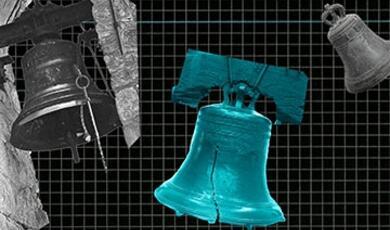
This lecture will look at change ringing, which is ringing a series of tuned bells (as you might find in the bell tower of a church) in a particular sequence, and this has exciting mathematical properties. We will also ask: why are bells bell-shaped?
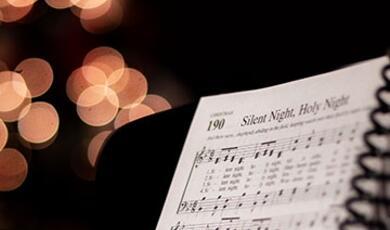
Boris Ord composed one tiny Christmas carol – ‘Adam lay ybounden’. But Ord’s largest contribution to the carol genre was his work as choirmaster at King’s College, Cambridge from 1929 to 1957.
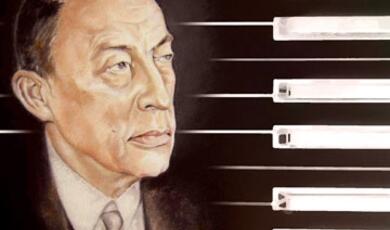
Rachmaninov is considered by many to be the greatest composer-pianist in history. But his very popularity has left the complexity and subtlety of his music underappreciated.
It has been known since antiquity that there are simple “harmonic” relationships between notes that sound appealing together. This lecture introduces the mathematics of pitch, scales, and just temperament. The pitch of a sound is not its only important property.

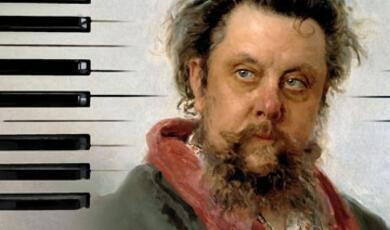
Musorgsky was a proficient, but not virtuosic pianist, and most of his piano music is comprised of unambitious salon pieces. On the basis of these modest exploits, no one could have predicted his Pictures at an Exhibition.
In 1920, Nellie Melba’s singing was transmitted to Europe and Newfoundland via the wireless. In 1922 the BBC began broadcasting, and from the outset sponsored new music and relayed outside broadcasts to the nation (and from 1932, to the world).
What are the opportunities for using Information Technology to reduce the cost of healthcare? And what might our healthcare system look like in 10 years time if we make judicious investments in technology?
In this final lecture, we will focus on one of the best-preserved Diaghilev productions, The Prodigal Son, a strikingly beautiful ballet by Prokofiev/Balanchine/Rouault.