Gresham College provides outstanding educational talks and videos for the public free of charge. There are over 2,500 videos available on our website. Your support will help us to encourage people's love of learning for many years to come.
A good night's sleep is anything but quiet: a myriad of processes occupy our brains, crucial for every aspect of our waking lives. Our increased understanding of the neuroscience of sleep – that sleep may not affect the brain in its entirety – provides a window into the human experiences of sleep deprivation, lucid dreaming, spiritual visitations and a range of clinical sleep disorders, such as insomnia, dream enactment and sleep paralysis.
Psychosis is a mental state where people experience a 'different' world. If, as clinical psychiatry and neuroscience suggests, it is our 'default mental state' why isn't everyone psychotic? Psychosis does not arise de novo; external sensory input and cognition actively inhibit its expression. It is important to understand: how thin the boundary is between sanity and madness and what leads from one to the other; and to appreciate the frailty of rational thought.
In this lecture we will review what is commonly called e-learning, including MOOCs, SPOOCs, flipping and DIYU, and see if there are any themes which emerge from the buzzword bingo that is digital learning.
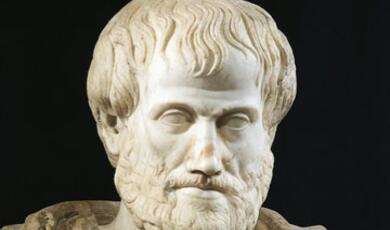
This lecture looks at the archaeological site of the Lyceum, discovered accidentally in 1996, and asks how the remains can illuminate Aristotle’s life, work, and incomparable contribution across academic disciplines, from Political Theory and Aesthetics to Zoology, Physics and Astronomy.

Mathematics education is changing rapidly and a big driver for this is the use of new technology. In this talk, we will look at the modern developments of computer based teaching and learning.
Professor Fletcher proposes that it can be understood in terms of the normal functioning of the mind, which seeks to construct a working model of reality even though it has very little direct contact with that reality.
Control measures including vaccination have reduced the risk of some, but not all, of these very serious infections. This lecture will cover how infections get into the brain, their effect and how we can prevent and treat them.
Professor Tallis seeks to rescue time from the jaws of physics, examining the claims that time is merely the fourth dimension of space-time, that there is a ‘passage’ of time or that time has a direction or arrow.