Gresham College provides outstanding educational talks and videos for the public free of charge. There are over 2,500 videos available on our website. Your support will help us to encourage people's love of learning for many years to come.
We often think that leaders are particularly strong in decision making – that’s why they’ve made it to the top. But evidence shows that even senior executives are prone to psychological biases, such as overconfidence, groupthink, and applying one-size-fits-all rules.
There is a seismic shift underway in economics, hastened by the aftermath of the Covid-19 pandemic. Communities and countries around the world are beginning to adopt/consider adopting well-being and prosperity as major guiding principles.
The story of the deep, biogeophysical planetary connections and how these are intensifying the effects of climate change and economic development, is told through personal research and expeditions to remote locations across the world (including some that were previously unexplored).
Air pollution, the usefulness of trees, ideas for a green belt are not concerns we associate with the 1600s. But John Evelyn, writer, diarist and gardener, was unusual. His thinking in Fumifugium (1661) about air quality, and Sylva (1664) about trees, seems astonishingly close to our own today.

Psychological studies show that humans overweight tangible factors and underweight intangible ones when making decisions. This talk shows how these biases affect the stock market – it focuses excessively on short-term profit, but ignores environmental, social and governance (ESG) factors.
The COVID-19 pandemic has been devastating. But one silver lining has been the tremendous responses from businesses and individual citizens, as we’ve realised how even small actions can have a substantial effect on society.
This talk will explore the “growth mindset”, the evidence-based view that talents are developed rather than genetic. It provides practical tips on how to develop new skills with limited time, and highlights the importance of pushing yourself outside your comfort zone.
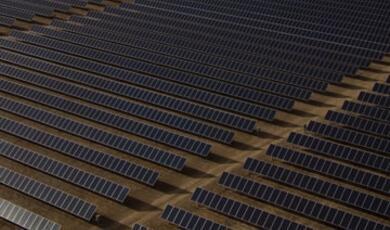
Environment Professor Jacqueline McGlade will examine how renewable energy systems, ranging from large scale hydroelectric dams, solar arrays and geothermal plants, to small-scale solar micro-grids can offer immense opportunities for climate mitigation and achieving a clean energy future.