Gresham College provides outstanding educational talks and videos for the public free of charge. There are over 2,500 videos available on our website. Your support will help us to encourage people's love of learning for many years to come.
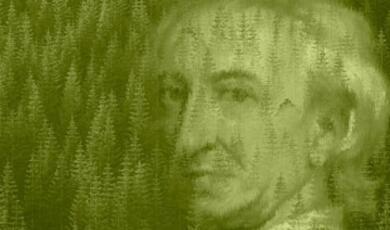
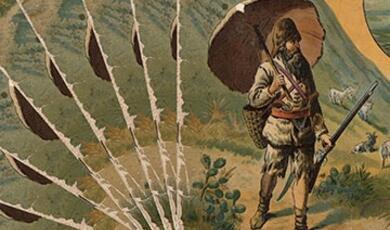
How does fiction make itself seem like fact? Professor John Mullan begins where novels begin: with Defoe’s Robinson Crusoe, which showed every novel that followed how to make a ‘strange surprising’ story seem entirely ‘probable’ (the word that eighteenth-century pioneers of fiction liked t
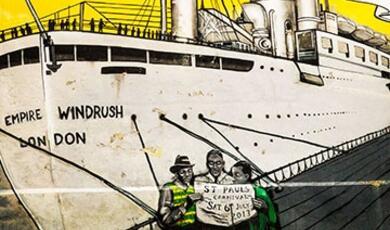
London in the 1950s and 60s was a crucible in which West Indian writers, artists, thinkers and scholars imagined new futures for the Caribbean, Britain and the world.
From The Merchant of Venice to The Taming of the Shrew, it’s easy to see how Shakespeare’s plays can cause offence to contemporary audiences. Is it harder to teach Shakespeare today than in the past? Have ideas about what is offensive in Shakespeare changed over time?
Environment Professor Jacqueline McGlade will examine how renewable energy systems, ranging from large scale hydroelectric dams, solar arrays and geothermal plants, to small-scale solar micro-grids can offer immense opportunities for climate mitigation and achieving a clean energy future.
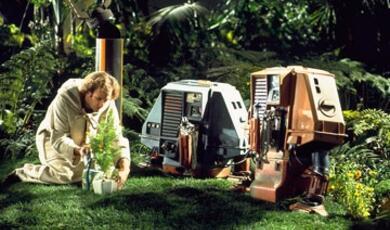
This lecture explores these notions through an examination of the film Silent Running (1972), which imagined gardens in space, in which the last remnants of Earth’s vegetation are preserved aboard gigantic spaceships.
Is gender equality a key factor in tackling climate change? Many think so, and in this lecture Environment Professor Jacqueline McGlade will explain why in relation to UN Sustainable Development Goal 5 is to 'achieve gender equality and empower all women and girls'.
This lecture examines the work of Hugo de Vries, a Dutch botanist who was one of the first to claim that science would allow plants and animals to be designed to order.
Stories about islands punctuate the careers of Michael Powell and Emeric Pressburger, from Powell’s breakthrough with Edge of the World (1936) to the Hebridean journey of I Know Where I’m Going! (1945), and the final act of their Tales of Hoffmann (1951).