Gresham College provides outstanding educational talks and videos for the public free of charge. There are over 2,500 videos available on our website. Your support will help us to encourage people's love of learning for many years to come.
China’s media provide a window into the Chinese mind, as the country asserts itself in the world as a great power. What do Chinese people think is the purpose of life? What matters most to them? In what do they believe? How do officials and journalists explain their responsibilities?
The story of the deep, biogeophysical planetary connections and how these are intensifying the effects of climate change and economic development, is told through personal research and expeditions to remote locations across the world (including some that were previously unexplored).
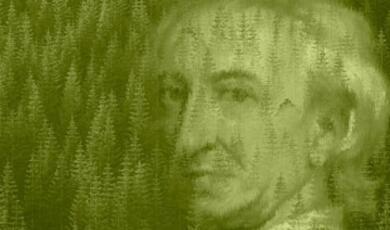
Air pollution, the usefulness of trees, ideas for a green belt are not concerns we associate with the 1600s. But John Evelyn, writer, diarist and gardener, was unusual. His thinking in Fumifugium (1661) about air quality, and Sylva (1664) about trees, seems astonishingly close to our own today.

In 1920, Nellie Melba’s singing was transmitted to Europe and Newfoundland via the wireless. In 1922 the BBC began broadcasting, and from the outset sponsored new music and relayed outside broadcasts to the nation (and from 1932, to the world).
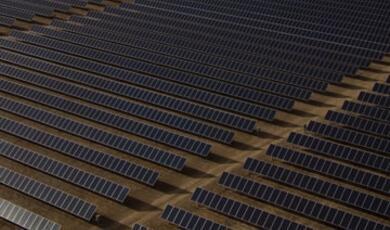
Environment Professor Jacqueline McGlade will examine how renewable energy systems, ranging from large scale hydroelectric dams, solar arrays and geothermal plants, to small-scale solar micro-grids can offer immense opportunities for climate mitigation and achieving a clean energy future.
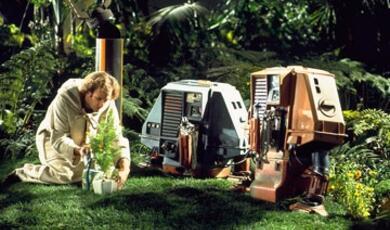
This lecture explores these notions through an examination of the film Silent Running (1972), which imagined gardens in space, in which the last remnants of Earth’s vegetation are preserved aboard gigantic spaceships.
Is gender equality a key factor in tackling climate change? Many think so, and in this lecture Environment Professor Jacqueline McGlade will explain why in relation to UN Sustainable Development Goal 5 is to 'achieve gender equality and empower all women and girls'.
This lecture examines the work of Hugo de Vries, a Dutch botanist who was one of the first to claim that science would allow plants and animals to be designed to order.