Gresham College provides outstanding educational talks and videos for the public free of charge. There are over 2,500 videos available on our website. Your support will help us to encourage people's love of learning for many years to come.
Air pollution, the usefulness of trees, ideas for a green belt are not concerns we associate with the 1600s. But John Evelyn, writer, diarist and gardener, was unusual. His thinking in Fumifugium (1661) about air quality, and Sylva (1664) about trees, seems astonishingly close to our own today.

How does fiction make itself seem like fact? Professor John Mullan begins where novels begin: with Defoe’s Robinson Crusoe, which showed every novel that followed how to make a ‘strange surprising’ story seem entirely ‘probable’ (the word that eighteenth-century pioneers of fiction liked t
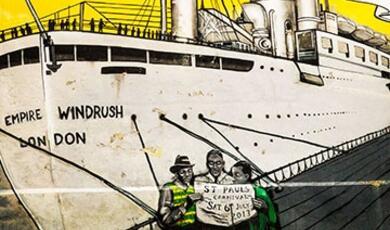
London in the 1950s and 60s was a crucible in which West Indian writers, artists, thinkers and scholars imagined new futures for the Caribbean, Britain and the world.
The relative role of the State and the individual is a recurring theme of political theory. It is also a practical question in public health – what are the respective responsibilities of government, individuals and healthcare professionals to protect health?
From The Merchant of Venice to The Taming of the Shrew, it’s easy to see how Shakespeare’s plays can cause offence to contemporary audiences. Is it harder to teach Shakespeare today than in the past? Have ideas about what is offensive in Shakespeare changed over time?
What are the opportunities for using Information Technology to reduce the cost of healthcare? And what might our healthcare system look like in 10 years time if we make judicious investments in technology?
This lecture uses examples from cutting-edge science and medicine to explore the ethical questions which advances in robotics, personalised medicine, transplantation and artificial intelligence pose for doctors, patients and society.
Lung cancer is the second most common cancer in both men and women, but kills the most people through a combination of being common and currently having much less effective treatment. Both treatment and prevention are currently improving, slowly.