Gresham College provides outstanding educational talks and videos for the public free of charge. There are over 2,500 videos available on our website. Your support will help us to encourage people's love of learning for many years to come.
Even the most humdrum of electrical devices nowadays contains at least one computer; yet surprisingly few people are aware of their history, their form or function. In this talk we will see that not only is the history of computers rich and diverse, their architecture likewise.

Niklaus Wirth said Algorithms + Data Structures = Programs. But programs are more than that. They are ubiquitous in modern life, but only a tiny minority of the population know how to program.
Humans use computers to do gigantic calculations which would be impossible to do by hand – for example, weather prediction. But could an AI go beyond that and come up with a proof of a theorem which has stumped humankind?
Drones are changing the face of war in the 21st century for combatants and civilians. Today drones carry out targeted assassinations, bombings and intelligence-gathering, and the forces that deploy them aim to minimise the loss of life.
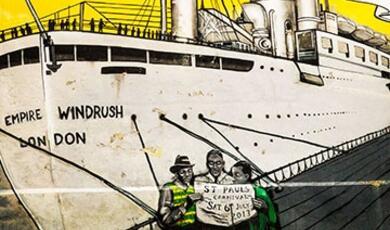
London in the 1950s and 60s was a crucible in which West Indian writers, artists, thinkers and scholars imagined new futures for the Caribbean, Britain and the world.
Algorithms, loosely translated, are systems for doing things. Algorithms are thus the link from pre-history to the modern world – without algorithms we would have an inanimate universe without all the mess and complexity of real life. It turns out that the history of algorithms is messy.
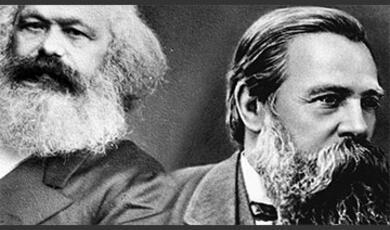
On the 200th anniversary of the birth of Friedrich Engels, his biographer Tristram Hunt looks at how both Engels and Karl Marx were deeply affected by their time in London in the second half of the 19th century.