Gresham College provides outstanding educational talks and videos for the public free of charge. There are over 2,500 videos available on our website. Your support will help us to encourage people's love of learning for many years to come.
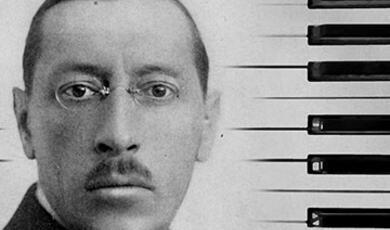
Prokofiev’s piano music struck his contemporaries as matching the new era: its dynamism was compared to sport (“football music”), and its grinding repeated patterns to industrial sounds (“machine music”).
It is widely accepted that the rising prevalence of obesity is a major threat to current and future health of individuals, the public, and the NHS. Obesity comes from a complex interaction of personal choices, genetics, economics, the food industry, and the environment, among other things.
Clinical practice depends on the acquisition and analysis of evidence - detailed information from each patient’s clinical history, laboratory tests, imaging scans and biopsies. Yet data on its own is not enough, and must always be interpreted in the context of each unique person.
Canons of taste and value in other media, such as literature, art and music, have been challenged in recent decades by proponents of sexual and ethnic equality.
Vaccination has transformed the outlook for many previously lethal infectious diseases. It has, however, caused controversy since its beginnings, even when used for widely feared diseases such as smallpox. For many infectious diseases we do not have a vaccine, and may never get one.

For nearly seventy years, what might be called ‘the canon’ of greatest films has been arbitrated by an international poll of critics delivering a ‘ten best’ list every decade, published in the BFI’s Sight & Sound.
One of the most powerful tools in public health is screening – whether for cancers like cervical or breast cancer, genetic abnormalities, or infectious diseases. Screening can be transformational, detecting disease early and preventing it taking hold.
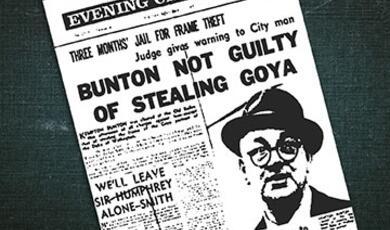
Is the jury system the bulwark of individual liberty? This lecture will look at the role of the so-called “perverse jury” in acquitting defendants where the law, or the charge itself, is deemed unjust.