Gresham College provides outstanding educational talks and videos for the public free of charge. There are over 2,500 videos available on our website. Your support will help us to encourage people's love of learning for many years to come.
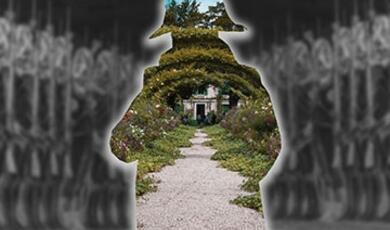
This lecture will explore Napoleon‘s life through his interactions with the natural world and a series of gardens that were important to him during the rise and fall of his power. The point of doing this is to approach his life from oblique angles, exploring material that is often overlooked.
Space today is terrifyingly silent. But it wasn’t always thus: the early universe was filled with a hot plasma in which sound waves could travel. The cosmos was quivering with the aftershocks of the Big Bang.
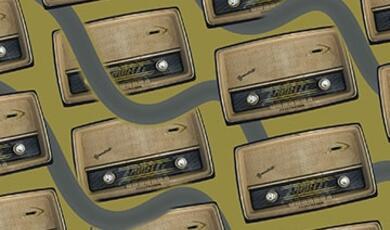
On 17 August 1982, the first commercial CD was released. Digital recording and editing have changed the face of music by making recordings easy to originate and share. But has this affected musical quality, and what are the financial and artistic consequences?
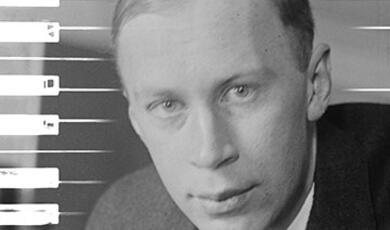
Prokofiev’s piano music struck his contemporaries as matching the new era: its dynamism was compared to sport (“football music”), and its grinding repeated patterns to industrial sounds (“machine music”).
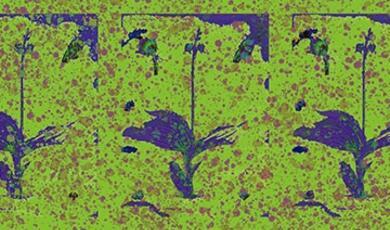
Despite the controversy, evolution was widely accepted by many naturalists within a few years of the Origin’s appearance. An important reason for this rapid triumph was Darwin’s botanical works. Seen through evolutionary eyes, plants proved to be mobile, carnivorous, sensitive – even crafty.

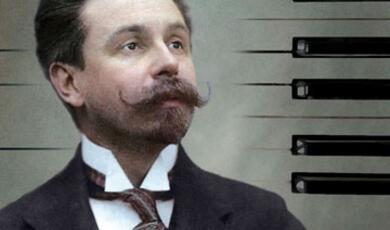
Scriabin was Rachmaninov’s classmate at the Moscow Conservatoire, and enjoyed comparable fame during his lifetime, and yet today he is much less known, especially outside Russia.
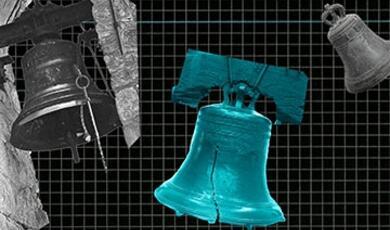
This lecture will look at change ringing, which is ringing a series of tuned bells (as you might find in the bell tower of a church) in a particular sequence, and this has exciting mathematical properties. We will also ask: why are bells bell-shaped?
Boris Ord composed one tiny Christmas carol – ‘Adam lay ybounden’. But Ord’s largest contribution to the carol genre was his work as choirmaster at King’s College, Cambridge from 1929 to 1957.