Gresham College provides outstanding educational talks and videos for the public free of charge. There are over 2,500 videos available on our website. Your support will help us to encourage people's love of learning for many years to come.
Starting with literary examples from Dickens, this lecture will untangle the complexity of shadow-meaning by exploring how artists have used shadows since ancient times.
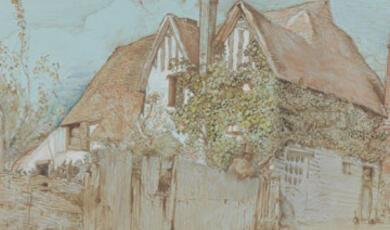
Samuel Palmer, in his Shoreham period in the 1820s and 30s, seized on the long tradition of classical pastoral landscapes, and wrested it into an English idiom.
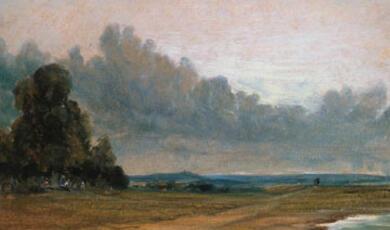
Constable's Stour landscapes of the Regency period, during and just after the War with France, and his publication English Landscape Scenery, champion local and low-key rural England.
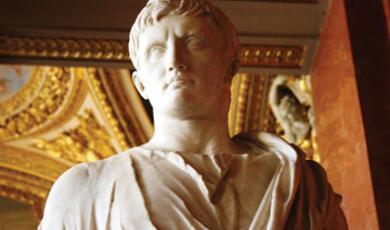
Mary Beard, Professor of Classics at the Univeristy of Cambridge, Fellow of Newnham College, and Royal Academy of Arts Professor of Ancient Literature - who is also well-known for her media appearances - will speak on the fascinating topic of images of Roman Emperors.

Alan Turing famously proposed a test of artificial intelligence. What has been achieved? Stephen Hawking has said that real artificial intelligence will mean the end of mankind. Is that a real threat? Are there limits to what a silicon brain might do?
In the long run, in an Internet society, it is claimed, we will neither need nor want doctors, teachers, accountants, architects, the clergy, consultants, lawyers, and many others, to work as they did in the 20th century. - Is this true?
A celebration of the heart for St Valentine’s Day. How is it that a simple pump has become a symbol of the highest human emotions of love, truth, conscience and moral courage? How have artists represented this? An interdisciplinary presentation.
Examples of disease as shown in artworks will be examined, from the medical and surgical point of view as well as the historical and artistic ones, particularly visual loss as portrayed by artists from pre-historic times.
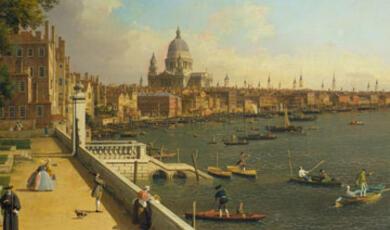
Canaletto's paintings have defined the look of mid-eighteenth century London. This lecture will explore the extent to which Canaletto built upon the existing visual landscape.