

 Login
Login

Education – And Its Limits
Share

- Details
- Text
- Audio
- Downloads
- Extra Reading
The most popular response to the challenge of automation is ‘more education’. This lecture argues that, for now, that is our best response. But ‘more education’ must go beyond simply rethinking what skills will be valuable in the future. We must also rethink how we educate – the way we teach has not really changed for centuries. And we must also rethink when we educate – providing people with a fixed set of skills at the start of their lives is no longer enough. However, there are serious limits to education – it is not the panacea that many imagine.
Download Text

Education – and its Limits
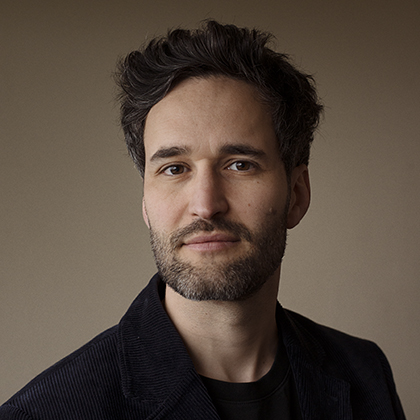
Daniel Susskind, Gresham Professor of Business
26th May 2026
We live at a remarkable technological moment. Almost every day, we hear of new technologies that are taking on tasks and activities which, until recently, only human beings alone could ever do. The recent progress in generative AI – systems like ChatGPT, Claude, Gemini, and Grok – are remarkable. But the argument of the lectures until now is that these are a remarkable chapter in a far longer story. This burst of technological progress has not come out the blue. Nor is this the first time our societies have had to find an effective response to technological disruption.
As we have seen in previous lectures, the main response to technological progress in the 20th century was ‘more education’. The labour market challenge was often thought of as a ‘race’ – new technologies were racing ahead, and workers needed to be given the skills that would allow them to keep up.
However, what the ‘more’ in ‘more education’ meant changed a great deal over time. At the start of the 20th century, ‘more’ meant more people. This was slow in coming. In the 1930s, as the economists Lawrence Katz and Claudia Goldin noted, the US was “virtually alone” in providing free secondary school education. But as time passed, other countries caught up and copied that initiative. Today, that sort of education is commonplace.
But by the end of the twentieth century, the meaning of ‘more’ had transformed. It no longer meant simply more people, increasing access to schooling for all, but more advanced education, with a focus on encouraging people to attend college and universities. At the turn of the century, it was common to hear political leaders talk about the importance of this sort of education.
In this lecture, I will argue that ‘more education’ remains our best response to technological disruption in the world of work. As I have explored in previous lectures, it is likely that the main challenge in the labour market for now from a technological point of view – and in the medium term – is not that there will not be enough jobs. Instead, there will be jobs – but for various reasons, these jobs may sit out of reach of those workers who want them. Put more formally, in the language of this series, the challenge is likely to be ‘frictional’ rather than ‘structural’ technological unemployment. And one of the best responses we have to the former remains ‘more education’.
However, just as the meaning of ‘more education’ has changed in the past as the nature of technological progress has changed, it will have to change again. In this lecture, I will argue that uncertainty about the future – about exactly which jobs will have to be done, about exactly what skills will be in demand – make it very difficult to proceed as we have in the past. In particular, the idea that we can pick out ‘future-proof’ skills that are out of reach of AI and teach people to do them is unlikely to succeed. In short, we simply do not know enough about what lies ahead for that to be effective.
Instead, I want to explore what we ought to do – in particular, how we ought to change what we teach, how we teach, and when we teach – to prepare people for this uncertainty and prepare people to flourish in the working world that is emerging.
However, in closing, I also want to explore the limits to education. Too often – in part due to its historical success – ‘more education’ is treated as a panacea. This is a mistake. To begin with, it is an imperfect response to the challenge of frictional technological unemployment – as we have seen in previous lectures, ‘skills’ are only one reason that people might struggle to take up available work. In turn, it is an ineffective response to the challenge of structural technological unemployment – if we find ourselves in a world where there is not enough work to be done full-stop, we will have to consider very different responses.
Further Reading
‘An OpenAI model has disproved a central conjecture in discrete geometry’, OpenAI.com, 20 May 2026.
Bloom, Benjamin. ‘The 2 Sigma Problem: The Search for Methods of Group Instruction as Effective as One-to-One Tutoring’, Educational Researcher. 13:6 (1984).
Deming, David et al. ‘Navigating Public Job Training’, Harvard Project on Workforce. March 2023.
Katz, Lawrence and Claudia Goldin. The Race Between Education and Technology. (HUP, 2008).
McBain, Sophie. ‘Are we living in a golden age of stupidity?’, The Guardian. 18 October 2025.
Susskind, Daniel. A World Without Work. 2020.
Susskind, Daniel. ‘Technological unemployment’, in The Oxford Handbook of Economic Governance ed. Justin Bullock et al. (2022).
Susskind, Daniel. The Digital Papers: The Economics of Transformative AI. (Stanford Digital Economy Lab, 2025).
Susskind, Daniel. What Should My Children Do? (Allen Lane, September 2026).
© Professor Daniel Susskind 2026
Further Reading
‘An OpenAI model has disproved a central conjecture in discrete geometry’, OpenAI.com, 20 May 2026.
Bloom, Benjamin. ‘The 2 Sigma Problem: The Search for Methods of Group Instruction as Effective as One-to-One Tutoring’, Educational Researcher. 13:6 (1984).
Deming, David et al. ‘Navigating Public Job Training’, Harvard Project on Workforce. March 2023.
Katz, Lawrence and Claudia Goldin. The Race Between Education and Technology. (HUP, 2008).
McBain, Sophie. ‘Are we living in a golden age of stupidity?’, The Guardian. 18 October 2025.
Susskind, Daniel. A World Without Work. 2020.
Susskind, Daniel. ‘Technological unemployment’, in The Oxford Handbook of Economic Governance ed. Justin Bullock et al. (2022).
Susskind, Daniel. The Digital Papers: The Economics of Transformative AI. (Stanford Digital Economy Lab, 2025).
Susskind, Daniel. What Should My Children Do? (Allen Lane, September 2026).
Part of:
This event was on Tue, 26 May 2026

Support Gresham
Gresham College has offered an outstanding education to the public free of charge for over 400 years. Today, Gresham College plays an important role in fostering a love of learning and a greater understanding of ourselves and the world around us. Your donation will help to widen our reach and to broaden our audience, allowing more people to benefit from a high-quality education from some of the brightest minds.