
 Login
Login

Hecate: Mistress of Magic
Share

- Details
- Text
- Audio
- Downloads
- Extra Reading
Hecate started as the ruling goddess of the Asian region of Caria, and got taken over by the Greeks as the only one able to operate in every realm of the cosmos. This then gave her special responsibility for travellers, doorways and restless ghosts. That slowly darkened her image, so that she became associated with the night, the moon, and magicians. By the Roman period, she was the goddess of sorcery par excellence, invoked for all sorts of enchantments, good or bad. In the late ancient worlds this also turned her into a saviour figure, enabling humans directly to contact the divine. This lecture traces that colourful journey.
Download Text

Hecate: Mistress of Magic
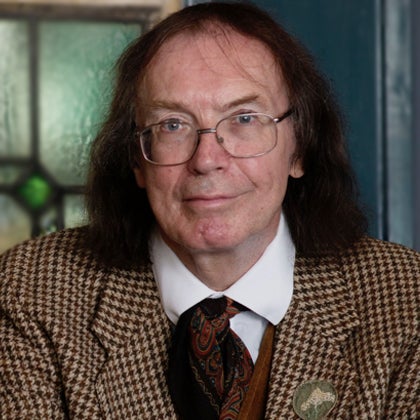
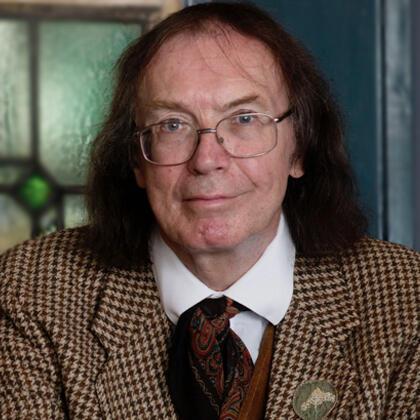
Professor Ronald Hutton
24 November 2025
Hecate is one of those ancient deities who underwent a long sequence of changes which turned them into the personae that we think we know today, and can be followed through each stage of it. In her origins she was the dominant divinity of Caria, what is now south-western Turkey, presiding over life and death in general and acting as a protective figure for the region. Greeks settled its coast in the ninth and eighth centuries BCE and assimilated her into their mythology. Around the year 700 the poet Hesiod said that the supreme Greek god Zeus was so impressed by her that he gave her the unusual right to operate in every realm of the cosmos- sky, earth and underworld. We don’t know what her name meant, because it is Carian, and that is a lost language. It sounds similar to the Greek word for ‘hundred’, and so by Hesiod’s time she was also made the special goddess of people who wanted to get rich, or indeed desired any kind of success and prosperity. As she was a voyager between worlds, Hesiod also gave her special care for travellers, guarding roads and gateways. Early Greek images of her often show her with a key, to unlock doors. Her name also sounds like the Greek hekatos, ‘far-shooting’, which gave her a further association with the archer goddess Artemis, patroness of wild places and animals, and of hunting, linked to the moon. The two deities became assimilated in their iconography, both being shown as young women carrying torches and accompanied by hounds.
Hecate however also attracted darker associations. As a giver of prosperity, she could also take it away.
In the course of the fifth century BCE the Athenians developed her cult further, by portraying her as triple, with three heads looking in different directions, to guide approaches. As such, crossroads became sacred to her. These were already regarded as uncanny places where spirits and ghosts gathered. The dark of the moon was therefore dedicated to her, as a time when this happened most frequently. By the late fifth century these snowballing attributes – darkness, ghosts and the crossroads – were giving her a new reputation, as patroness of magic. Her images acquired flashing eyes, snakes for hair and a retinue of infernal spirits and the restless dead. By the fourth century it was believed that magicians called up evil spirits and ghosts to do their bidding, and to do that they had to win Hecate’s permission. She retained some of her earlier, benevolent, aspect, but her association with the dark and uncanny was becoming dominant.
By Roman times, she had become regarded both as a deity with whom people could deal, as she always had been, and as the animating spirit of the moon. Her triple form was now associated with the three visible faces of the lunar cycle, and she became assimilated with other moon goddesses such as Selene, Diana and Luna. This had an immense influence on modern occultists and Pagans, especially as it inspired Robert Graves to develop his concept of a great triple goddess, Maiden, Mother and Crone. Her new identity as a composite goddess of moonlight and mystery gave new strength to some of her older associations: with dogs, which howl at the moon, and with aspects of nature, such as the deep-rooted black poplar tree. The greatest magicians were now thought to be those who could subdue her to their will, though admittedly they appeared only in works of (usually satirical) fiction. By contrast, superlative invocations to her are preserved from the Roman period not only in pieces of literature, such as the poems of Ovid, but in actual magicians’ texts such as the Greek Magical Papyri from Egypt.
Hecate’s reputation as the goddess who could wander between worlds gave her a new and important role towards the end of ancient times.This was among a small group of pagan intellectuals known to historians as Neoplatonists, and especially among those who practised theurgy. That was the Greek expression for rites intended to enable human beings to contact deities directly, and perhaps even to merge with them. The theurgists made Hecate their favourite goddess, because her travel between worlds turned her into a perfect figure to mediate between human and divine. She became their patroness of transmission, transformation and initiation: Hecate Soteira, Hecate the Saviour. Her spirits could act as messengers between realms. The theurgists visualised the goddess herself as a pure and formless fire from which a voice issued, coming down from heaven to lodge in a person or statue and deliver wisdom to her devotees.
With the end of the ancient world she withdrew, along with the other ancient deities, into art and literature, to reappear as an ‘active’ goddess with the development of modern Paganism and ritual magic. In those traditions she naturally has a powerful place now. She is however also a figure in broader enduring Western culture, the classical European personification of the darker and creepier aspects of the divine feminine. It is a curious fate for the original protective and regal Carian divinity.
© Professor Ronald Hutton 2025
References and Further Reading
Johnston, Sarah Iles. Hekate Soteira. 1990.
Ronan, Stephen. The Goddess Hekate. 1992.
Johnston, Sarah Iles. Hekate Soteira. 1990.
Ronan, Stephen. The Goddess Hekate. 1992.
This event was on Wed, 26 Nov 2025
Support Gresham
Gresham College has offered an outstanding education to the public free of charge for over 400 years. Today, Gresham College plays an important role in fostering a love of learning and a greater understanding of ourselves and the world around us. Your donation will help to widen our reach and to broaden our audience, allowing more people to benefit from a high-quality education from some of the brightest minds.