
 Login
Login

Society and Survival During the Holocaust
Share

- Details
- Text
- Audio
- Downloads
- Extra Reading
This lecture focuses on experiences of hiding and help during the Holocaust across Europe, including the German Reich itself, to highlight the significance of surrounding societies for the survival of Jews. In a broad comparative analysis, going beyond a focus on individual rescuers and getting away from generalisations about supposed ‘national characteristics’, Mary Fulbrook illuminates how local power structures and sense of community shaped non-Jewish responses to antisemitic policies, and affected the choices, experiences and chances of Jews attempting to evade persecution in different regions during the war.
This is the annual Alfred Wiener Holocaust Memorial Lecture.
Download Text

Society and Survival during the Holocaust
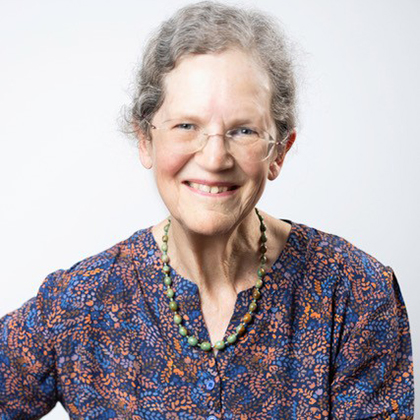
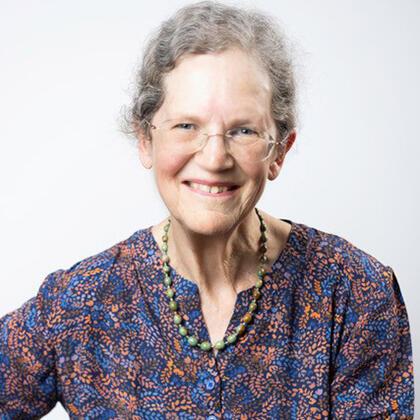
Professor Mary Fulbrook, FBA
18 May 2026
This lecture addresses the role of wider society in relation to the mass murder of Jews across Europe during the Holocaust. Why did so many people remain passive in face of violence against others? Looking at this from another perspective: under what conditions, by contrast, were non-Jews more likely to offer sympathy, shelter, food, help in acquiring a false identity – or indeed simply to remain silent rather than denouncing victims of persecution and their helpers? What circumstances facilitated survival and rescue?
Building on her previous work on Bystander Society, and based on her current research for a forthcoming book on Hiding from the Holocaust, in this lecture Mary Fulbrook brings the wider societal background to the fore, and suggests some of the social, cultural, and political conditions that could foster survival and acts of rescue across Europe. Three main areas of inquiry are briefly introduced.
- Beyond national stereotypes and individual heroes: survival in context
Public representations of the Holocaust – whether in museums, exhibitions, films, novels or memoirs – tend to focus on a few key figures. Narratives about this horrific period are inevitably dramatic, highlighting perpetrators and victims, and often also saviour figures who engage in resistance or rescue at considerable personal risk. Yet the actions and inaction of members of the surrounding society – those who witnessed the expropriations, deportations, and murders, even also facilitated and benefitted from the removal of Jews – generally remain in the background. Complicity is not easy to portray. Moreover, it is all too easy to fall back either on national generalisations – whether positive or negative – or to emphasise the personality traits of exceptionally altruistic individuals.
Survivor memoirs and testimonies have also drawn widespread attention, frequently geared towards markets emphasising courage, resilience, ‘the triumph of the human spirit’ and the like. We need of course to understand how a tiny minority managed to battle through against all the odds, and why some individuals were willing to risk so much to help them along the way. But we need to go beyond this.
Scholarly analyses and local histories have increasingly highlighted the significance of surrounding societies for involvement in perpetration – as in Jedwabne, made infamous through Jan Gross’s study of Neighbours. Such micro-historical studies have yet to be brought into any kind of wider pan-European synthesis.
Despite all the differences in experiences and locations, some patterns may be discerned, varying according to both the individual’s own attributes and the broader context. Selected examples can provide insights into how fugitives variously managed to hide or to ‘pass’ under false identities, how they found shelter, experienced compassion, and contended with widespread hostility and danger.
- Hospitable communities
It is clear that the environment made a significant difference. But what aspects of the wider environment were more (or less) conducive to survival?
Some extraordinary cases of whole communities being involved in rescue activities, beyond the well-known case of Denmark, can help to illuminate key issues. The lecture introduces five remarkable cases where considerable numbers of Jews were offered help and shelter by members of the surrounding society: Le Chambon-sur-Lignon and surrounding villages on the Vivarais-Lignon plateau in southern France; Nieuwlande in the Netherlands; Villa Emma in Nonantola, Italy; some Baptist villagers in Volhynia, western Ukraine; and the area around Volos in Greece.
In different ways in each case there was a fruitful combination of individual commitment as well as leadership, and trusted networks through which fugitives could be passed. Where they differed significantly however was in regard to the wider societal context and the local constellation of forces.
- Compliance: the capacity to act
This leads then to a key question: that of compliance. What forces and local pressures help to shape people’s reactions as a collective, beyond purely individual decisions rooted in personal connections and morals?
The local balance of power could radically affect the actions and chances of both fugitives and helpers – in a variety of directions. Ordinary residents might feel greater pressure to comply with the moral and social codes of the local community, or key authority figures, than with the edicts of occupation forces. Many people, living through the war in difficult circumstances, sought to comply with conflicting pressures and forces more or less simultaneously, changing their behaviour according to context.
Much depended also not only on the character of the occupation regime and its local collaborators, but also on those who opposed them, including resistance movements and partisans. Jews who manged to escape from ghettos, deportations, or round-ups could soon find themselves at the mercy of antisemitic bands; or, if more fortunate, might meet up with partisans who were prepared to help them in some way.
Complex and ever-changing kaleidoscopes of power could, then, radically affect the ways in which non-Jews behaved towards victims of persecution. This could make all the difference to the experiences and survival chances of fugitives.
Conclusions: The social topography of survival
Psychological approaches to rescuers have emphasised individual character traits or personality attributes; and sociological analyses have highlighted the significance of minority status, which may have predisposed some people to greater sympathy with fugitives. But it is important to note that such approaches focus essentially on the question of what might make people want to help victims. This lecture has argued that there are other facets that were also crucial: specifically the contrasts between hospitable communities and hostile environments; and the ways in which local compliance with one or another form of behaviour might be achieved.
This approach to understanding survival and rescue has implications for public representations, including the emphasis on individual courage and altruism in public education and portrayals of the Holocaust today. Wider community cultures and societal responses under particular political circumstances are also vital to understanding how a minority of those who were persecuted managed to evade their fate, despite all.
© Mary Fulbrook 2026
References and Further Reading
Natalia Aleksiun, Zofia Wóycicka and Raphael Utz (eds), The Rescue Turn and the Politics of Holocaust Memory (Detroit: Wayne State University Press, 2024).
Frank Bajohr and Andrea Löw (eds), The Holocaust and European Societies (London: Palgrave Macmillan, 2016)
Mary Fulbrook, Bystander Society: Conformity and Complicity in Nazi Germany and the Holocaust (Oxford: Oxford University Press, 2023)
Jan Grabowski and Barbara Engelking (eds), Night without End: The Fate of Jews in German-occupied Poland (Yad Vashem and Indiana University Press, 2022)
Jan T. Gross, Neighbours. The Destruction of the Jewish Community in Jedwabne, Poland, 1941 (London: Random House, Arrow, 2003; orig. Princeton University Press, 2003)
Bob Moore, Survivors: Jewish Self-Help and Rescue in Nazi-Occupied Western Europe (Oxford and New York: Oxford University Press, 2010)
Mark Roseman (ed.), The Cambridge History of the Holocaust, 4 vols. (Cambridge: Cambridge University Press, 2025)
Shmuel Spector, The Holocaust of Volhynian Jews 1941-1944 (Jerusalem: Yad Vashem,1990)
Nechama Tec, Dry Tears. The Story of a Lost Childhood (Westport, Connecticut: Wildcat Publishing Co., inc., 1982)
Nikos Tzafleris, ‘Persecution and Rescue of the Jews of Volos during the Holocaust in Greece (1943-44)’ in Dan Michman (ed.), Hiding, Sheltering, and Borrowing Identities. Avenues of Rescue during the Holocaust (Jerusalem: Yad Vashem, 2017),
Klaus Voigt, ‘The Children of Villa Emma at Nonantola’, in Joshua D. Zimmerman (ed.), Jews in Italy under Fascist and Nazi Rule, 1922-1945 (Cambridge: Cambridge University Press, 2005), pp. 182-198
Natalia Aleksiun, Zofia Wóycicka and Raphael Utz (eds), The Rescue Turn and the Politics of Holocaust Memory (Detroit: Wayne State University Press, 2024).
Frank Bajohr and Andrea Löw (eds), The Holocaust and European Societies (London: Palgrave Macmillan, 2016)
Mary Fulbrook, Bystander Society: Conformity and Complicity in Nazi Germany and the Holocaust (Oxford: Oxford University Press, 2023)
Jan Grabowski and Barbara Engelking (eds), Night without End: The Fate of Jews in German-occupied Poland (Yad Vashem and Indiana University Press, 2022)
Jan T. Gross, Neighbours. The Destruction of the Jewish Community in Jedwabne, Poland, 1941 (London: Random House, Arrow, 2003; orig. Princeton University Press, 2003)
Bob Moore, Survivors: Jewish Self-Help and Rescue in Nazi-Occupied Western Europe (Oxford and New York: Oxford University Press, 2010)
Mark Roseman (ed.), The Cambridge History of the Holocaust, 4 vols. (Cambridge: Cambridge University Press, 2025)
Shmuel Spector, The Holocaust of Volhynian Jews 1941-1944 (Jerusalem: Yad Vashem,1990)
Nechama Tec, Dry Tears. The Story of a Lost Childhood (Westport, Connecticut: Wildcat Publishing Co., inc., 1982)
Nikos Tzafleris, ‘Persecution and Rescue of the Jews of Volos during the Holocaust in Greece (1943-44)’ in Dan Michman (ed.), Hiding, Sheltering, and Borrowing Identities. Avenues of Rescue during the Holocaust (Jerusalem: Yad Vashem, 2017),
Klaus Voigt, ‘The Children of Villa Emma at Nonantola’, in Joshua D. Zimmerman (ed.), Jews in Italy under Fascist and Nazi Rule, 1922-1945 (Cambridge: Cambridge University Press, 2005), pp. 182-198
This event was on Mon, 18 May 2026
Support Gresham
Gresham College has offered an outstanding education to the public free of charge for over 400 years. Today, Gresham College plays an important role in fostering a love of learning and a greater understanding of ourselves and the world around us. Your donation will help to widen our reach and to broaden our audience, allowing more people to benefit from a high-quality education from some of the brightest minds.