
 Login
Login

Death Investigation: What Do Coroners Do?
Share

- Details
- Text
- Audio
- Downloads
- Extra Reading
When death occurs, the state has a duty to investigate. Every death must be registered locally with a cause of death. And now, more than any other country, all deaths are double-checked, with coroners having a significant role in over 30% of them, explaining the unexplained and reporting to prevent future deaths.
This lecture explains:
- Who are coroners and what they do
- When an inquest must take place
- How coroners arrive at a just conclusion and
- The benefit to the health and welfare of the nation in death investigation
Download Text

Death Investigation: Coroners and Inquests
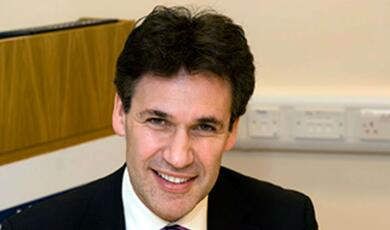
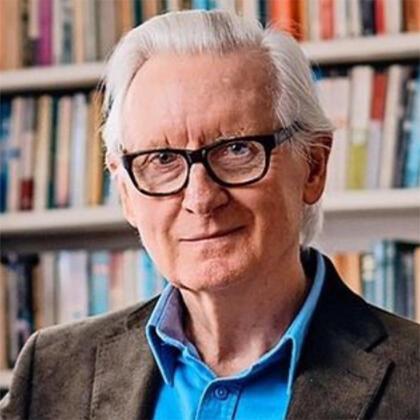
Sir Peter Thornton KC
5 February 2026
Introduction
Death investigation. What is it and why do we do it? Who are coroners and what do they do? What are inquests and why do we have them?
In this country we take death investigation seriously. Families want to know how a loved one has died and we want to learn from deaths about life so that we can monitor and improve the health and the safety of others.
A formal structure
We have a formal structure for death investigation. In the first place each death has to be registered with the local registrar of births and deaths. A doctor (usually a hospital doctor) will certify the cause of death on the Medical Certificate for the Cause of Death (MCCD). But that’s not all. That death will then be double-checked by a local Medical Examiner to ensure that the death is from natural causes.
This process accounts for about 70% of all deaths, nearly 400,000 deaths each year. The remaining 30%, some 175,000 deaths, may not be natural deaths and will therefore receive additional investigation, mostly by coroners.
All deaths double-checked
As a result, all deaths in England and Wales are double-checked. 70% by doctors and then double-checked by medical examiners (since 2024), and the remaining 30%, by doctors and then coroners. To my knowledge, we are the only country in the world who do this. Some say we are a model from whom other countries learn. By contrast, Scotland has no coroner system, and, in a few cases only, deaths are investigated by the Procurator Fiscal (the public prosecutor), with the process leading to a ‘fatal accident inquiry’ in the Sheriff’s court. But fewer than 50 cases are completed each year. Northern Ireland has its own coroner system.
Police investigation
So, let us look at extra investigation in England and Wales. In a relatively small number of cases, where homicide (murder or manslaughter or infanticide) is suspected, the police will investigate. On the latest reliable figures that is about 570 deaths a year, the lowest figure for 10 years. London, for example, on 2024 figures, had 97 homicides, the second lowest number on record. By contrast, in the same period, New York had 377 homicides and Chicago 573, both cities with a lower population than London.
Coroner investigation
That leaves nearly all of the 30% of deaths requiring extra investigation by coroners.
What do coroners do? A coroner acts when a death is reported to the coroner’s office. It will be reported to the local coroner when it is suspected to be a violent death; one from poisoning or controlled drugs or from self-harm or neglect; from injury or disease from work or resulting from a medical procedure; or where the death is suspected to be unnatural for any other reason. Once a death is reported the coroner has a legal duty to investigate. In most of these cases, about 80% of them, the coroner’s ‘preliminary inquiries’ will lead to a conclusion that the death was in fact natural and can therefore be signed off with the local registrar without an inquest. But where the coroner has ‘reason to suspect’ that the death was violent or unnatural, that the cause of death is unknown or the death was in custody (whether natural or not), the coroner must investigate and must hold an inquest.
In England and Wales there are about 36,500 inquests a year. In a small number of cases, just 550 a year, a jury is sworn in and makes the decisions.
In every single inquest, the coroner (or jury if there is one) must answer the four statutory questions: who died, when and where did they die, and how did they come by their death. The how question is the most important. It must be answered by describing the mechanical means of death, such as ‘he fell from a ladder after a rung broke and landed head first some 20 feet below’, or ‘by hanging from an exposed beam using a ligature made from a bedsheet’, or ‘by drowning while swimming from his small fishing boat in the open sea’, or ‘from injuries suffered as the front seat passenger in a car which was in a head-on collision with another car coming in the opposite direction and which was exceeding the speed limit and travelling on the wrong side of the road’.
In addition to answering the key four questions, the coroner (or jury if there is one) must record the medical cause of death (usually stated by a pathologist who has carried out a post-mortem examination) and state a conclusion as to the death. Conclusions, formerly known as verdicts, include accident, natural causes, suicide - these three are the most common - road traffic collision, alcohol/drug related, industrial disease, lawful/unlawful killing or open conclusion. In addition, the conclusion can be in the form of a narrative, which sets out inquest’s conclusion in a more descriptive form, although, usually, the answer to the how question will be sufficient for these purposes.
All of these requirements are set out in statute (the Coroners and Justice Act 2009), and in statutory rules and regulations. Once the findings are made at the inquest, they must be recorded formally in the Record of Inquest which the coroner (and jurors if there is a jury) must sign. That Record is kept by the local coroner’s office. It is a record of the death which must be kept for all time. It is available as a public document for inspection.
Reports to prevent future deaths
In addition, the coroner can, where appropriate, write a report to prevent future deaths. This is a particularly valuable feature of coroner work; it provides the opportunity to try and prevent future similar deaths.
If any aspect of the coroner’s investigation (such as evidence collected for the inquest) gives rise to a concern that further deaths may occur unless preventative action is taken, the coroner must report that concern to any person or organisation who may have power to take that action. And that person or organisation must provide a written response. For example, where there has been an unexpected death in a mental health unit, the report could be sent to any one or more of the following: the GP who assessed and referred the patient, the mental health unit, the NHS Trust and the Minister for Health.
Who are coroners?
Who are these coroners? They used to be lawyers or doctors (or both), but now they are lawyers only. They must have the same qualifications as judges; they must be a qualified solicitor or barrister (or chartered legal executive), with five years practical experience in the law. They are not strictly speaking judges, but are classified as independent judicial officers. Independence is important, especially when the State or its agents (for example in a police shooting) are under scrutiny in an inquest. Coroners are not, as is often thought, pathologists.
The coroner service of England and Wales is a local service. Unlike criminal courts, civil courts and tribunals, there is no nationally organised service. Coroners are, therefore, appointed locally by the relevant local authority and funded locally. There is a local office, a local court and a local Senior Coroner in charge. There are about 80 coroner areas, each with a full-time Senior Coroner, sometimes assisted by a deputy known as an Area Coroner (usually full-time) and always with part-time Assistant Coroners. There are about 380 coroners in all.
Coroners have local administrative support. And much of the investigative work is carried out by ‘coroners’ officers’ who work for the local coroner. They may be serving police officers, ex-police officers, ex-medical staff, or local authority staff. In one area, an ex-BBC radio announcer had taken up the role. Apart from her other skills, she had an excellent telephone voice.
The Chief Coroner
The only aspect of the system which is national is the Chief Coroner. I was appointed in 2012 as the first Chief Coroner of England and Wales, after more than 800 years of coroners. It was my role to try and bring some consistency across the country in this very local service; to modernise the service (drag it - in some cases kicking and screaming - into the 21st century); to improve the quality of investigation and inquests; to reduce delays; to improve appointments; to provide training to coroners and officers through the Judicial College; and, in general, to make the coroner service effective and purposeful and to ensure that families of those who had died were put very firmly at the heart of the process.
What happens at an inquest?
What happens when an inquest must be held? It should be noted first of all that this is an inquisitorial process. Unlike criminal and civil courts with an adversarial process (the parties arguing their case in front of judge or jury), the coroner determines the scope of the investigation, the evidence to be collected, which witnesses to be called and in what order. Quite a feudal role, but a truly independent and impartial one.
Once the evidence is collected, the hearing will take place in a public, open court, and the proceedings will be recorded. Witnesses will be called by the coroner or their statements read out, and on that evidence the inquest will decide the answer to the four questions, the medical cause of death and come to a conclusion. Sometimes, public bodies such as a prison or the police or an NHS trust will be represented by lawyers, but usually families are not. In an appropriate case, the coroner may follow up with a report to prevent future deaths.
The purpose of the coroner system
Finally, what is the purpose of our coroner system?
In broad terms, the purpose is two-fold: firstly, to answer the question of how this person came by their death. This is particularly important for families (although sometimes it may not be the answer they are hoping for. This key aim is sometimes expressed as explaining the unexplained. Secondly, the purpose is to learn lessons for the health, welfare and safety of others (particularly through the use of reports to prevent future deaths).
I am not sure, though, how good we are at learning lessons. In some cases, better than others. The coroner service is a local service, so learning lessons locally can work well. For example, there was more than one death on a major stretch of road leading up to a roundabout where there was no speed limit. The local coroner, who had good local knowledge, sent a report to the local highway authority suggesting action to reduce the speed limit. That action was in due course taken and hopefully lives saved.
As Chief Coroner I encouraged the writing of thoughtful, positive reports to prevent future deaths and the number of reports went up. I made sure for the first time that all reports would be published (on the Courts and Tribunals Judiciary website and under clear topic headings). They are therefore available for study and research purposes.
But, sadly, statistics show that not enough reports are written. There is a website called The Preventable Deaths Tracker, created by Dr Georgia Richards of King’s College London. It provides invaluable information about reports and types of deaths. But she shows, unfortunately, that as many as 40% of coroners do not write reports at all. Just to illustrate this in a different way, in the last 10 yrs there have been 3,000 deaths in prison and only 146 reports written by coroners on the subject. There is clearly much more to be learned.
And the process only goes so far. Even if coroners do make a report, and send it to a person or organisation they consider has the power to take action, they cannot force a response. They cannot follow up a response, if there is one, with further questions or observations. They cannot force action.
And, separately, there is no organised, basic collection of data from inquests about unnatural deaths. We need more information in order to learn from deaths, for example, about opiod poisoning or deaths from ketamine. What about deaths in schools or of teenagers under 18? It would not be difficult to collect this information and build a national database. Australia, New Zealand and Canada have done it, but it is not done here, not yet.
Perhaps I am being a bit negative. So let me conclude on a more positive note.
There is at least in place a formal legal structure for thorough death investigation, which is carried out by independent coroners. And with the double checks on all deaths, the process is extensive and unique.
Inquests can be valuable. They can explain the unexplained and provide important answers. And a coroner’s report can genuinely lead to the saving of lives. That’s how the system should work and can work at its best.
In recent times, inquests have dealt with often difficult and many varied issues. These include internet sites encouraging suicide, deaths from pollution in inner cities, from exposure to moulds and fungi in rental premises, from inadequate labelling of food products, from deaths in the kitchen construction industry from inhaling toxic silica dust from cutting artificial surfaces, unexpected deaths in hospitals and mental health units, deaths involving police restraint, police shootings, high speed chases, army officers on training exercises, deaths of babies after failings by hospital trusts.
These are just a few examples. All put under the public scrutiny of an independent inquest. But for inquests, these deaths might not have been scrutinised at all. And rightly, coroners will always deal with deaths in prisons or police custody (of which there are too many), by holding a full investigation in public into the death.
There have been important results from inquests. In the fresh Hillsborough inquests, the jury came to clear conclusions about unlawful killing and exoneration of the Liverpool football fans who attended the fateful game. That was a big moment. I sat in the High Court with the Chief Justice when we ordered fresh inquests.
There was the case of Dr Abbas Khan. He had gone from the UK to Syria to help out in hospitals where opponents of the Assad regime lay injured, but was one day abducted by forces of the regime when he took a wrong turning in Aleppo and was taken to fearful prisons in Damascus. The jury found, on good evidence, that his hanging from a peg on the back of his cell door was murder and not suicide as the regime had formally claimed. I was the coroner.
In the case of Sarah Reed, the last woman to take her own life in HMP Holloway before it was closed down, her family claimed at first that the troubled Sarah must have been murdered by prison officers. But in the end they were perfectly satisfied with the outcome and the jury’s conclusion that she had taken her own life. They thanked the jury, even the coroner. I was the coroner.
Conclusion
The coroner system is, therefore, in my view, an important part of our administration of justice and one in which we can take pride. No justice system is perfect, of course. Much more can be done. But if you are a family and have lost a loved one in troubling circumstances, you will want answers. I believe that this country, better than any other in the world, has a system in place which will do its very best to provide the answers to which you are entitled.
As William Gladstone said: ‘Show me the manner in which a nation or community cares for its dead and I will measure with mathematical exactness the tender sympathies of its people, their respect for the laws of the land and their loyalty to high ideals.’
©Peter Thornton 2026
References and Further Reading
Coroners and Justice Act 2009
The Coroners (Investigations) Regulations 2013
The Coroners (Inquests) Rules 2013
The Notification of Deaths Regulations 2019
www.judiciary.uk
Part of:
This event was on Thu, 05 Feb 2026
Support Gresham
Gresham College has offered an outstanding education to the public free of charge for over 400 years. Today, Gresham College plays an important role in fostering a love of learning and a greater understanding of ourselves and the world around us. Your donation will help to widen our reach and to broaden our audience, allowing more people to benefit from a high-quality education from some of the brightest minds.