
 Login
Login

Bridget: Goddess and Saint
Share

- Details
- Text
- Audio
- Downloads
- Extra Reading
Bridget is the most popular Celtic goddess or saint in modern spirituality. She straddles the pagan and Christian division as no other figure does, and remains entirely benign while being also independent and capable. She is at once the Mother Saint of Gaelic people and a pagan goddess of healing, poetry and smithcraft. This lecture examines the very tangled history that lies behind this identity. It asks if the goddess became the saint, or if they were different beings, and how good the evidence is for the existence of a real woman or a genuine pagan deity behind all the mythology.
Download Text

Bridget: Goddess and Saint
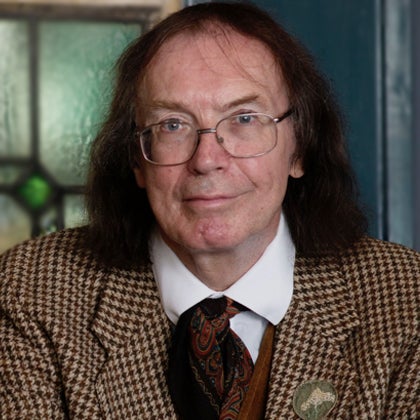
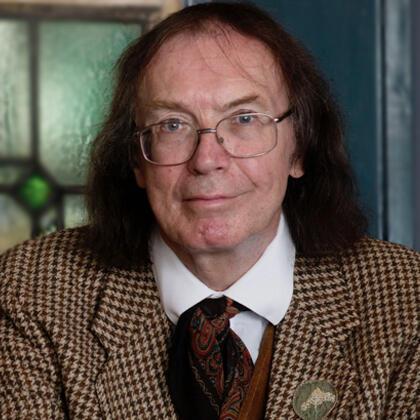
Professor Ronald Hutton
10th March 2026
Bridget (also known as Brigid, Brigit, Brige or Bride) is the most popular Celtic goddess or saint in modern alternative spirituality, across the Western world. She unites Druids and Pagans, followers of Goddess spirituality, and Celtic Christians. Few other figures straddle these boundaries. The skills she represents offer respected careers to modern women, and she is entirely benign while remaining resolutely independent and capable.To a historian, matters are however more complex, and there are four different Bridgets: modern, folkloric, medieval saint and medieval goddess.
The modern Bridget represents a remarkable reappearance, because as a goddess she disappears from the record between 1200 and 1860. It was due to three factors. First came a transformation in the national identity of the French after 1871, when they were defeated by a newly united Germany and changed from regarding their origins as Germanic to viewing them as Celtic. That meant looking for ancient deities who might have spanned the ancient Celtic world, of which France now claimed to have been the centre, and Bridget was one. The second development in the same period was Irish nationalism, which revived an interest in early Irish mythology and made the suggestion that the Christian saint Bridget had once been a pagan goddess. This idea was then taken up by the third force, emerging Scottish nationalism. By the early twentieth century it was firmly established that she was a goddess turned saint, though differing traits were attribued to the goddess by different writers, such as William Sharp, Sir James Frazer and Robert Graves.
The folkloric Bridget features as the most popular female saint in Gaelic tradition, above all the Mother of Ireland but also revered in the Isle of Man, the Hebrides and the Scottish Highlands. Her feast day was 1 February, the traditional opening of spring in that culture. By the eighteenth century it had become a widespread belief that the saint would visit households who welcomed her on the night before. During the nineteenth and early twentieth centuries, therefore, folklorists collected records of a great number of customs across the Gaelic area designed to make her feel welcome in particular houses and bless them. These included laying out food for her on a wndow ledge, making a sheaf of rushes or straw to represent her, making up a bed for her, leaving a cloth on the window sill for her to bless, carrying a straw figure costumed as her around the neighbourhood, stepping through a circle of straw in her name, strewing a carpet of rushes for her or (most enduringly) weaving a cross of rushes and hanging it over a door or window to welcome her.
The sources for the medieval saint are very abudant, reflecting her importance as the leading female saint of the Irish. There are five early medieval lives of her and anecdotes about her in other texts. The trouble is that all the biographies of her are imaginative elaborations of the first two, and all the information on her comes from periods long after the time of her presumed life. The two original biographies date from the late seventh century, well over a hundred years after the period in which she is located, and are really just lists of her claimed miracles instead of proper life stories. Moreover they disagree with each other, in respect to her parentage and upbringing, and the area of Ireland in which she operated: one puts her in the north-east Midlands and the other at Kildare, her main later medieval shrine. They were produced by rival kingdoms. So if there was a real woman behind all this, she is inaccessible. We can neither prove nor disprove her existence, let alone say anything certain about what she did. She is however in medieval legend a very well-formed personality, self-assertive and intelligent, and associated with increasing abundance of food and drink as well as the usual saintly activity of healing.
By comparison, Bridget the goddess barely features in the medieval literature. There is a famous reference in a dictionary attributed to a king and bishop from south-west Ireland called Cormac, which makes her appear in three forms, concerned with healing, poetry and smithcraft. A second text makes her the wife of a king of the gods, and a third the mother of three gods concerned respectively with the working of iron, bronze and wood. Law texts refer to a Bridget who was a great legal expert, but it is not clear if she was the same goddess, a different one or a human being. We are therefore left with a small heap of discordant and unrelated records which do not add up to a single personality within an accepted pantheon.
The most famous of all references to the medieval cult of Bridget, in modern times, is one written at the end of the twelfth century by the famous Welsh-Norman scholar Gerald of Wales. He recorded that a holy fire was kept at her great shrine at Kildare, in a special enclosure which only women could enter, and tended by nuns from the religious house there. From the late nineteenth century it has often been assumed that the shrine must of have been built on the site of a pagan fire temple to the goddess Bridget, from which it inherited the flame. However, no medieval text represents Bridget as a fire goddess, while Christian saints were often associated with flame. Moreover, a detailed seventh-century description of Kildare does not mention a sacred fire. It looks as if that was a Christian addition to the cult.
We are therefore left with a large amount of incoherent and rather contradictory medieval material, most of it to do with the saint and little with the goddess. None of its adds up to a sufficiently coherent story to tell us whether the saint was a historial person, what the relationship was between her and the goddess, or how imporant the goddess was and how far the little information we have upon her is accurate. That does leave us free to draw on all the images of her in medieval and modern texts according to our own instincts and need. There is no single, cohesive, medieval concept of her by which to be guided or controlled. Instead there are different images and ideas from which a range of Bridgets can be developed by different individuals and groups.
© Professor Ronald Hutton 2026
References and Further Reading
-Weber, Courtney. Brigid. 2015.
-Williams, Mark. Ireland’s Immortals. 2016.
-Kissane, Noel. Saint Brigid of Kildare. 2017.
Weber, Courtney. Brigid. 2015.
Williams, Mark. Ireland’s Immortals. 2016.
Kissane, Noel. Saint Brigid of Kildare. 2017.
This event was on Tue, 10 Mar 2026
Support Gresham
Gresham College has offered an outstanding education to the public free of charge for over 400 years. Today, Gresham College plays an important role in fostering a love of learning and a greater understanding of ourselves and the world around us. Your donation will help to widen our reach and to broaden our audience, allowing more people to benefit from a high-quality education from some of the brightest minds.