
 Login
Login





Life, Death and Judgement in the Art and Times of Hieronymus Bosch (d. 1516)
Share

- Details
- Text
- Audio
- Downloads
- Extra Reading
This lecture looks at the 'surreal' art of the Early Netherlandish painter Jheronimus Bosch within its historical and cultural context. Although Bosch’s terrifying visions of sin, death, and the hereafter may appear surreal today, especially his highly imaginative depictions of devils, they were tied to the religious attitudes and moralising texts of the period, such as the Ars moriendi, the Dance of Death, and Everyman. It is in this context that one should examine Bosch’s Haywain Triptych, Garden of Earthly Delights, and other works.
Download Text

Life, Death and Judgement in the Art and Times of Hieronymus Bosch (d. 1516)
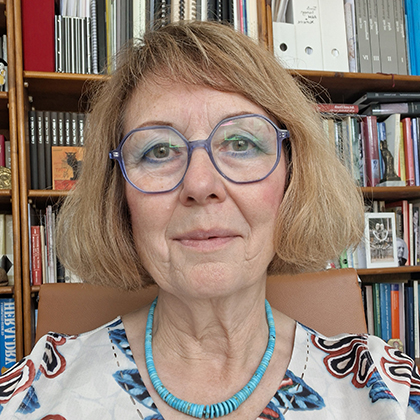
Sophie Oosterwijk FSA
10 December 2025
Abstract
The surreal art of the Early Netherlandish painter Jheronimus (Hieronymus, or Joen for short) Bosch has sometimes been explained rather fancifully as the work of a mystic, a heretic, or even a hallucinating eccentric who may have suffered from ergotism or dabbled in drugs and secret orgies. Instead, it is much more helpful to study his work within its historical, cultural and religious context as this will reveal how Bosch’s work was indeed considered original by contemporaries, but not heretical or controversial.
It is true that Bosch lived in a time of growing religious turmoil: Martin Luther’s Ninety-five Theses date from 1517, the year after Bosch’s death. Yet while highly imaginative and original, Bosch’s paintings fully conformed with Catholic doctrine about the sinful nature of mankind, Christ’s sacrifice, and the inevitable punishment of sinners in the afterlife. Many of his works, such as The Haywain and The Garden of Earthly Delights, focus on human sinfulness in this world, death and God’s final judgement.
As such, Bosch’s work fits into the religious culture of the period. The Ars Moriendi (The Art of Dying) provided examples of how to die a good or a bad death. The moralistic Dance of Death was also an estates satire that taught how Death will strike both young and old, rich and poor, indiscriminately and without warning. Contemporary morality plays such as Everyman (an English adaptation of the Dutch play Elckerlijc) were likewise intended to show the conflict between good and evil, and the need to make a good death. Over-indulgence in the pleasures of this world was considered both sinful and dangerous because dying in a state of sin will condemn the souls of unshriven sinners to the very physical torments of Hell, as Bosch reminds viewers in his paintings.
Background
Jheronimus Bosch was born into a family of artists who originally came from Aachen (Germany). Unlike the rest of his family, who used the name ‘van Aken’ (i.e. of Aachen), Jheronimus took the name of his hometown ’s-Hertogenbosch where he was born c.1450 and where spent all his life. ’s-Hertogenbosch was a flourishing city in the duchy of Brabant although around 1500 its population was one third that of Antwerp. Brabant was held by the Burgundian dukes before coming under Habsburg rule. A disastrous fire that hit the city in 1463 may have impacted Bosch’s visionary art, which features hellish fires in abundance.
It is important to realise that in Bosch’s lifetime Christian eschatological ideas raised fears that the world would end by the year 1500. These fears inspired the series of fifteen Apocalypse woodcuts that Albrecht Dürer (1471-1528) published in 1498. It was also a period of exploration and new discoveries: Christopher Columbus made landfall in the Americas in 1492. Bosch’s fascination with exotic worlds is evident in the plants and animals he painted, such as the giraffe, lion and elephant in The Garden of Earthly Delights, while he was also evidently a keen observer of birds. Yet his sometimes grotesque imagery is also part of a longer tradition of hybrid monsters and fabulous creatures that we find in medieval art, from illustrations in the Bestiary to marginal decorations in manuscripts and sculpture.
Bosch was probably trained by his father Anthonius along with his brothers and may have continued to produce his paintings in the family workshop. He specialised in religious scenes and allegories for both religious institutions and lay patrons, from wealthy burghers to the higher nobility: Philip the Handsome, duke of Brabant, is known to have commissioned a Last Judgement from him in 1504. Bosch’s paintings and drawings reveal a real talent for landscape, an eye for detail and a vivid imagination. However, as a typical medieval craftsman he also produced designs for other artists, e.g. for embroidery, stained glass and a brass chandelier. Bosch was a well-respected citizen, a guild member, and a member of the order of the Illustrious Brotherhood of Our Blessed Lady, a local religious confraternity that survives to this day. In 1481 he is recorded as married to Aleid Goyaerts van den Meervenne (born 1453), a woman from a well-to-do local merchant family who would survive him; the couple appears to have remained childless.
Bosch died in early August 1516; a memorial mass was held for him on 9 August of that year. Yet decades after his death his work still inspired other artists, notably Pieter Bruegel the Elder (d. 1569), and also imitators whose works may well include copies of lost original works by Bosch. These ‘visionary’ works were later avidly collected by King Philip II of Spain, which is why so many works by Bosch and/or his workshop and followers are now in Spain.
Works by Bosch (or workshop/follower?) shown in this lecture
● The Adoration of the Magi (Epiphany Triptych), Prado, Madrid:
This triptych features a continuous landscape with the Adoration of the Magi in the central panel. A mysterious figure is the semi-naked pale fourth king looking out from the stable, who is probably the Antichrist. The donors (identified as Peeter Scheyfve from Antwerp and his second wife Agneese de Gramme, who commissioned this altarpiece between 1491 and 1498) are shown in the wings with their heraldry and name saints. The grisaille exterior (not shown) depicts the Mass of St Gregory with two kneeling male donors (probably Scheyfve’s father Claus and son Jan).
● The Crowning with Thorns, National Gallery, London:
Also known as Christ Mocked, this single devotional panel shows Christ looking out calmly at the viewer while being tormented by four evil but mysterious characters, who may be interpreted in different ways, e.g. the four Ages of Man, the four Elements or the four Humours. The shape and placing of the crown of thorns suggest a halo, and the scene serves to remind viewers of Christ’s suffering and sacrifice for mankind. The NG dates this work later than the Bosch Research and Conservation Project (BRCP) team. See also https://www.nationalgallery.org.uk/paintings/hieronymus-bosch-christ-mocked-the-crowning-with-thorns.
● The Tabletop of the Seven Deadly Sins and the Four Last Things, Prado:
This painting (unlikely to have ever been used as the top of a trestle table) features a large eye-like circle with the resurrected Christ in the centre, accompanied by the Latin words ‘Cave, cave, dominus videt’ (Beware, beware, the Lord sees [everything]), and banderoles with cautionary texts from Deuteronomy above and below. Surrounding Christ are the Seven Deadly Sins, which are presented as everyday scenes: Gluttony, Sloth, Lust, Pride, Wroth, Envy and Greed. Roundels in the corners show the Four Last Things: Death, Judgement, Heaven and Hell. Unlike the Prado, the BRCP team rejects this work as being by Bosch or his workshop, despite the signature, but its iconography and emphasis on sin and the hereafter fits in well with other works by Bosch.
● Death and the Miser, National Gallery, Washington:
This is the right interior wing of a disassembled diptych that also comprised The Ship of Fools (Paris) and Gluttony and Lust (New Haven) as the left interior wing and The Pedlar (Rotterdam) as the joined exterior wings. The subject of the lost central panel is unknown but may have been the Last Judgement. The deathbed scene shows Death appearing in the doorway of a room filled with devils while an angel tries to persuade the dying man to focus his last thoughts on Christ. The man near the treasure chest at the foot of the bed may be the dying man’s alter ego. The subject owes much to the Ars Moriendi tradition that describes good and bad ways of dying. See also https://www.nga.gov/artworks/41645-death-and-miser.
● The Pedlar (The Wayfarer), Museum Boijmans Van Beuningen, Rotterdam:
This small grisaille panel, now cropped and joined to make a tondo, once formed the exterior wings of a disassembled triptych that also comprised Death and the Miser (Washington), The Ship of Fools (Paris) and Gluttony and Lust (New Haven). The pedlar was previously interpreted as the Prodigal Son but is now believed to represent mankind, like Everyman, making his way through an evil world as symbolised by the tavern/brothel in the background, the threatening dog, and the bull guarding the gate. Note also the owl.
● The Haywain Triptych, Prado, Madrid:
The exterior wings of this triptych features another pedlar making his way through an evil world see above). The interior should be read from left to right. The left wing shows Paradise with the creation of Eve, Fall and Expulsion. The Fall of the Rebel Angels in the sky above emphasises that sin is a matter of free will with inevitable consequences. The haywain in the central panel is an allegory for human sinfulness, esp. greed. The lovers on top of the haywain ignore Christ’s appearance in the sky above, despite the entreaties of the angel on the left. On the ground people from all walks of life fight over the hay or follow the haywain in wilful ignorance as it is being pulled by demons towards the scene of Hell in the right wing where sinners suffer eternal torments. A workshop copy of this altarpiece is preserved at the Escorial.
● The Garden of Earthly Delights, Prado, Madrid:
The grisaille exterior of Bosch’s most famous triptych shows the third day of Creation with God in the top left creating the world. The interior shows in the left wing God presenting Eve to Adam in a strange paradisical landscape that continues into the central panel. Here a multitude of naked figures indulge shamelessly in carnal sin, notably gluttony and lust. The inevitable consequences of such sinful behaviour are shown in the imaginative tormenting of souls in Hell in the right wing. In 1517 the altarpiece was recorded at the Nassau Palace in Brussels so it was probably commissioned by Count Engelbert II of Nassau (d. 1504) or his nephew Henry III (d. 1538).
● Visions of the Hereafter, Palazzo Grimani, Venice:
The original configuration of these four visionary panels (also known as the ‘Afterlife Panels’) is unknown as is the order in which they should be displayed, with the Hell scenes either on the left or the right: the fall of the damned into Hell is intended to mirror the ascent of the blessed towards the tunnel of light. All four panels have marbled backs to imitate stone, but they have suffered damage and have been cropped.
©Sophie Oosterwijk, 2025
References and Further Reading
Many of Bosch’s works are preserved in the Prado, Madrid. Its website https://www.museodelprado.es/en/the-collection/ allows users to browse the collection and study works by Bosch and other artists in detail and read the information provided by the Prado.
However, it should be noted that there are disputes among scholars about attributions and dating of work by Bosch and/or his workshop (or copies by followers), notably between the Prado and the Bosch Research and Conservation Project (BRCP) team. Arguments cited against attributions based on style and iconography are technical data, e.g. the evidence of underdrawing, pigment analysis and dendrochronology (tree-ring dating). See also the website http://boschproject.org.
Several publications originate from research by the BRCP, including these two major volumes published at the time of the two anniversary exhibitions in ’s-Hertogenbosch and Madrid in 2016:
BRCP 2016 vol. I. Ilsink, Matthijs, Jos Koldeweij, Ron Spronk, Luuk Hoogstede, Robert G. Erdmann, Rik Klein Gotink, Hanneke Nap and Daan Veldhuizen. Hieronymus Bosch, Painter and Draughtsman. Catalogue Raisonné. Brussels 2016. (published in English, Dutch, German and French)
BRCP 2016, vol. II. Hoogstede, Luuk, Ron Spronk, Robert G. Erdmann, Rik Klein Gotink, Matthijs Ilsink, Jos Koldeweij, Hanneke Nap and Daan Veldhuizen. Hieronymus Bosch, Painter and Draughtsman. Technical Studies. Brussels 2016.
Silver, Larry. "Jheronimus Bosch and the Issue of Origins". Journal of Historians of Netherlandish Art 1:1 (Winter 2009). DOI: 10.5092/jhna.2009.1.1.5. This article by a specialist in Northern Renaissance art and Bosch author is available online at https://jhna.org/articles/jheronimus-bosch-issue-of-origins/.
Many of Bosch’s works are preserved in the Prado, Madrid. Its website https://www.museodelprado.es/en/the-collection/ allows users to browse the collection and study works by Bosch and other artists in detail and read the information provided by the Prado.
However, it should be noted that there are disputes among scholars about attributions and dating of work by Bosch and/or his workshop (or copies by followers), notably between the Prado and the Bosch Research and Conservation Project (BRCP) team. Arguments cited against attributions based on style and iconography are technical data, e.g. the evidence of underdrawing, pigment analysis and dendrochronology (tree-ring dating). See also the website http://boschproject.org.
Several publications originate from research by the BRCP, including these two major volumes published at the time of the two anniversary exhibitions in ’s-Hertogenbosch and Madrid in 2016:
BRCP 2016 vol. I. Ilsink, Matthijs, Jos Koldeweij, Ron Spronk, Luuk Hoogstede, Robert G. Erdmann, Rik Klein Gotink, Hanneke Nap and Daan Veldhuizen. Hieronymus Bosch, Painter and Draughtsman. Catalogue Raisonné. Brussels 2016. (published in English, Dutch, German and French)
BRCP 2016, vol. II. Hoogstede, Luuk, Ron Spronk, Robert G. Erdmann, Rik Klein Gotink, Matthijs Ilsink, Jos Koldeweij, Hanneke Nap and Daan Veldhuizen. Hieronymus Bosch, Painter and Draughtsman. Technical Studies. Brussels 2016.
Silver, Larry. "Jheronimus Bosch and the Issue of Origins". Journal of Historians of Netherlandish Art 1:1 (Winter 2009). DOI: 10.5092/jhna.2009.1.1.5. This article by a specialist in Northern Renaissance art and Bosch author is available online at https://jhna.org/articles/jheronimus-bosch-issue-of-origins/.
Part of:
This event was on Wed, 10 Dec 2025
Support Gresham
Gresham College has offered an outstanding education to the public free of charge for over 400 years. Today, Gresham College plays an important role in fostering a love of learning and a greater understanding of ourselves and the world around us. Your donation will help to widen our reach and to broaden our audience, allowing more people to benefit from a high-quality education from some of the brightest minds.