Gresham College provides outstanding educational talks and videos for the public free of charge. There are over 2,500 videos available on our website. Your support will help us to encourage people's love of learning for many years to come.
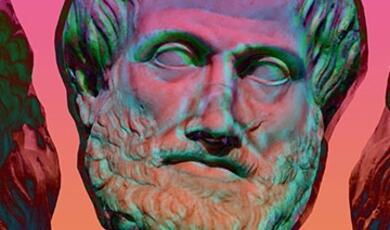
Plato’s most brilliant student and perhaps the most significant intellectual in world history, Aristotle built on Plato’s doctrines but also radically disagreed with them.
Clinical practice depends on the acquisition and analysis of evidence - detailed information from each patient’s clinical history, laboratory tests, imaging scans and biopsies. Yet data on its own is not enough, and must always be interpreted in the context of each unique person.
Vaccination has transformed the outlook for many previously lethal infectious diseases. It has, however, caused controversy since its beginnings, even when used for widely feared diseases such as smallpox. For many infectious diseases we do not have a vaccine, and may never get one.

One of the most powerful tools in public health is screening – whether for cancers like cervical or breast cancer, genetic abnormalities, or infectious diseases. Screening can be transformational, detecting disease early and preventing it taking hold.
Plato the Athenian was the philosopher who founded the Academy and whose brilliant writings are the foundation texts of the entire western philosophical tradition.
Ill health has always been concentrated in particular places; tackling these pockets of ill health is an essential role for public health. These may be driven by environmental factors, demography, deprivation and healthcare provision.
The relative role of the State and the individual is a recurring theme of political theory. It is also a practical question in public health – what are the respective responsibilities of government, individuals and healthcare professionals to protect health?
Clinical practice is often seen as the acquisition and application of scientific knowledge to diagnose and treat diseases. Yet every patient is different.