Gresham College provides outstanding educational talks and videos for the public free of charge. There are over 2,500 videos available on our website. Your support will help us to encourage people's love of learning for many years to come.
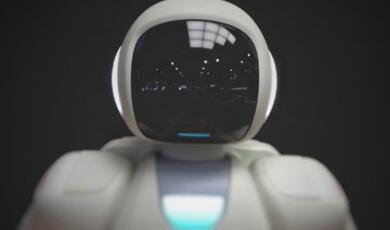
The question “Will AI artefacts ever be conscious?” was raised by Turing seventy years ago, and will not go away even though no one quite knows what it means, nor how we would know they were conscious if they were.
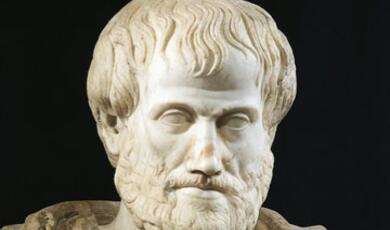
This lecture looks at the archaeological site of the Lyceum, discovered accidentally in 1996, and asks how the remains can illuminate Aristotle’s life, work, and incomparable contribution across academic disciplines, from Political Theory and Aesthetics to Zoology, Physics and Astronomy.

Professor Wilks will describe the Semantic Web and its origin in annotation methods from the humanities and will argue the need for this form of AI to manage a lifetime’s information on the web.
Professor Wilks will discuss the notion of an artificial Companion, a long-term software agent that could be present in any device: a screen, handbag or even a furry toy - and which understands the person it 'lives' with.
Excavations have recently uncovered much evidence of Roman London, including fragments of 405 waxed stylus writing-tablets that can be dated to AD 50-90. Roger Tomlin explains how he deciphered the tablets and what can be learned from them.
Roman London was founded on the banks of the Thames to take advantage of the tidal river for traffic trade and communications. But precisely where were the bridge and the harbour, and what did they look like?
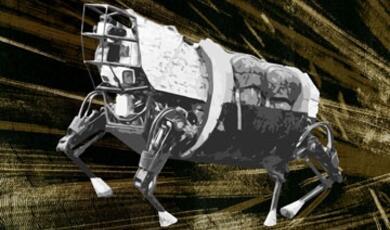
Alan Turing famously proposed a test of artificial intelligence. What has been achieved? Stephen Hawking has said that real artificial intelligence will mean the end of mankind. Is that a real threat? Are there limits to what a silicon brain might do?